

What if the most transformative step in your skincare ritual isn't a product at all, but a strategic, medical-grade investment in your skin's future? While the term chemical peel may once have sparked anxiety about visible downtime, modern aesthetic standards have evolved this treatment into a refined, customizable experience. You've likely noticed how urban pollution leaves your complexion looking dull. Perhaps persistent sun spots or acne scars have become a source of frustration. It's completely understandable to desire a more luminous glow while feeling hesitant about the recovery process in a professional setting. This guide will illuminate how professional peels can safely resurface your skin with clinical precision. We'll explore the essential differences between treatment depths, the importance of expert supervision in light of 2026 safety standards, and how a tailored approach ensures your journey to a smoother, clearer texture is both comfortable and effective.
Key Takeaways
- Understand the biological mechanism that allows professional acids to stimulate natural cellular renewal and surface transformation.
- Compare superficial, medium, and deep treatment levels to identify which option provides the right balance of results and recovery for your schedule.
- Learn why professional customization of a chemical peel is vital for safety, protecting your skin from the risks associated with unverified at-home products.
- Prepare for your appointment by walking through the clinical steps of a high-end skin resurfacing experience, from initial analysis to neutralization.
- Discover how to integrate peels into a broader wellness plan, including their role in preparing your skin for synergistic treatments like Laser Genesis or microneedling.
What is a Chemical Peel? The Science of Skin Resurfacing
A professional chemical peel is far more than a simple surface treatment; it's a sophisticated method of biological communication. By applying a meticulously curated acid solution to the face or neck, we initiate a process of controlled exfoliation that signals the deeper layers of your skin to begin a period of rapid renewal. Many guests initially focus on the physical shedding of dead cells, yet this "peeling" is merely a secondary byproduct of the treatment's true objective: the activation of your body's regenerative pathways. It's a proactive approach to self-care that moves beyond the surface to address the root of skin health.
Understanding What is a Chemical Peel? requires looking beneath the epidermis at how these solutions recalibrate your complexion. For those living in high-energy urban environments, the skin constantly battles microscopic pollutants and oxidative stress. This "urban skin" often appears fatigued, characterized by a persistent dullness that even the most rigorous home routine cannot fully resolve. A professional treatment acts as a clinical reset, stripping away the accumulated environmental damage to reveal the vibrant, healthy tissue underneath. It transforms the skin from a state of defense to a state of active repair.
How Peels Interact with Your Skin Barrier
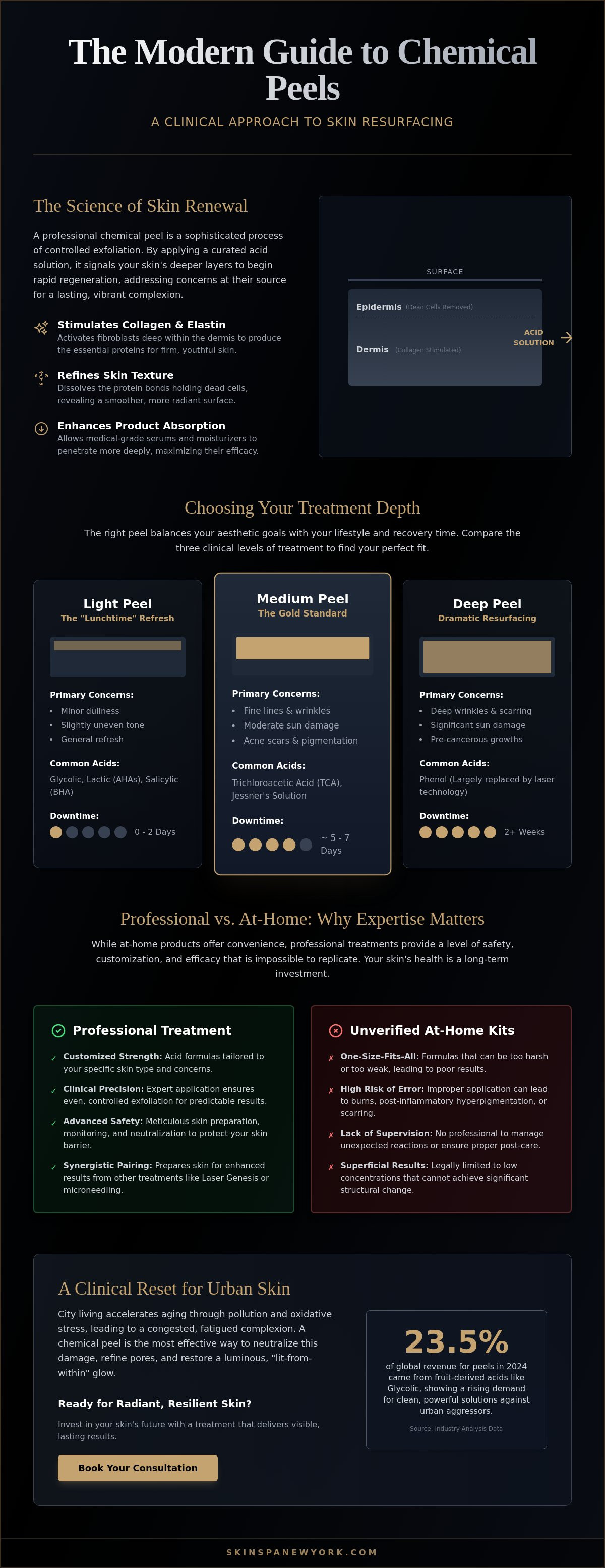
The science begins with the dissolution of desmosomes, which are the protein bonds that keep dead, dull cells anchored to your surface. Once these bonds are loosened, the treatment stimulates fibroblasts within the dermis. These specialized cells are responsible for the production of collagen and elastin, the essential building blocks of firm, youthful skin. Beyond immediate texture improvement, this process optimizes your skin's receptivity. After a treatment, your medical-grade serums and moisturizers can penetrate more deeply, ensuring your daily investment in skincare yields maximum returns. It's a comprehensive strategy for long-term vitality.
The Clinical Benefits for Urban Complexions
City living introduces unique challenges, from vehicle exhaust to heavy metal particulates that settle into the pores. These factors accelerate the aging process and lead to a congested, uneven texture. A chemical peel effectively neutralizes this oxidative stress while refining the appearance of enlarged pores. This efficacy explains why naturally derived "fruit peels," utilizing glycolic or citric acids, accounted for 23.5% of global revenue in 2024, as urban dwellers increasingly seek clean yet powerful solutions. The result is a refined surface that reflects light evenly, creating that sought-after "lit-from-within" glow essential for a polished, modern lifestyle. This treatment provides the clarity and composure your skin deserves in a fast-paced world.
Choosing Your Depth: Light, Medium, and Deep Peels
Selecting the appropriate intensity for your chemical peel is a decision rooted in both clinical necessity and your personal lifestyle. While one guest may seek a subtle refresh before a major event, another might require deeper intervention to address years of sun exposure. The "Lunchtime Peel" represents the pinnacle of efficiency for the modern professional. These superficial treatments utilize mild acids to gently sweep away dead surface cells, providing an immediate glow without the need for social withdrawal. It's the perfect entry point for those new to resurfacing or those maintaining results between more intensive sessions.
For structural changes, medium-depth peels reach the papillary dermis to correct more stubborn imperfections. These are the gold standard for treating fine lines and moderate hyperpigmentation. In contrast, deep phenol peels have largely been replaced by advanced laser technologies in modern clinics. The extensive downtime and risk profile of deep peels often conflict with the fast-paced nature of city life, making them a rare choice compared to more precise, manageable alternatives. Every skin journey is unique, and the depth of your treatment should always align with your specific recovery capacity and aesthetic ambitions.
Common Acids and Their Specific Strengths
The artistry of a professional treatment lies in the specific acid profile selected for your skin. Alpha-Hydroxy Acids (AHAs), such as Glycolic and Lactic acid, are favored for their ability to hydrate while they exfoliate, making them ideal for dry or aging complexions. Beta-Hydroxy Acids (BHAs), specifically Salicylic acid, are oil-soluble, allowing them to penetrate deep into the pores to resolve congestion and acne. For more significant correction, TCA (Trichloroacetic Acid) and Jessner’s solutions are utilized to break down pigment and smooth the skin's architecture. The Science of Skin Resurfacing confirms that these agents, when applied by an expert, provide predictable and transformative results for various dermatological concerns.
Matching the Peel to Your Fitzpatrick Skin Type
Your skin's unique heritage dictates its response to chemical agents. A sophisticated practitioner always considers your Fitzpatrick Skin Type to prevent complications like post-inflammatory hyperpigmentation (PIH). Darker skin tones require a more measured, "low and slow" approach, often utilizing gentler acids in a series of treatments rather than a single high-concentration application. This ensures safety without sacrificing the end result. Before beginning your journey, a professional consultation at a refined skin spa is the most reliable way to design a treatment plan that respects your skin's biology while achieving your aesthetic goals. It's about finding that perfect balance between clinical efficacy and the comfort of your skin barrier.
Professional vs. At-Home Peels: Why Expertise Matters
While it's tempting to explore retail options, a medical-grade chemical peel is a sophisticated clinical event that requires professional oversight. Over-the-counter products are legally restricted to lower concentrations and higher pH levels, which significantly limits their ability to address deep-seated concerns like hyperpigmentation or scarring. In a professional sanctuary, we utilize calibrated solutions designed to trigger meaningful cellular turnover. The FDA issued a clear warning in July 2024 against the use of high-strength at-home peeling agents, noting the high risk of chemical burns and permanent scarring. Entrusting your skin to a licensed expert ensures your journey toward renewal is both safe and effective.
The value of a clinical setting in Manhattan or Boston lies in the immediate, expert response to your skin's behavior. Unlike at-home kits that offer a "one-size-fits-all" approach, a professional treatment is a dynamic process. We provide a sterile, serene environment where every variable is controlled, from the atmospheric temperature to the precision of the application. This professional foundation is what allows for the "lit-from-within" results that define a premium aesthetic experience without the risks of unmonitored DIY attempts.
The Danger of Unregulated pH Levels
The potency of a resurfacing solution is defined primarily by its pH level rather than its percentage alone. A lower pH indicates a more active, acidic environment that can penetrate the skin barrier more aggressively. In a clinical setting, your aesthetician monitors your skin for "frosting," a biological indicator that the acid has reached its target depth. We utilize professional-grade neutralizing agents to halt the reaction at the exact second of peak efficacy. The Science of Chemical Peels underscores how these controlled clinical variables are vital for preventing complications like post-inflammatory hyperpigmentation (PIH) and ensuring a smooth recovery.
Customization: Beyond the Bottle
True expertise involves more than just applying a product; it requires the strategic layering of acids to meet your skin's immediate needs. We often employ "multi-masking" techniques, applying different concentrations to specific zones of the face to balance oily and dry areas. Professional preparation is equally critical. We use clinical degreasing agents to ensure the chemical peel penetrates the skin uniformly, avoiding the patchy results common with DIY attempts. This meticulous attention to detail, followed by the application of medical-grade recovery balms, transforms the procedure into a restorative ritual that respects your skin's unique biology.
The Skin Spa Experience: What to Expect During Your Treatment
Entering a premier skin sanctuary should feel like a transition from the frantic pace of the city into a state of composed confidence. Your chemical peel journey begins with a comprehensive consultation, a vital step where we analyze your skin's unique architecture and history. This isn't a generic procedure; it's a clinical partnership. We discuss your aesthetic ambitions and evaluate your skin's current health to select the precise acid profile that will yield the most radiant results. This initial dialogue ensures that your treatment is perfectly aligned with your lifestyle and skin's tolerance.
The procedure itself is a rhythmic, multi-step process designed for both efficacy and comfort. We start with a meticulous double cleanse to remove surface impurities, followed by a degreasing step that ensures the solution penetrates uniformly across your complexion. As the acid is applied, you'll likely feel a localized sensation of tingling or warmth. This heat is a positive sign that the treatment is actively breaking down the desmosome bonds we discussed earlier. We monitor your skin's reaction in real-time, neutralizing the solution at the exact moment of peak performance to ensure safety. You'll leave the spa with an immediate, temporary glow, though the true transformative resurfacing begins in the days that follow.
Preparing for Your Appointment
Success starts well before you arrive at the spa. To ensure your skin is a resilient canvas, you must pause the use of retinoids, benzoyl peroxide, and other strong chemical exfoliants for 5 to 7 days prior to your session. This window prevents over-sensitization and allows your natural barrier to stabilize. Sun protection is absolutely mandatory during this lead-up period; even a minor sunburn can delay your treatment. Focus on intensive hydration and barrier-supportive ingredients to prime your skin for the renewal process. A well-prepared complexion responds more predictably and recovers more swiftly.
The Critical First 48 Hours of Aftercare
The first 48 hours post-treatment require a disciplined "less is more" philosophy. Your skin is in a state of active regeneration, so you should only use a gentle, soap-free cleanser and the specific recovery balms recommended by your specialist. In the brisk, dry air of a Boston winter or the humid environment of Miami, your hydration needs will vary significantly. We provide tailored product guidance to protect your delicate new skin from environmental stressors. Most importantly, follow the "hands-off" rule: if visible peeling occurs, do not pick or pull at the skin, as this can lead to scarring or hyperpigmentation. You can typically resume your full medical-grade skincare routine once the active peeling phase has concluded. To begin your personalized journey toward a clearer complexion, schedule your professional consultation today.
Maximizing Results: Maintenance and Combination Therapy
Achieving a truly radiant complexion isn't merely the result of a single appointment; it's the outcome of a sustained, strategic relationship with your skin. While a standalone chemical peel provides a remarkable clinical reset, the most sophisticated results are cumulative. By establishing a professional cadence, you maintain the momentum of cellular renewal, ensuring your skin remains resilient against the stressors of city life. We recommend tracking your progress at the four-week mark. This is when the deep-seated structural improvements, such as enhanced collagen density and refined pore architecture, become fully visible to the naked eye.
Regular treatments do more than just address existing damage; they function as a proactive defense against the aging process. When you commit to a customized plan, each session builds upon the last, gradually thinning the layer of dead skin that contributes to dullness. This consistent exfoliation signals the deeper dermis to remain in an active state of repair. Over time, you'll notice that your daily medical-grade products absorb more efficiently and your skin's natural "glow" becomes a permanent feature rather than a temporary post-facial effect.
The Power of Combination Therapy
Peels serve as an essential foundation for more advanced aesthetic modalities. By removing the obstructive layer of dead cells, a chemical peel ensures that treatments like Microneedling or Laser Genesis can work with maximum precision. This dual approach is particularly effective for those addressing stubborn acne scarring or deep-seated sun damage. For guests seeking a total facial rejuvenation, combining a peel with Botox Cosmetic creates a flawlessly smooth canvas. The peel refines the surface texture and tone, while the injectable softens the underlying muscle movement. This multi-dimensional strategy ensures every layer of your skin's health is addressed simultaneously for a polished, youthful appearance.
Long-Term Skin Health and Longevity
In the Northeast, your skincare strategy must evolve alongside the changing environment. The harsh, dry winters of Boston and New York require a different clinical approach than the humid summer months. Winter is often the ideal season for more intensive resurfacing, as the lower UV index provides a safer window for recovery. During the summer, we often transition guests to lighter, hydration-focused acids that maintain clarity without increasing sun sensitivity. This adaptive method ensures your complexion is never overwhelmed by the elements. To begin designing your annual skin health strategy, Schedule your customized peel consultation at Skin Spa New York and discover the transformative power of professional expertise.
Embrace the Future of Your Skin’s Vitality
A professional chemical peel is more than a simple aesthetic treatment; it's a strategic investment in the long-term clarity and health of your complexion. By prioritizing expert customization over unpredictable at-home methods, you ensure that every session respects your skin's unique biology while delivering visible, clinical results. We've explored how the right treatment depth and a consistent seasonal cadence can transform a dull, urban complexion into a radiant and polished canvas.
Since 2005, Skin Spa New York has provided over two decades of aesthetic expertise to guests seeking a reliable sanctuary for their skincare goals. Our medical-grade solutions are meticulously tailored to your specific skin profile, ensuring a safe and transformative experience every time you visit. With convenient, upscale locations in NYC, Boston, and Miami, your path to a clearer and smoother texture is always within reach. We invite you to experience the balance of clinical precision and high-end hospitality that defines our practice.
Book Your Customized Chemical Peel at Skin Spa New York
Take the first step toward a more confident version of yourself today. Your skin deserves the precision and dedicated care that only a trusted professional can provide.
Frequently Asked Questions
How long does the peeling last after a chemical peel?
Visible shedding typically begins forty-eight to seventy-two hours after your session and lasts for approximately three to seven days for most superficial treatments. Medium-depth peels may involve a more pronounced duration of flaking that can extend up to two weeks. It's essential to let this process occur naturally without picking or pulling at the skin to ensure a smooth and even recovery.
Can I get a chemical peel if I have active acne?
Yes, a chemical peel is often a primary clinical strategy for managing active acne and clearing congested pores. We frequently utilize oil-soluble acids like salicylic acid to penetrate deep into the follicles, which helps dissolve sebum and reduce localized inflammation. Your specialist will select a specific concentration that treats current blemishes while preventing future breakouts and refining your skin’s overall texture.
Are chemical peels safe for dark skin tones?
Professional peels are safe and effective for deeper skin tones when administered by an expert who understands the nuances of Fitzpatrick types IV through VI. We utilize a "low and slow" approach with specific acid profiles that minimize the risk of post-inflammatory hyperpigmentation. This careful customization allows you to achieve a luminous, even complexion while fully protecting the integrity of your skin barrier.
How many sessions do I need to see significant results for hyperpigmentation?
Most guests observe a meaningful reduction in sun spots and uneven tone after a series of three to six sessions. While a single treatment provides an immediate refresh, correcting deeper hyperpigmentation requires a cumulative approach to reach and lift pigmented cells. These appointments are typically spaced four to six weeks apart to align with your skin's natural thirty-day cellular turnover cycle.
Can I go back to work immediately after a "lunchtime" peel?
You can return to your professional or social schedule immediately following a superficial or "lunchtime" treatment. These sessions are designed for high-efficiency renewal with minimal downtime, though you may experience slight redness similar to a mild glow. We apply a protective medical-grade balm and mineral sunscreen before you leave so you can step back into your day with complete confidence.
What is the difference between a chemical peel and microdermabrasion?
A chemical peel uses acid solutions to chemically dissolve the bonds between dead cells, while microdermabrasion is a mechanical process that physically buffs away the surface layer. While both improve texture, peels have the capacity to reach deeper layers to stimulate collagen and address pigment concerns. Microdermabrasion is an excellent alternative for those seeking surface-level exfoliation with zero risk of subsequent flaking.
Is it normal to not see any actual peeling after a treatment?
It is perfectly normal to experience a successful treatment without visible flaking or shedding of the skin. The "peel" is a secondary effect, and many modern, sophisticated formulations achieve cellular renewal at a microscopic level. Your skin is still regenerating and improving in texture even if you don't witness physical flaking. The clinical results are measured by the clarity and radiance of your complexion rather than the amount of visible shed.
How soon can I wear makeup after my chemical peel session?
We recommend waiting at least twenty-four hours before applying makeup to allow your skin barrier to stabilize and remain undisturbed. If you've received a more intensive medium-depth treatment, you may need to wait several days until the initial shedding phase has concluded. When you do resume your routine, choose mineral-based products that are free from harsh fragrances or irritants to protect your fresh, new skin.