

Your skin's reaction to the sun is not a matter of chance; it is a coded biological blueprint that dictates which clinical treatments will transform your complexion and which could inadvertently cause harm. Whether you are curious about Laser Hair Removal or a Chemical Peel, knowing your fitzpatrick skin type is the first step toward a safe and successful outcome. You've likely felt a flicker of hesitation when considering advanced aesthetics, wondering if your specific tone is at risk for hyperpigmentation or unexpected burns.
It's a valid concern that deserves a sophisticated, professional answer. We're here to replace that uncertainty with the confidence of clinical safety. This guide explores how the six-point Fitzpatrick scale serves as the foundation for every customized treatment plan, ensuring your journey toward renewal is as precise as it is effective. We will preview the characteristics of each skin type and explain how this classification dictates the settings for transformative services like Laser Genesis and Morpheus8, allowing you to pursue your aesthetic goals with absolute peace of mind.
Key Takeaways
- Understand why this scientific classification system is the essential foundation for a safe and effective aesthetic journey.
- Learn to identify your specific profile among the six phototypes to better predict your skin’s natural response to sun exposure and clinical energy.
- Discover how determining your fitzpatrick skin type allows practitioners to calibrate laser settings with precision, preventing complications like hyperpigmentation.
- Explore customized sun protection strategies that move beyond generic advice to address the unique vulnerabilities of your specific skin tone.
- Find out how a professional clinical analysis ensures that services like Morpheus8 and PCA Peels are perfectly tailored to your biological blueprint.
What is the Fitzpatrick Skin Type Scale?
The Fitzpatrick scale is far more than a simple categorization of complexion. It's a sophisticated clinical framework that measures how human skin responds to ultraviolet (UV) light. Originally developed in 1975 by Dr. Thomas B. Fitzpatrick, this system remains the undisputed gold standard in dermatology and high-end medical aesthetics. By analyzing melanin concentration and historical sun reactions, it classifies skin into six distinct phototypes. Identifying your specific fitzpatrick skin type is the foundational step in designing a treatment plan that prioritizes both safety and transformative results. It functions as a biological blueprint, guiding practitioners through the complexities of modern skin renewal.
The History and Evolution of Skin Typing
Dr. Fitzpatrick initially designed the scale to determine correct doses of UV radiation for psoriasis treatments. However, as the aesthetic industry evolved, the scale transitioned from a simple sun-sensitivity test into a vital diagnostic tool for modern medical spa consultations. In the premier sanctuaries of NYC, Boston, and Miami, this assessment is the first point of contact between a guest and their clinician. It informs the precise calibration of advanced technologies like Laser Genesis or Morpheus8. While many people attempt to categorize themselves using online quizzes, these self-identifications are frequently inaccurate. A professional clinical assessment is necessary because factors like underlying pigment and genetic history aren't always visible to the untrained eye. Our experts look beyond the surface to ensure every setting is optimized for your unique profile.
Melanin: The Biological Driver of Your Phototype
At the heart of your phototype lies melanin, the pigment produced by specialized cells called melanocytes. There are two primary forms: eumelanin and pheomelanin. Eumelanin provides a brown or black pigment and offers a degree of natural protection against UV damage. In contrast, pheomelanin is a reddish-yellow pigment that doesn't protect against the sun and is more prevalent in fairer skin types. Your assigned fitzpatrick skin type is determined by the ratio of these pigments and the baseline activity of your melanocytes. This biological mix is deeply rooted in your genetics and ancestry, dictating whether your skin will gracefully tan or immediately burn when exposed to light. Eumelanin acts as a resilient guardian, while pheomelanin remains more delicate and prone to oxidative stress. Understanding this internal chemistry allows us to customize your skincare journey with the calm confidence that comes from clinical expertise.
The Six Fitzpatrick Phototypes: Identifying Your Profile
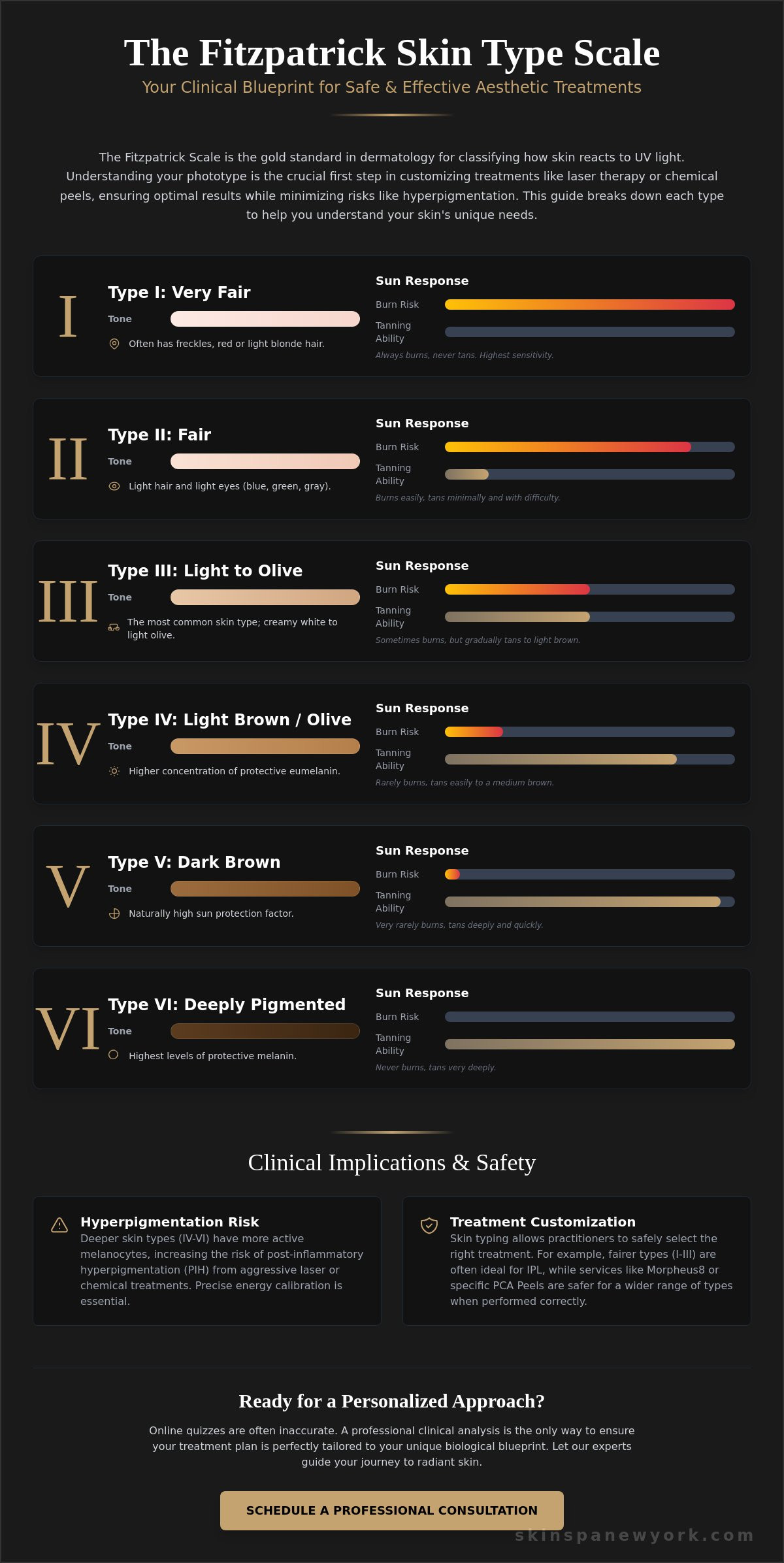
Understanding where you fall on the scale is an exercise in both observation and history. While your reflection provides a starting point, your skin's historical reaction to the sun reveals the true biological story. The scale categorizes skin into six distinct phototypes, ranging from the most delicate to the most resilient. This categorization isn't about aesthetics; it's about safety. Identifying your fitzpatrick skin type dictates the energy thresholds our clinicians use during your customized facial or laser session.
- Type I: Very fair skin, often accompanied by red hair and freckles. This type has a high sensitivity to the sun, always burns, and possesses zero tanning ability.
- Type II: Fair skin, usually with light eyes. It burns easily and tans with significant effort.
- Type III: Creamy white to light olive skin. This type may burn initially but gradually develops a light tan over time.
- Type IV: Light brown or olive skin tones. It rarely burns and tans easily to a medium brown.
- Type V: Dark brown skin. This type very rarely burns and tans deeply and quickly.
- Type VI: Deeply pigmented dark brown to black skin. It never burns and tans very deeply.
Visual and Reactive Characteristics of Types I-III
Lighter phototypes are often characterized by blue, green, or grey eyes and hair ranging from platinum blonde to auburn. Because these individuals possess lower levels of protective melanin, they face a heightened risk of DNA damage and premature aging. Identifying Your Fitzpatrick Skin Type is particularly vital for this group when considering light-based therapies. For example, Type I and II guests are often ideal candidates for Lumecca IPL to address sunspots. However, their delicate nature means they must be hyper-vigilant with sun protection to prevent the rapid return of solar damage.
Visual and Reactive Characteristics of Types IV-VI
Darker skin tones offer a unique resilience. The abundance of melanin provides a baseline of natural protection, yet it introduces its own set of clinical considerations. The primary concern for these groups is Post-Inflammatory Hyperpigmentation (PIH). When the skin is stressed by incorrect laser settings, it can overreact by producing dark, stubborn patches. This is why your fitzpatrick skin type dictates the use of specific technologies. We often utilize Laser Genesis or Morpheus8 for these types. These devices deliver energy in a way that respects the skin's integrity, providing tightening and renewal without the thermal risks associated with older, less sophisticated lasers.
Clinical Implications: Why Skin Typing Dictates Treatment Safety
In the specialized world of medical aesthetics, the Fitzpatrick skin type classification scale serves as the ultimate safety manual. It dictates the specific wavelength and intensity of every laser pulse delivered to your skin. When clinicians ignore these biological markers, the results can be devastating. Incorrect settings for higher phototypes often lead to thermal injury, painful blistering, or long-term pigment changes that are difficult to reverse. We prioritize your safety by using this data to select the most appropriate device for your profile. For instance, while a shorter wavelength might suit fair skin, an Nd:YAG laser is the gold standard for safely treating deeper tones. Understanding your unique profile is not just a preliminary step; it's a clinical necessity that defines the boundaries of your treatment.
Laser Hair Removal and the Melanin Challenge
Precision is paramount when a laser must distinguish between the pigment in a hair follicle and the surrounding skin. This challenge is why choosing the right technology for laser hair removal nyc is essential for avoiding complications. For guests with a higher fitzpatrick skin type, we adjust pulse durations and utilize advanced cooling technologies. These modifications protect the epidermis by allowing heat to dissipate from the skin surface while still effectively destroying the hair root. It's a delicate balance that requires both sophisticated machinery and expert oversight. By extending the time it takes for the laser to deliver energy, we ensure the follicle absorbs the heat without overwhelming the surrounding tissue.
Addressing the Myth: Is Laser Safe for Dark Skin?
Modern aesthetic technology makes laser treatments exceptionally safe for all Fitzpatrick types when performed by trained clinical experts. The industry has moved far beyond the limitations of early IPL technology, which often struggled to differentiate between dark hair and dark skin. Today, specialized lasers like the Nd:YAG are engineered specifically for deep skin tones, bypassing the surface melanin to target deeper structures safely. Beyond lasers, we also calibrate the depth and acidity of our Chemical Peels and PCA Peels to suit your phototype. Your skin's response to acidity is just as unique as its response to light. For guests with higher melanin levels, we often opt for gentler formulations that provide exfoliation without triggering a defensive pigment response. This measured approach prevents Post-Inflammatory Hyperpigmentation, a common concern for those with darker complexions. A professional consultation mitigates these risks, ensuring your journey toward renewal is both serene and successful.
Skincare and Sun Protection Strategies by Phototype
While every complexion requires a reliable shield against ultraviolet rays, the specific architecture of your defense depends entirely on your fitzpatrick skin type. A one-size-fits-all approach ignores the biological realities of how different skin tones process light. For those with Types I and II, the primary goal is preventing actinic damage and cellular mutation. For Types IV through VI, the focus shifts toward preventing melasma and stubborn pigment irregularities. Even if you rarely burn, your skin's defensive response to UV exposure can lead to long-term discoloration that obscures your natural radiance. Proper protection isn't just about avoiding a burn; it's about maintaining the clinical integrity of your skin.
Sunscreen Selection: Physical vs. Chemical Blockers
Choosing the right formulation is as critical as the application itself. Physical blockers containing zinc oxide or titanium dioxide are the gold standard for sensitive, low-melanin skin. These minerals sit on the surface, reflecting rays away like a mirror. For individuals with darker phototypes, we often recommend tinted sunscreens. These sophisticated formulas utilize iron oxides to blend seamlessly with your tone, effectively eliminating the unflattering white cast often associated with traditional mineral blocks. Regardless of your profile, reapplication is non-negotiable. If you have fair skin that begins to redden after ten minutes of exposure, your window of protection is significantly shorter than someone with a more resilient baseline. Consistent coverage ensures that your results from services like Lumecca IPL remain crisp and clear.
Maintenance and Rejuvenation for Your Type
Beyond protection, your daily regimen should support your skin’s unique vulnerabilities. Guests with fair skin benefit immensely from high-potency antioxidants like Vitamin C and E, which neutralize the oxidative stress that leads to premature lines. Conversely, managing hyperpigmentation in darker skin tones requires medical-grade ingredients that regulate melanin production without causing irritation. Post-treatment care is where this customization becomes most apparent. After a session of Microneedling or a Chemical Peel, we often integrate melanin-inhibiting serums into the recovery phase for higher phototypes. This ensures that the healing process results in a smooth, even glow rather than reactive darkening. Maintaining a healthy skin barrier is a universal necessity that we address through our range of customized facials. By tailoring every product to your biological blueprint, we ensure your skin remains resilient and refined. If you're ready to elevate your daily defense with professional guidance, explore our MedSpa treatments to find a regimen designed specifically for your needs.
Professional Skin Typing at Skin Spa New York
At Skin Spa New York, we believe that true beauty transformation begins with a deep, clinical understanding of your biological profile. Every advanced service we offer starts with a comprehensive analysis to determine your fitzpatrick skin type. This isn't a mere formality. It's a critical safety measure that allows our experts in NYC, Boston, and Miami to deliver results without compromise. Whether you're visiting us for Laser Genesis or a Signature Facial, our approach is entirely customized to your skin's unique needs and reactive patterns. We operate as a premier sanctuary where clinical authority meets high-end hospitality, ensuring that your journey toward renewal is as safe as it is luxurious.
The Consultation Process: Beyond the Chart
Our clinicians use your fitzpatrick skin type as a roadmap for your entire aesthetic journey. The consultation process goes far beyond a simple visual check. We evaluate your skin's history, your genetic heritage, and how you've responded to previous aesthetic interventions. This holistic view ensures that we don't just treat the surface, but respect the underlying health of your tissue. For certain light-based or high-energy procedures, we often perform test patches. This cautious, professional step allows us to observe your skin's immediate reaction before proceeding with a full treatment. By integrating your specific phototype into a long-term anti-aging strategy, we help you achieve a complexion that remains vibrant and resilient through the years. We don't just solve immediate concerns; we build a permanent blueprint for your skin's health.
Tailored Technology for Every Tone
We've curated a suite of technologies that allow us to serve a diverse range of skin profiles with expert precision. For instance, Morpheus8 body provides advanced subdermal contouring that is safe for various skin types thanks to its adjustable needle depth and radiofrequency energy. This technology bypasses the surface pigment, making it an excellent choice for skin tightening across the scale without the risk of surface damage. In contrast, we optimize Lumecca IPL specifically for our guests with lighter skin tones who seek significant redness reduction and sun damage repair. Our presence in major metropolitan hubs like NYC, Boston, and Miami allows us to refine our techniques across a vast spectrum of skin tones. This diversity has made us experts in precision, ensuring that every session is calibrated to the exact settings required for your unique profile. Customization is our hallmark, and your safety is our absolute priority.
Elevate Your Skin Health with Clinical Precision
Your complexion is a complex biological asset that deserves a customized approach. By identifying your specific fitzpatrick skin type, you transition from guesswork to a scientifically backed safety blueprint. This classification dictates everything from the specific wavelength of your laser sessions to the acidity of your chemical peels. This level of detail isn't just about achieving a temporary glow; it's about protecting your skin's long-term integrity while pursuing transformative results.
At Skin Spa New York, our expert clinicians in NYC, Boston, and Miami utilize advanced laser technology designed to perform safely on all skin tones. We implement personalized clinical safety protocols to ensure every guest receives the highest standard of care within a refined, welcoming environment. You don't have to navigate the complexities of advanced aesthetics alone. We're here to provide the expertise and technology required for your unique profile.
Book Your Professional Skin Consultation at Skin Spa New York today. Let us help you unlock the most radiant version of your skin with the confidence that only clinical expertise can provide. Your journey toward a more resilient and refined complexion begins with a plan designed just for you.
Frequently Asked Questions
Can my Fitzpatrick skin type change over time?
Your genetic phototype remains constant throughout your life because it's based on your biological baseline and your skin's innate reaction to UV light. While you might develop a tan or experience sun damage, your underlying classification doesn't shift. It's a permanent measure of your skin's protective melanin and its specific response to energy and light.
Is laser hair removal safe for Fitzpatrick Type VI?
Yes, Laser Hair Removal is exceptionally safe for Type VI when performed with specialized long-pulse Nd:YAG technology. This specific wavelength bypasses the surface melanin to target the hair follicle directly. It prevents thermal injury to the skin, making it a reliable and effective option for deeply pigmented complexions without the risk of burns.
What is the best sunscreen for Fitzpatrick Type I?
Individuals with Type I skin should prioritize high-SPF physical blockers containing zinc oxide or titanium dioxide. These minerals provide a broad-spectrum shield that reflects UV rays without irritating delicate, reactive skin. Because Type I burns almost instantly, a water-resistant formula with at least SPF 50 is essential for maintaining clinical skin health.
How do I know if I have Fitzpatrick Type III or IV?
The primary distinction lies in how your skin reacts to the first sun exposure of the season. Type III skin often burns initially before developing a gradual, light tan. In contrast, Type IV skin rarely burns and tans deeply almost immediately. Observing your natural baseline and tanning speed helps our clinicians accurately determine your specific fitzpatrick skin type.
Why does my Fitzpatrick type matter for a chemical peel?
Your phototype determines the risk of Post-Inflammatory Hyperpigmentation following an acid application. Higher phototypes require gentler, self-neutralizing PCA Peels or specific acid concentrations to avoid triggering a defensive pigment response. We calibrate the depth of every Chemical Peel to ensure safe exfoliation that respects your skin's natural tone and integrity.
Can I have a Morpheus8 treatment if I am a Fitzpatrick Type V?
Yes, Morpheus8 is an excellent choice for Type V skin because it utilizes insulated microneedles to deliver radiofrequency energy. This sophisticated design protects the epidermis from heat, focusing the renewal process in the deeper dermal layers. It allows for effective skin tightening and resurfacing while significantly minimizing the risk of surface discoloration or pigment changes.
Does the Fitzpatrick scale account for skin sensitivity?
While the scale primarily measures UV response and melanin, it often correlates with overall sensitivity. Lower phototypes like Type I and II frequently experience higher reactivity to environmental stressors and active ingredients. However, a professional clinical analysis is required to distinguish between your biological fitzpatrick skin type and acquired sensitivity or conditions like rosacea.
How does ethnicity influence my Fitzpatrick skin type?
Ethnicity provides a genetic foundation for your phototype, but it doesn't always strictly dictate it. Individuals of the same ethnic background can possess different Fitzpatrick classifications based on their specific ancestral mix and melanin activity. We evaluate your skin's individual behavior and history rather than making assumptions based solely on heritage or ethnic background.