

What if massage could offer a little more ease without being expected to resolve anxiety on its own? If worry often comes with tight shoulders, a restless body, or difficulty unwinding, it’s understandable to wonder whether the benefits of regular massage for anxiety might last beyond the calm of a single session.
Research suggests massage may support relaxation and ease anxiety symptoms for some people, but the evidence doesn’t establish it as a cure or a replacement for mental health care. Results can vary, and relief during or after a session doesn’t necessarily mean lasting change.
This article explores how massage may help the body settle, what studies can and can’t tell us about repeated sessions, and how to consider massage as part of broader anxiety care. At Skin Spa New York, Swedish massage is a personalized wellness experience, guided by each patient’s needs and preferences. With a clear view of both the potential benefits and the limits, you can decide whether it may be a thoughtful addition to your care.
Key Takeaways
- The benefits of regular massage for anxiety may include support for relaxation, but individual experiences can differ.
- Massage may ease physical tension and help some people feel more at ease; it isn’t a guaranteed anxiety treatment.
- Research findings depend on who was studied and how outcomes were measured, so they don’t establish that massage replaces mental health care.
- Rather than assuming a set schedule, notice your comfort, pressure preferences, and how you feel before and after a session.
- Skin Spa’s Swedish Massage offers a personalized wellness experience, with guidance about techniques suited to each patient’s service.
What Regular Massage May Offer When Anxiety Keeps the Body on Alert
Anxiety can feel like more than persistent worry. For some people, it also shows up as tight shoulders, a clenched jaw, restlessness, or a body that stays tense even when the day is over. These experiences can make it harder to unwind, but they don’t, on their own, confirm an anxiety disorder.
Everyday stress is a response to pressure; a clinical diagnosis involves assessment by a qualified mental health professional. If anxious feelings are affecting daily life, professional guidance can help clarify what’s going on and what care may be appropriate.
How anxiety can feel in the body
Physical tension and mental distress can reinforce each other: feeling keyed up may make it harder to release tight muscles, while ongoing discomfort can make rest feel less accessible. A calm massage may give some people a chance to pause and experience physical ease. The response is personal, however, and relaxation during a session doesn’t establish that massage treats an anxiety condition.
An overview of medical massage cites a systematic review reporting that massage therapy reduced anxiety, with effects described as similar to psychotherapy. Such a comparison doesn’t mean massage is interchangeable with psychotherapy or a substitute for individualized mental health care. The evidence and its limits deserve closer attention, which we’ll explore later in this article.
What “regular massage” means in this article
Here, “regular” means returning to massage as a wellness practice, rather than following a prescribed anxiety-treatment schedule. There isn’t a universal frequency or number of sessions that guarantees a particular result. The potential benefits of regular massage for anxiety are best understood as possible support for relaxation, not a promised outcome.
Your comfort and preferences matter. Consider whether massage feels welcoming, what level of pressure feels comfortable, and how you feel before and afterward. These reflections can help you decide whether to continue, pause, or adjust the experience. Skin Spa’s Swedish Massage is offered as a wellness service with personalized guidance about techniques suited to each patient.
Massage can be one part of broader self-care, alongside support from a mental health professional when needed. It shouldn’t replace therapy, medication, or other care recommended for you. If anxiety is persistent or interfering with everyday activities, speaking with a qualified professional can help you identify appropriate next steps.
How Massage May Support Relaxation: Touch, Muscle Tension, and Stress Responses
A quiet setting, comfortable positioning, and touch that feels appropriate to you can make it easier to pause and settle into the moment. For some patients, Swedish massage also offers an opportunity to notice areas of tightness and allow them to soften. That experience may feel restorative, but it isn’t the same as treating the thoughts, patterns, or symptoms associated with an anxiety disorder.
The connection between muscle tension and feeling on edge
Physical tightness and subjective stress can overlap, though neither has a single cause. A tense neck after a demanding day, for example, may add to a sense of discomfort, while worry can make it harder to feel at ease in the body. Gentle massage may help some patients notice where they’re holding tension and experience temporary physical relief. Relaxed muscles alone, however, don’t resolve anxious thoughts or establish lasting change.
What the relaxation response can, and cannot, tell us
The “relaxation response” is a simple way to describe a shift toward feeling calmer and less on alert. It can help explain why a soothing experience may feel beneficial, but it shouldn’t be treated as proof that massage has changed a person’s long-term anxiety. Claims about cortisol or other stress-related biology require careful interpretation, too; a change in a biological measure wouldn’t, by itself, show that anxiety symptoms have improved in daily life.
The National Center for Complementary and Integrative Health offers a useful overview of what the science says about complementary approaches for anxiety, including massage. Some studies suggest potential benefit, but the evidence isn’t conclusive. This distinction matters: feeling calmer during or after a massage is a meaningful personal experience, yet it doesn’t establish a durable clinical outcome.
Massage may support relaxation through a calming experience and temporary easing of muscle tension, but these plausible pathways don’t prove lasting improvement in anxiety. The potential benefits of regular massage for anxiety are therefore best considered alongside what research has measured, how long any effects lasted, and whether findings apply to an individual patient.
If you’re curious about massage as a wellness practice, comfort and communication can shape the experience. At Skin Spa, personalized guidance helps each patient understand the techniques suited to the service. Explore the Swedish Massage wellness experience as one possible way to make space for relaxation, not as a replacement for mental health care.
Does Regular Massage Reduce Anxiety? What the Research Supports, and What It Does Not
Research offers reasons to study massage as supportive care, but the findings don’t justify promising that regular sessions will reduce anxiety for every patient. A calming experience is not proof of lasting symptom change, and one clinical trial cannot establish a universal treatment schedule or replace established mental health care.
What the generalized anxiety disorder trial actually tested
A reported randomized trial studied people with generalized anxiety disorder (GAD). Participants received Swedish massage twice a week for six weeks or light-touch sessions, and the massage group had greater reductions in anxiety scores. This is a relevant finding for that study group, not proof that the same result applies to everyone who feels anxious.
The summary available for this trial doesn’t provide its sample size, the specific anxiety measure, or follow-up results. Those details matter: without them, readers can’t judge the size or durability of the difference or how broadly it applies. The study also doesn’t establish that its schedule is necessary or best for other patients.
Temporary calm versus ongoing anxiety care
Feeling calmer after massage may be worthwhile, but that immediate response doesn’t show whether symptoms remain reduced over time or daily functioning improves. The American Massage Therapy Association discusses a growing body of research on massage and mental health; interest in a potential benefit should still be weighed against what individual studies actually measured and their limitations.
Massage may be supportive, but current evidence doesn’t establish it as a stand-alone treatment for anxiety. If anxiety is persistent or disrupting everyday life, discuss it with a qualified health professional. Massage can be considered alongside appropriate care, not instead of prescribed treatment. Don’t stop or change treatment based on a relaxing session or a study finding; discuss care decisions with the professional who supports you.
| What the evidence suggests | What remains unanswered |
|---|---|
| A trial in people with GAD reported lower anxiety scores after Swedish massage compared with light touch. | Whether the result lasts, applies to people beyond the study group, or depends on a particular schedule. |
| Massage may offer some patients a supportive relaxation experience. | Whether feeling calmer after a session leads to sustained clinical improvement or can replace mental health care. |
How to Explore Massage for Anxiety Without Assuming One Schedule Fits All
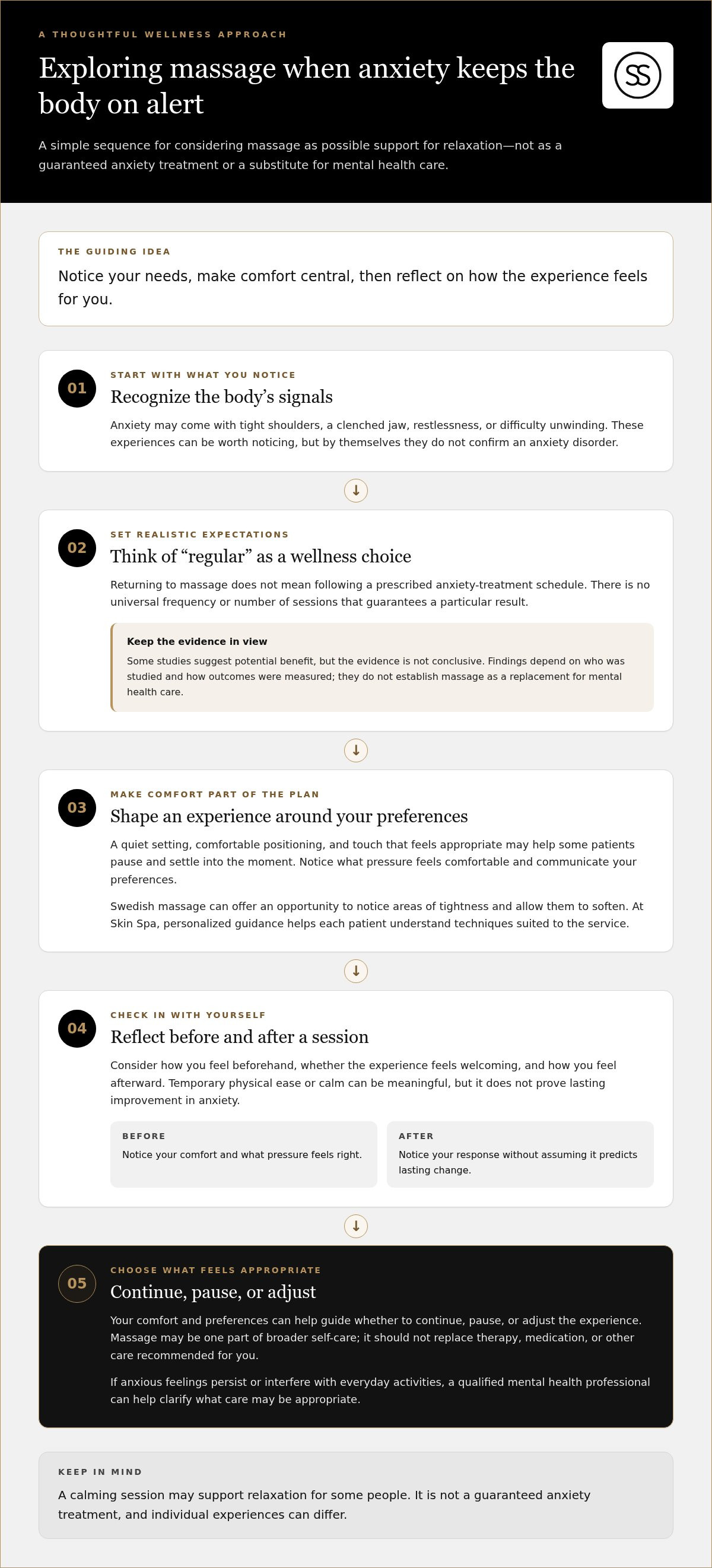
If you’re considering massage as part of your wellness routine, focus on whether the experience feels supportive rather than aiming for a specific number of sessions. There’s no universal schedule that guarantees anxiety relief. Your comfort, preferences, and broader care needs are more useful guides than a fixed timetable.
A simple way to assess whether massage feels supportive
Before and after a session, take a moment to notice your tension, mood, and sense of comfort. You might note whether your shoulders feel less tight, whether you feel more settled, or whether there’s no clear change. These observations can help you reflect, but they aren’t a diagnosis or proof of treatment effectiveness.
During the experience, share your pressure preferences and any comfort needs. You can ask for an adjustment or pause if something doesn’t feel right. Feeling neutral or uncomfortable is valid; it doesn’t mean you’ve failed to relax or need to keep trying.
- Before: Notice how tense or settled you feel.
- During: Communicate what feels comfortable and speak up if you want a change.
- After: Reflect on whether your comfort or mood feels different, without expecting a particular result.
Massage is only one possible wellness practice. Gentle movement, breathing exercises, mindfulness, and supportive relationships may also help you make space for calm. You can explore these approaches at your own pace while keeping any professional care plan in view. For a closer look at the experience, read about Swedish massage in NYC.
When massage is not enough on its own
If anxiety persists or disrupts daily life, consider discussing it with a qualified mental health professional. Massage may complement care, but it shouldn’t displace treatment already recommended for you. Keep following your care plan and speak with the professional supporting you before making changes.
The potential benefits of regular massage for anxiety are personal, so a thoughtful approach leaves room for different responses. If you’d like to explore massage as a wellness experience, learn about Swedish Massage at Skin Spa and the personalized guidance available to each patient.
Swedish Massage at Skin Spa: A Personalized Wellness Experience
Skin Spa offers Swedish Massage as a wellness service that may support relaxation. It isn’t presented as an anxiety treatment, and no particular outcome can be promised. If you’re exploring massage as one part of your well-being routine, the experience should reflect what feels comfortable and restorative for you.
What a patient-centered massage experience should prioritize
Clear communication helps shape a thoughtful experience. A patient should be able to discuss pressure preferences, comfort needs, and personal relaxation goals, then receive clear guidance about techniques suited to the service. Skin Spa’s patient-right-to-know policy reflects this emphasis on personalized service guidance, so patients can better understand the approach and make informed choices about their experience.
Preferences can differ, and they may change over time. You might want a gentler touch, or simply value knowing what to expect. Sharing those preferences can help guide the conversation; it doesn’t require you to arrive with a particular goal or to feel relaxed in a certain way.
Making massage one part of a broader well-being plan
The benefits of regular massage for anxiety aren’t guaranteed, and Swedish Massage at Skin Spa is a wellness offering rather than care for an anxiety disorder. Massage may sit alongside supportive routines such as gentle movement or breathing practices, and alongside professional mental health care when that’s part of your needs. It shouldn’t replace an existing care plan or prompt you to change treatment without speaking with the professional supporting you.
A patient-centered approach leaves room for your own response. You can reflect on whether the experience feels comfortable and suits your relaxation goals, without expecting it to resolve persistent anxiety. If anxiety continues to affect daily life, a qualified mental health professional can help you consider appropriate care.
If you’d like to learn more, explore Swedish Massage and wellness services at Skin Spa. Take the next step at a pace that feels comfortable, with personalized guidance focused on your preferences.
Choose a Thoughtful Next Step for Your Well-Being
The benefits of regular massage for anxiety may include moments of relaxation and ease, but research doesn’t establish massage as a stand-alone anxiety treatment or guarantee lasting relief. Responses differ, so consider your comfort and personal experience rather than assuming a particular schedule will work for you.
Skin Spa offers Swedish Massage as a wellness service. Its patient-right-to-know policy emphasizes personalized guidance about techniques suited to each patient’s service. Massage may be one supportive part of a broader well-being plan, while persistent or disruptive anxiety deserves attention from a qualified mental health professional. Keep any existing care plan in place unless the professional supporting you recommends a change.
If massage feels like a comfortable next step, explore Skin Spa’s wellness services at your own pace. Your well-being is personal, and an informed choice is a meaningful place to begin.
Frequently Asked Questions
Can regular massage help with anxiety?
Regular massage may help some people feel calmer or less physically tense, but it isn’t a proven cure for anxiety. The benefits of regular massage for anxiety can vary, and research doesn’t establish a universal schedule or lasting effect for everyone. Consider massage complementary wellness support, not a replacement for mental health care. Skin Spa New York offers Swedish Massage as a wellness service for patients in New York, Boston, and Miami.
How often should you get a massage for anxiety?
There’s no established massage schedule for anxiety that suits everyone or guarantees a result. Frequency can depend on your comfort, preferences, budget, and overall care needs. If you try massage, notice how you feel before and after sessions and decide whether the experience feels supportive. If anxiety is persistent or affecting daily life, discuss care options with a qualified mental health professional rather than relying on massage alone.
What type of massage is best for anxiety?
No massage type has been established as the best choice for anxiety. Some people may prefer the gentle, flowing techniques commonly associated with Swedish massage, while others may find massage uncomfortable or prefer another relaxation practice. Your comfort matters more than choosing a technique based on a promise of anxiety relief. At Skin Spa New York, Swedish Massage is offered as a wellness service, not a treatment for an anxiety disorder.
Can massage help with anxiety disorders?
Massage may offer relaxation support for some people with anxiety disorders, but research doesn’t establish it as a stand-alone treatment. A study of people with generalized anxiety disorder reported lower anxiety scores after Swedish massage than after light-touch sessions, but one study can’t predict an individual’s response or prove lasting benefit. If you have an anxiety disorder, discuss complementary practices with your qualified health professional and keep your care plan in place.
How long do the calming effects of a massage last?
The duration of any calming effect varies, and there isn’t a reliable timeframe that applies to everyone. Feeling more settled immediately after a massage doesn’t show whether anxiety symptoms will remain lower later. You can reflect on your mood and physical comfort after a session, but treat those observations as personal notes, not a diagnosis or proof of long-term improvement. Seek professional guidance if anxiety continues to interfere with everyday life.
Is massage a replacement for therapy or anxiety medication?
No. Massage shouldn’t replace therapy, prescribed medication, or other care recommended for anxiety. It may be considered as complementary wellness support if it feels comfortable and fits your care plan. Don’t stop or change prescribed treatment based on how you feel after a massage. If you’re considering changes or adding a complementary approach, discuss them with the qualified professional involved in your care.
What should I expect from a Swedish massage for relaxation?
A Swedish massage is generally associated with flowing massage techniques and may help some people feel more relaxed, though each person’s experience differs. You can share your pressure preferences and comfort needs so the service approach can be discussed with you. Skin Spa New York offers Swedish Massage as a wellness service for patients in New York, Boston, and Miami. It isn’t an anxiety treatment, and a particular result can’t be guaranteed.
