

What if the uneven texture you have spent years concealing with heavy foundations could be refined not by covering it up, but by strategically revealing the skin that lies beneath? Choosing a professional chemical peel for acne scars is often the turning point for those struggling with persistent dark spots and lingering indentations that resist even the most potent over the counter serums. It’s frustrating to feel that your skin’s history is written in shadows that makeup cannot hide, especially when you are seeking a level of clarity that feels both modern and effortless. You deserve a solution that moves beyond guesswork and delivers the polished results of clinical expertise.
In this professional guide, you will discover how to navigate the complexities of clinical exfoliation, from the deep remodeling of a TCA treatment to the brightening precision of a PCA Peel. We will demystify the science behind Salicylic and Glycolic acids so you can establish a treatment plan tailored to your specific skin profile. By understanding how these medical grade formulations interact with your unique histology, you can move past the confusion and toward a future of visible renewal and lasting confidence.
Key Takeaways
- Understand how clinical exfoliation triggers a repair cycle that replaces damaged scar tissue with fresh, organized collagen.
- Learn to match your specific scar profile, whether it's pigmentation or texture, to the most effective chemical peel for acne scars.
- Explore the precision of PCA Peels and customized facials designed to refine your complexion with minimal disruption to your lifestyle.
- Discover the essential pre-treatment protocols that ensure your skin is conditioned for optimal safety and deep, transformative results.
- Master the post-care rituals required to protect your new skin and maintain the long term clarity of your professional treatment.
The Science of Chemical Peels for Acne Scars
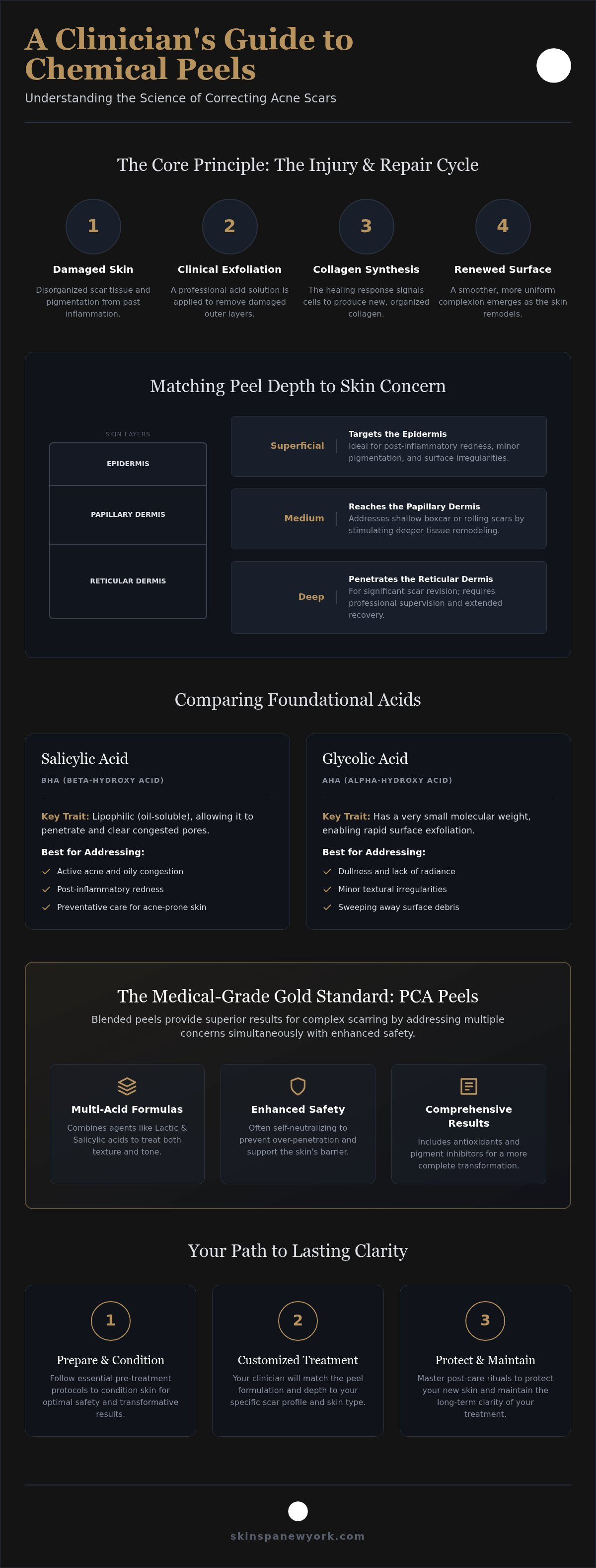
At its core, a chemical peel is a form of controlled clinical exfoliation that uses specific acid solutions to remove damaged outer layers of skin. This process accelerates cellular turnover, allowing a fresher, more uniform complexion to emerge. Understanding The Science of Chemical Peels is essential because effective scar revision relies on a precise "injury and repair" cycle. By applying professional grade acids, we initiate a healing response that replaces disorganized, scarred tissue with a smoother surface. While over the counter products might offer light brightening, a professional chemical peel for acne scars is required to alter the skin’s architecture, reaching the depths where scar tissue actually resides.
Professional treatments are categorized by their depth of penetration to ensure safety and efficacy:
- Superficial peels: These target the epidermis and are ideal for resolving post-inflammatory redness and minor surface irregularities.
- Medium peels: These reach the papillary dermis to address shallow boxcar or rolling scars by stimulating deeper tissue.
- Deep peels: These penetrate the reticular dermis for significant remodeling, though they require more extensive recovery and professional supervision.
Molecular Weight and Depth of Penetration
The efficacy of a treatment often depends on the molecular size of the acid used. Glycolic acid, for example, has a very small molecular weight, allowing it to penetrate quickly and deeply into the pores. In contrast, Lactic acid has a larger molecule, making it a gentler choice for surface hydration and pigment correction. For textural scars, we often prioritize acids that can travel deeper into the dermis. Clinical grade peels also utilize a lower pH than home kits; this acidity is what "unlocks" the proteins in the skin to allow for true structural change.
The Role of Collagen Synthesis in Scar Revision
True transformation happens when acids like Trichloroacetic Acid (TCA) signal fibroblasts, the cells responsible for structural integrity, to produce new collagen and elastin. This is not an instant fix. The remodeling process typically begins shortly after the peel but continues for several weeks as new protein fibers organize themselves into a smoother lattice. We often recommend a series of treatments rather than a single, aggressive session. This incremental approach allows us to build skin density and improve the chemical peel for acne scars outcome without the prolonged downtime or risks associated with deep, invasive procedures.
Comparing Peel Types: Salicylic, Glycolic, and PCA Peels
Selecting the right acid requires a nuanced understanding of your skin's current state. Salicylic acid is a lipophilic BHA, meaning it penetrates oil to clear active congestion while calming the post-inflammatory redness that often lingers after a breakout. It's an excellent preventative tool for those still prone to acne. Glycolic acid, with its diminutive molecular size, excels at sweeping away surface debris to improve overall radiance and minor textural irregularities. Modern clinical formulas have shifted away from the aggressive, sheet-like peeling of the past. Instead, you might experience a sophisticated "flaking" that reveals fresh skin without significant social downtime. This transition makes a professional chemical peel for acne scars far more accessible for those with busy urban lifestyles.
PCA Peels: The Medical-Grade Gold Standard
Blended peels often provide superior results for complex scarring because they address multiple concerns simultaneously. PCA Peels represent a refined, multi-acid approach that combines exfoliating agents with skin-strengthening ingredients like lactic acid, salicylic acid, and resorcinol. These formulas are often self-neutralizing, which enhances safety by preventing the acid from over-penetrating. This controlled delivery ensures that the treatment remains focused on scar revision while supporting the skin's natural barrier. By treating the scar and the surrounding tissue with a cocktail of antioxidants and pigment inhibitors, these peels offer a more comprehensive transformation than a single-acid solution. This makes them a premier choice for a chemical peel for acne scars when addressing both texture and tone. If you're looking for a customized approach, exploring the PCA Peel collection can provide the targeted results your skin requires.
TCA and Medium-Depth Solutions
When surface-level AHAs aren't enough to reach deeper indentations, we often graduate to Trichloroacetic Acid (TCA). This medium-depth solution is particularly effective for ice pick and boxcar scars that require more intensive dermal stimulation. TCA works by coagulating skin proteins, causing the damaged top layers to eventually slough off. Because of this deeper action, the recovery is more pronounced than with superficial acids. Understanding what to expect after a chemical peel of this depth is vital for a successful outcome. You'll likely see a "frosting" effect during the session, followed by a few days of darkening and eventual peeling as the damaged tissue makes way for new, organized collagen. It's a process that requires patience but yields significant structural improvement.
Matching Your Peel to Your Scar Type: PIH vs. Textural Scars
Not all scars are created equal. Some appear as flat, dark spots that linger for months, while others manifest as visible indentations in the skin's surface. Choosing the wrong chemical peel for acne scars is a common mistake that often leads to underwhelming results or unnecessary irritation. To achieve a truly refined complexion, we must first categorize your scarring into two primary types: pigment based and texture based. Each requires a distinct molecular approach to ensure the treatment reaches the specific depth of the damage.
Solutions for Post-Inflammatory Hyperpigmentation
Post-Inflammatory Hyperpigmentation (PIH) is characterized by stubborn red or brown spots that remain long after a blemish has healed. Because these aren't true structural scars, they respond beautifully to pigment inhibiting agents like Lactic and Kojic acids. These ingredients work to brighten the complexion while gently lifting existing discoloration. Regular professional peels also serve a dual purpose; they keep pores clear to prevent the active breakouts that lead to new marks in the first place. For those seeking an even more comprehensive glow, we often suggest incorporating Oxygeneo facials to enhance skin oxygenation and maximize the absorption of brightening serums.
Strategies for Pitted and Textural Scars
Atrophic scars, such as ice pick, boxcar, or rolling scars, require a more intensive approach because the damage resides deeper in the dermal layers. Surface brightening won't level these indentations. Instead, we utilize higher strength Glycolic or TCA blends to trigger significant tissue remodeling. The chemical peel procedure for texture often involves layering acids to reach the necessary depth for surface leveling. In specialized cases, we may use the "cross" technique, where a high concentration of acid is applied precisely to the floor of individual pitted scars to stimulate localized collagen growth.
Your skin tone, measured on the Fitzpatrick scale, is a critical factor in this selection process. Darker skin profiles require a more conservative and expert approach to avoid rebound hyperpigmentation, where the skin overproduces pigment in response to the peel's intensity. This is why a professional assessment at our NYC or Miami clinics is non negotiable. We ensure the depth of the chemical peel for acne scars is perfectly calibrated to your unique histology, providing a safe path to smoother skin without compromising your natural tone. Many textural concerns benefit from a multi-modality approach, combining peels with other clinical treatments to achieve a truly polished finish.
Standout Treatments: A Curated Guide to the Skin Spa Collection
Achieving a flawless finish requires more than a standard treatment; it demands a curated selection of medical-grade solutions. At Skin Spa, we specialize in the PCA Peel collection, a lineup recognized for its ability to provide targeted scar revision with remarkable precision. These formulas allow our experts to address the specific depth of your scarring while maintaining the skin's overall health. For those beginning their journey, the Signature Facial serves as an essential gateway. It provides a customized baseline of care that prepares the tissue for more intensive remodeling. Our Customized Facial goes a step further, allowing our clinicians to blend clinical exfoliation with deep hydration, ensuring your chemical peel for acne scars delivers maximum results without compromising comfort. The most significant transformations often come from MedSpa treatment bundles that address skin health from multiple angles. By combining various modalities, we can target both surface irregularities and deep structural damage simultaneously.
Synergistic Treatments: Peels and Microneedling
Professional clinicians often rely on a strategic pairing of services to achieve optimal leveling. Alternating a chemical peel for acne scars with sessions of Microneedling is a highly effective secret for complex tissue remodeling. Peels excel at refining the skin's surface and clearing congestion, which preps the area for deeper energy treatments like Morpheus8. This combination creates a six-month roadmap where each session builds upon the last, stimulating collagen at various depths to fill indentations and smooth the overall texture.
The Skin Spa Experience in NYC, Boston, and Miami
Stepping into our urban sanctuaries in NYC, Boston, or Miami feels like entering a reliable retreat from the city's pace. Your clinical consultation is the first step, where we analyze your skin's histology to ensure a perfect treatment match. We prioritize a hospitality-focused approach, ensuring you feel like a valued guest throughout your high-end aesthetic journey. You can explore the full range of options within the Skin Spa Services Collection to find the ideal starting point for your transformation.
Explore our MedSpa treatment options to discover how a curated plan can restore your skin's natural clarity.
Preparing for Your Transformation: The Path to Professional Results
The journey toward a smoother complexion reaches its peak during your appointment, but the foundation for success is laid weeks in advance. A professional chemical peel for acne scars requires a skin barrier that's both resilient and hydrated to ensure even acid penetration and predictable healing. We view the two week pre-conditioning phase as a vital partnership between our clinicians and our guests. Skipping this preparation can lead to uneven results or heightened sensitivity, whereas a well-prepared canvas allows the acids to work with surgical precision. By stabilizing your melanocytes and strengthening the lipid barrier, you ensure that the "injury and repair" cycle we discussed earlier remains focused on renewal rather than irritation.
The Pre-Peel Checklist
In the days leading up to your session, your primary goal is to minimize skin stress. You must discontinue the use of Retin-A, prescription retinoids, and all forms of chemical exfoliants at least 5 to 7 days prior to your treatment. This window allows your skin's natural moisture levels to stabilize. We also emphasize hydration as a prerequisite; skin that's dehydrated will absorb acid too quickly, which can lead to excessive downtime. When scheduling, consider your social calendar carefully. While modern formulas often lead to sophisticated flaking rather than aggressive peeling, you should still allow for a 3 to 5 day "downtime window" before major life events where you'd want to be at your most radiant.
Post-Treatment Sanctuary: Caring for Your New Skin
Once the peel is applied, your skin enters a vulnerable state of high-speed renewal. The most critical rule of the healing phase is simple: never pick, pull, or scrub at peeling skin. Forcing the exfoliation process can lead to the very scarring we're working to erase. Instead, rely on the soothing agents and medical-grade moisturizers recommended by your clinician to manage texture changes. Sun protection is the non-negotiable golden rule of post-care. Your new skin is highly susceptible to UV damage, and even brief exposure can trigger rebound hyperpigmentation. We recommend a physical SPF of 30 or higher, applied every two hours if you're near windows or outdoors.
To maintain the clarity achieved through your chemical peel for acne scars, your home care routine should transition into a maintenance phase once the initial healing is complete. This typically involves gentle, non-comedogenic hydration and, eventually, a return to targeted brightening serums. We usually schedule follow-up sessions every 4 to 6 weeks to build upon the cumulative benefits of each treatment. To ensure your skin remains in its best possible condition between visits, you can explore our professional maintenance and skin health collection to find products that support your specific scar revision goals.
Embrace a Future of Visible Renewal
Achieving a smoother, more uniform complexion isn't a matter of chance; it's the result of a precisely calibrated clinical strategy. Throughout this guide, we've explored how matching the right molecular weight to your specific scar morphology can fundamentally alter your skin's texture. Whether you're addressing the shadows of post-inflammatory hyperpigmentation or the deeper indentations of atrophic scars, a professional chemical peel for acne scars provides the structural remodeling that over the counter solutions simply cannot reach.
Since 2005, Skin Spa has functioned as a reliable sanctuary for advanced skin remodeling across NYC, Boston, and Miami. By combining the clinical results of expertly applied PCA Peels with a sophisticated medspa environment, we ensure your transformation is as comfortable as it is effective. You don't have to navigate your skin's history alone. Our knowledgeable clinicians are ready to function as your guide, helping you reveal the polished, radiant skin you deserve. Explore our curated collection of professional skin services and book your peel today.
Common Questions About Clinical Resurfacing
Can chemical peels remove deep acne scars completely?
Chemical peels improve the appearance of deep scars by stimulating collagen, but they rarely remove them completely in a single session. While superficial and medium depth peels refine the surface, deep indentations often require a combination of treatments like Microneedling or Morpheus8. At our NYC, Boston, and Miami clinics, we focus on significant textural improvement and skin leveling to make scars far less visible to the naked eye while maintaining the skin's overall health.
How many sessions of chemical peels are needed for acne scars?
Most guests require a series of three to six sessions to see the best results for their skin profile. Since the remodeling process is cumulative, each chemical peel for acne scars builds upon the last to gradually resurface the tissue. We typically space these treatments four to six weeks apart. This timeline allows your skin to fully recover and produce the new collagen necessary for a smoother, more refined complexion.
Which acid is best for dark spots left by acne?
Lactic and Glycolic acids are the premier choices for resolving the dark spots known as post-inflammatory hyperpigmentation. These alpha-hydroxy acids work by inhibiting pigment production and accelerating the shedding of discolored surface cells. Our PCA Peels often utilize these ingredients in sophisticated blends to brighten the skin without excessive irritation. This targeted approach ensures that stubborn red or brown marks fade efficiently, leaving behind a clear and luminous skin tone.
Is there significant downtime after a professional chemical peel?
Downtime varies based on the depth of the treatment, though modern clinical formulas prioritize sophisticated flaking over aggressive peeling. For superficial treatments, you might experience mild redness for a few hours. Medium-depth peels often result in three to five days of skin shedding. We recommend planning your session at our urban sanctuaries at least one week before major social events to ensure your skin has reached its most polished state.
Are chemical peels safe for darker skin tones with acne scars?
Chemical peels are safe and effective for darker skin tones when administered by clinical experts who understand the Fitzpatrick scale. We utilize specific acids, such as Salicylic or Lactic, which carry a lower risk of triggering rebound hyperpigmentation. Professional application is crucial here; we carefully calibrate the pH and contact time to ensure the treatment remains focused on scar revision while protecting your natural skin tone from inflammation.
What is the difference between an at-home peel and a medspa peel for scars?
The primary difference lies in the concentration of active ingredients and the acidity levels of the formula. At-home products are designed for surface brightening and have a higher pH to ensure safety for unsupervised use. While many options are gentle, specialized treatments like the Skin Culture Home Skin Peel provide a more intensive peeling experience for home use. In contrast, a medspa chemical peel for acne scars uses medical-grade acids with a lower pH to reach the dermal layers where scarring resides. This clinical depth is necessary to stimulate the collagen required for true textural change.
You can certainly combine these treatments to achieve comprehensive facial rejuvenation, though we typically recommend a strategic schedule. It is often best to wait at least two weeks after receiving Botox or fillers before undergoing a chemical peel. This ensures that the injectables have fully settled and the skin is not overly sensitive. During your consultation in NYC, Boston, or Miami, we can create a personalized roadmap that integrates these services seamlessly.
What should I avoid immediately after my chemical peel treatment?
You should avoid direct sun exposure, intense heat, and heavy exercise for at least 48 hours following your session. It is also vital to stop using Retin-A or other exfoliating acids until your skin has fully healed. Most importantly, don't pick or pull at any flaking skin. Forcing the exfoliation process can lead to irritation or new scarring, so it's best to let the tissue shed naturally while keeping it hydrated.
