

More pressure doesn’t mean you need a more demanding recovery routine. After a deep tissue massage, gentle, responsive aftercare is often the most sensible approach, and how your body feels can guide what comes next. If you’ve been searching for what to do after a swedish massage, it helps to know that aftercare can depend on the massage technique and your individual response.
Mild soreness, tiredness, or other temporary changes may occur after deeper work, but experiences vary. This guide explains simple ways to care for yourself, how to think about rest, movement, and hydration, and when discomfort may warrant advice from a licensed professional. It also helps distinguish general aftercare education from personalized guidance for your circumstances. Skin Spa New York offers Swedish massage; this information is educational and does not imply that the practice provides deep tissue massage.
Key Takeaways
- After a deep tissue massage, pause and check how your body feels before returning to a busy schedule.
- Learn why post-massage tenderness can vary with pressure, personal sensitivity, and individual circumstances.
- For guidance on what to do after a swedish massage, focus on comfort and follow advice suited to your specific session.
- Consider postponing strenuous exercise if you feel sore or depleted, rather than treating a fixed rule as right for everyone.
- Recognize when symptoms feel severe, unusual, worsening, or persistent, and when to seek professional advice.
What to Do Right After a Deep Tissue Massage
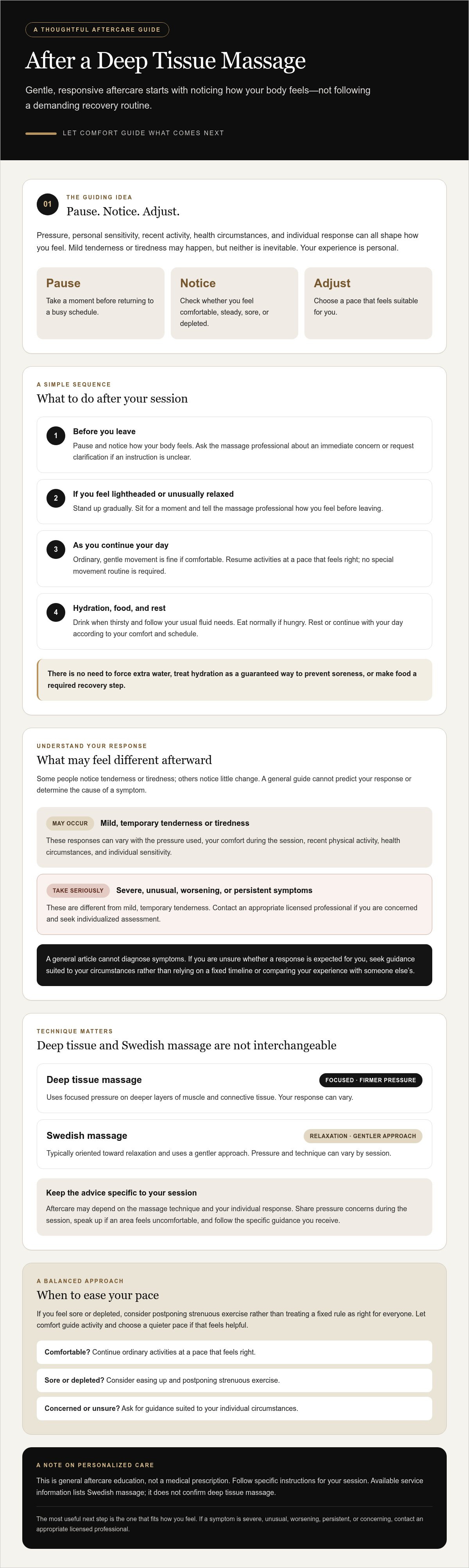
Keep the first steps simple. This is general aftercare education, not a medical prescription, and your response may differ from someone else’s. After a deep tissue massage:
- Pause briefly and notice how your body feels.
- Stand up gradually if you feel lightheaded or unusually relaxed.
- Choose gentle, ordinary movement only if it feels comfortable.
- Drink according to thirst and your usual needs.
- Ask the massage professional about any immediate concern before leaving.
Deep tissue massage uses focused pressure on deeper layers of muscle and connective tissue. For a neutral introduction to the technique, see Deep tissue massage. Since pressure and personal sensitivity can shape how you feel afterward, use your own comfort as a guide rather than expecting a particular response.
The first hour: pause, notice, and keep movement comfortable
Give yourself a moment before returning to a packed schedule. If you feel steady, you can resume ordinary activities at a comfortable pace; there’s no need to follow a special movement routine. If you’re lightheaded, unusually relaxed, or concerned about how you feel, sit for a moment and tell the massage professional before you leave. Specific instructions for your session should take priority over generic online suggestions.
Hydration, food, and rest after a massage
Drink when you’re thirsty and follow your usual fluid needs. There’s no need to force extra water or treat hydration as a guaranteed way to prevent soreness. If you’re hungry, eat normally; food isn’t a required recovery step. Rest is also a personal choice. You might prefer a quieter pace, or you may feel ready to continue with your day. Let your comfort and schedule guide you.
If you’re searching for what to do after a swedish massage, these practical basics may help you approach the hours afterward without turning them into a lengthy recovery ritual. Still, aftercare advice should match the massage you received and your individual circumstances. Skin Spa New York offers Swedish massage, while the available business information doesn’t confirm that it provides deep tissue massage. For any massage, follow the specific guidance given by your massage professional, and ask for clarification if an instruction doesn’t feel clear or suitable for you.
How Deep Tissue Massage Can Leave You Feeling, and What Is Typical
After a deep tissue massage, some people notice tenderness or feel tired; others feel little change. Mild tenderness can be a temporary response, but it isn’t inevitable, and a general article can’t predict how you’ll feel or determine the cause of a symptom. Healthline discusses possible physical and psychological benefits of deep tissue massage, along with potential side effects. Use that information as general context, not a personal assessment.
Why tenderness or fatigue may vary from person to person
The pressure used, your comfort during the session, recent physical activity, health circumstances, and individual sensitivity may all shape your experience. Share any concerns about pressure with the massage professional during the session, and let them know if an area feels uncomfortable. If you’re unsure whether a response is expected for you, seek individualized guidance rather than relying on a fixed timeline or comparing your experience with someone else’s.
Mild, temporary tenderness may be different from severe, unusual, worsening, or persistent symptoms, which call for individualized assessment. This distinction can help you stay calm without dismissing a concern. A general guide cannot identify what’s causing a symptom; contact an appropriate licensed professional if you’re concerned about how you feel.
Deep tissue and Swedish massage are not interchangeable terms
Deep tissue massage is generally associated with more focused, firmer pressure, while Swedish massage is typically oriented toward relaxation and uses a gentler approach. Pressure and technique can vary by session, so ask the massage professional what to expect and speak up about your comfort. Advice about what to do after a swedish massage may be relevant as general guidance, but it shouldn’t be assumed to apply in exactly the same way after a different massage technique.
Skin Spa New York lists Swedish massage among its services; available business information does not confirm that it offers deep tissue massage. If you’re considering a massage, clarify the technique and available personalized guidance with the provider before your session. Knowing what kind of massage you received gives you a clearer context for interpreting how you feel afterward, without turning a typical response into a diagnosis.
What to Avoid After a Deep Tissue Massage Without Overreacting
After a deep tissue massage, you don’t need to follow a strict list of prohibitions. Think in terms of comfort: if you feel sore or depleted, postpone strenuous exercise and choose a gentler pace. If you feel comfortable, ordinary activity may be fine. The aim is to notice your own response, not to follow a rigid rule that ignores how you feel.
Exercise, stretching, and returning to your routine
Gentle movement, such as an easy walk, isn’t the same as forcing a stretch or training through pain. Let comfort and any personalized instructions from the massage professional guide your choices. For example, if a workout or deep stretch makes a tender area feel worse, stop rather than pushing through. There isn’t a universal waiting period that suits every patient or every session.
Deep tissue work is often described as focused pressure, and the National University of Health Sciences explains that it targets chronic tension. That description isn’t a reason to seek intense soreness afterward. Pain or tenderness doesn’t prove a massage was more effective, and you don’t need to repeat pressure on a sensitive area to make the session “work.” Ask the massage professional for guidance before trying to address tenderness yourself.
Heat, cold, and other home comfort measures
Heat or cold may feel soothing to some people, but neither is a required treatment or a guaranteed remedy after massage. If you choose a comfort measure, follow its product directions and stop if discomfort increases. Avoid experimenting with repeated or intense pressure on a tender spot. If you have a health condition, an unusual reaction, or uncertainty about what’s appropriate for you, ask a licensed professional for individualized advice.
For patients looking up what to do after a swedish massage, the same general principle applies: make comfort-led choices rather than treating online advice as a strict prescription. Massage techniques differ, and Skin Spa New York lists Swedish massage, not deep tissue massage, among its services. Clarify the technique and any aftercare guidance with the provider for your session. You can also learn more about Skin Spa New York and its Swedish massage offering.
When to Seek Advice After a Deep Tissue Massage
Some tenderness may be mild and improve, but not every symptom after a massage should be assumed to be a normal response. A general article can’t determine what’s causing a symptom or replace an individual assessment. If you’re concerned, contact a licensed healthcare professional for guidance rather than relying on an online timeline or trying to diagnose the issue yourself.
Symptoms that deserve individualized professional advice
Consider seeking advice if you experience severe or worsening pain, significant swelling, or symptoms that feel unusual for you or persist without improvement. These are broad examples, not a diagnosis or a complete checklist. Your health history and circumstances matter, so a licensed healthcare professional can help assess what is appropriate. If a symptom feels urgent or alarming, seek appropriate local medical care rather than waiting for online advice.
Mild, improving tenderness is different from discomfort that is intensifying or interfering with your usual activities. That distinction can help you decide whether to monitor how you feel or ask for professional guidance, but it can’t confirm the cause. Trust your concern if something doesn’t feel right.
What to tell a massage or healthcare professional
Clear details can help a professional understand your concern. Describe when the symptom began, where you feel it, and whether it’s improving, staying the same, or getting worse. Mention relevant health conditions and, if you know it, the pressure or technique used during the massage. Then ask what next steps are appropriate for your individual circumstances.
If you’re unsure what to do after a swedish massage, explain which type of massage you received before asking for advice. Massage techniques differ, and recommendations for one session may not fit another person’s situation. Skin Spa New York lists Swedish massage as a service; the available information doesn’t confirm that it offers deep tissue massage or provide deep tissue-specific aftercare instructions.
For questions about massage options, explore Swedish massage at Skin Spa New York. For symptoms that concern you, contact a licensed healthcare professional or appropriate local medical care. This article offers general education, not a substitute for personalized assessment.
A Simple Aftercare Plan for the Rest of the Day
After a massage, you don’t need a lengthy recovery ritual or a perfectly structured schedule. A brief check-in with yourself, attention to any instructions for your session, and a comfortable return to your routine are enough to guide your next steps. Use this flexible plan as a starting point, not a prescription:
- Notice how you feel. Check whether you feel comfortable, tired, tender, or simply ready to carry on.
- Follow tailored advice. Keep any specific guidance from your massage professional in mind, and ask if an instruction isn’t clear.
- Adjust your plans if needed. Continue ordinary activities at a pace that feels comfortable, or choose a quieter schedule if you prefer.
- Reach out with questions. Contact the massage professional about concerns related to your session.
Good aftercare is guided by your comfort, your circumstances, and the advice tailored to your session. You don’t have to interpret every sensation or follow every general tip you find online. If something concerns you, seek individualized guidance instead of trying to determine the cause on your own.
A comfortable plan for the hours after treatment
Think of the rest of the day as a chance to respond to your needs, not a test of whether you’ve followed every possible aftercare step. If you feel well, resume your usual routine as comfortable. If you’d rather slow down, make room for that. The most useful plan is one you can adapt without pressure.
How to prepare for a future massage appointment
Before a future appointment, tell the massage professional what pressure feels comfortable, whether any areas are sensitive, and about concerns or relevant circumstances you’d like considered. Clear communication helps the professional understand your preferences and discuss appropriate techniques and guidance for your service.
If you’re searching for what to do after a swedish massage, remember that advice should reflect the massage you actually received. Skin Spa New York lists Swedish massage as an offering; its available service information doesn’t confirm deep tissue massage or deep tissue-specific aftercare. For information about the massage and wellness services it does list, explore Skin Spa New York's massage and wellness services.
Make Aftercare Personal to Your Needs
The most useful aftercare plan is a flexible one: notice how you feel, choose activity that remains comfortable, and follow guidance suited to your session. Responses to massage vary, so don’t treat a particular sensation or recovery timeline as universal. If a symptom worries you or isn’t improving, seek advice from a licensed healthcare professional rather than relying on a general article to assess it.
If you’re asking what to do after a swedish massage, remember that advice should reflect the massage you received and your individual circumstances. Skin Spa New York lists Swedish massage among its wellness services, but its available information doesn’t confirm that it offers deep tissue massage or deep tissue-specific aftercare. Its stated mission is to strive to exceed patients’ expectations, with guidance tailored to each patient’s service.
Explore Skin Spa’s massage and wellness services to learn about its listed offerings. With clear communication and choices guided by your comfort, you can approach your next massage with greater confidence.
Frequently Asked Questions
Is soreness normal after a deep tissue massage?
Some patients notice temporary tenderness after a deep tissue massage, while others feel little or none. Your response can vary with personal sensitivity, the pressure used, and other individual factors. Soreness alone doesn’t show whether a massage was beneficial or harmful. If discomfort is severe, worsening, unusual, or concerning, contact a licensed healthcare professional for an assessment rather than relying on a general aftercare article.
What should I drink after a deep tissue massage?
Follow your usual hydration habits and drink according to thirst and personal needs. There’s no universal amount you need to drink after a massage, and extra water shouldn’t be presented as a way to prevent soreness or remove toxins. If a healthcare professional has given you specific fluid guidance, follow that individualized advice. Otherwise, there’s no need to force fluids as part of a recovery routine.
Can I exercise after a deep tissue massage?
Choose activity according to how you feel and any guidance provided for your circumstances. If you feel tender or unusually tired, consider gentle movement and postpone strenuous exercise until you feel comfortable. Don’t push through pain or force stretches to keep to a workout plan. There’s no universal waiting period that applies to every patient, so let comfort and relevant professional advice guide your return to exercise.
Should I stretch after a deep tissue massage?
Stretching isn’t a required part of aftercare. Gentle movement may feel comfortable, but avoid forcing a stretch, particularly if it increases discomfort or focuses on a tender area. Ask the massage professional for guidance that reflects your session. If movement brings on concerning symptoms, stop and contact a licensed healthcare professional for advice suited to your individual circumstances.
How long can soreness last after a deep tissue massage?
There’s no single timeline that applies to everyone, and a general article can’t predict how long tenderness may last for you. Your response may depend on individual factors and the session. Don’t assume that persistent or worsening discomfort is routine. If symptoms concern you or aren’t improving, contact a licensed healthcare professional for an assessment tailored to your circumstances.
Can I take a hot bath after a deep tissue massage?
The appropriate choice can depend on your comfort, circumstances, and any instructions from the professional who performed the session. There’s no universal bathing or heat recommendation established here, and heat shouldn’t be treated as a guaranteed remedy for soreness. Stop if it makes you feel worse. If you have a relevant health concern or aren’t sure what’s suitable, ask a licensed professional for individualized guidance.
What should I do if I feel worse after a deep tissue massage?
Stop any activity that increases discomfort, and contact a licensed healthcare professional if symptoms are severe, worsening, unusual, or concerning. A general article can’t identify the cause or determine the right next step. Be ready to describe when symptoms began, where you feel them, and how they’ve changed. For urgent or alarming symptoms, seek appropriate local medical care. Skin Spa lists Swedish massage, not confirmed deep tissue massage, among its services for patients in New York, Boston, and Miami.
