

Could a treatment designed to exfoliate leave sensitive skin feeling less comfortable? If you're asking, “is microdermabrasion good for sensitive skin,” the answer depends on your skin’s current condition and the treatment’s intensity. Because microdermabrasion uses physical exfoliation, sensitivity deserves more than a simple yes-or-no answer.
It makes sense to be cautious: temporary redness or stinging can be difficult to distinguish from a flare of an underlying skin condition, and advice about exfoliation can seem contradictory. A professional assessment can help put your skin’s reactions and concerns in context. At Skin Spa New York, microdermabrasion is considered as part of personalized skincare planning, with recommendations guided by each patient’s needs.
This guide explains what microdermabrasion can and can’t do, which signs or skin conditions may warrant professional assessment before treatment, and what to discuss with a skincare professional. It also compares microdermabrasion with Power Peel, a chemical exfoliation treatment, so you can explore the differences and make an informed decision about what may suit your skin.
Key Takeaways
- Whether “is microdermabrasion good for sensitive skin” depends on your skin’s current condition, concerns, and tolerance for physical exfoliation.
- Active irritation or a disrupted-feeling skin barrier is a reason to pause and discuss suitability with a skincare professional.
- Compare physical exfoliation, chemical exfoliation, and simpler skincare approaches based on your needs rather than assuming one option is best for everyone.
- Prepare for a personalized discussion by sharing your symptoms, skin history, goals, current products, recent treatments, and any known diagnoses.
- Skin Spa offers Microdermabrasion and Power Peel, with guidance on products and techniques to support informed treatment decisions.
What microdermabrasion does to the skin, and why sensitivity matters
Sensitive skin alone doesn’t determine whether microdermabrasion is appropriate. A patient may describe skin as sensitive because it often feels tight, stings after applying products, or becomes visibly red. Another patient may have a diagnosed condition that affects treatment planning. The key question is how the skin is behaving now, alongside its history and the patient’s goals. That calls for an individual assessment, not a blanket yes or no.
Microdermabrasion is a form of physical exfoliation. It works through physical action on the skin’s surface rather than relying on an exfoliating ingredient. The general Microdermabrasion overview describes the treatment and its approach. Understanding that distinction can help patients have a more informed conversation about suitability.
How physical microdermabrasion differs from a Power Peel
Physical exfoliation acts on the skin through physical contact; chemical exfoliation uses exfoliating ingredients to loosen or remove surface buildup. Microdermabrasion is the physical option, while Skin Spa’s Power Peel is a chemical exfoliation treatment. They are distinct approaches, not two names for the same service. Neither category is automatically gentler or more suitable for every sensitive-skin patient. Recommendations depend on individual skin needs and concerns.
What sensitive skin can mean in practice
For one patient, sensitivity may mean occasional tightness after cleansing. For another, products may repeatedly cause stinging, dryness, or visible redness. These experiences are useful details to share, but they don’t identify a diagnosis on their own. “Sensitive skin” describes how skin reacts, not a single medical condition.
That distinction matters because ongoing or recurring reactions can have different causes, and an aesthetic discussion shouldn’t be used to diagnose them. A known skin condition, recent flare, or treatment history may change what a professional recommends. If your skin is currently irritated or feels unusually dry and uncomfortable, explain that before considering exfoliation. A professional can assess whether to proceed, adjust the approach, or discuss another option based on your circumstances.
It can help to be specific rather than simply saying, “My skin is sensitive.” Describe what you notice, where it happens, how often it occurs, and whether anything seems to trigger it. Mention recent treatments and products that have caused a reaction, as well as any skin diagnosis you’ve received. These details give the skincare professional a clearer picture and support a more thoughtful discussion of physical microdermabrasion, chemical exfoliation, or a simpler skincare approach.
When microdermabrasion may, or may not, suit sensitive skin
There isn’t a single answer for every patient who describes their skin as sensitive. A professional considers what the skin is doing now, what may be contributing to reactivity, and what the patient hopes to address. A period of calm skin may call for a different discussion than a current flare or a recent change in how products feel.
A thoughtful exfoliation recommendation weighs current symptoms, skin history, recent procedures, and treatment goals together. That context matters because physical exfoliation may be uncomfortable for skin that’s already irritated or feels unusually dry, tight, or fragile. If your skin is actively reacting, pause before treatment and discuss its condition with a skincare professional rather than trying to assess suitability on your own.
Skin concerns to discuss before treatment
Share changes that could affect the conversation, even if you’re unsure they’re relevant. This includes persistent redness, burning, unusual dryness, or sensitivity that has recently increased. Mention any known diagnosis, including rosacea, eczema, or contact dermatitis, as information for professional discussion, not as a self-diagnosis or automatic decision about treatment.
Active irritation, open or inflamed lesions, and a recent skin procedure are also worth bringing up before exfoliation. Describe when symptoms began, what seems to trigger them, and whether they’re improving or worsening. If a reaction is severe, persistent, or concerning, seek appropriate medical advice; a cosmetic treatment discussion is not a substitute for diagnosis.
How treatment goals affect the decision
Be clear about what you’d like to address. Is your main concern uneven texture, a dull appearance, or something else? Microdermabrasion may be considered as part of a skincare plan, but the desired outcome needs to be weighed against your current skin condition and how comfortably your skin tolerates exfoliation. It shouldn’t be assumed to address every concern.
For example, a patient hoping to improve the feel of surface texture while their skin is calm may have a different discussion from someone seeking exfoliation while experiencing burning and visible redness. Neither example determines eligibility on its own. They illustrate why a professional needs to understand both the goal and the skin’s present response before discussing an approach.
If you’re wondering, is microdermabrasion good for sensitive skin, focus the discussion on whether it’s appropriate for your skin at this time, rather than seeking a universal verdict. Ask what signs would suggest waiting, what alternatives may better match your goals, and how the plan can reflect your comfort and history. Skin Spa’s skincare products can also be part of a personalized conversation about your treatment plan.
Microdermabrasion compared with gentler exfoliation options
There’s more than one way to approach exfoliation, and a different mechanism doesn’t automatically make one option gentler for every patient. Skin Spa offers Microdermabrasion as a physical exfoliation treatment and Power Peel as a chemical exfoliation option. A simpler skincare approach may also be worth discussing, particularly if the skin is currently uncomfortable.
The right exfoliation choice depends on the patient’s current skin condition, treatment goals, and professional assessment, not on the method’s name alone. The comparison below can help organize that conversation, but it can’t determine individual suitability.
| Approach | How it works | What to consider | What to discuss professionally |
|---|---|---|---|
| Physical microdermabrasion | Exfoliates through physical action on the skin’s surface. | Consider how your skin has responded to exfoliation and whether it’s currently calm or reactive. | Discuss symptoms, skin history, recent procedures, and whether this approach fits your goal. |
| Chemical exfoliation, including Power Peel | Uses exfoliating ingredients rather than physical exfoliation. | A different mechanism does not, by itself, establish that it will be more comfortable for your skin. | Review your sensitivity, known skin concerns, and whether chemical exfoliation is appropriate for you. |
| Gentler skincare approach | May involve simplifying the routine and pausing exfoliation while irritation is present. | Keeping the routine uncomplicated can help avoid adding more variables while skin feels unsettled. | Ask what to pause and when to revisit exfoliation, based on your skin’s condition. |
Physical exfoliation versus chemical exfoliation
The distinction is the method: physical exfoliation acts through contact, while chemical exfoliation relies on exfoliating ingredients. That difference can guide questions, but it doesn’t predict how a particular patient will respond. If your skin has been reactive, discuss your symptoms and history before deciding between Microdermabrasion and Power Peel. Any assessment of likely response should be specific to you.
When a simpler skincare approach may be worth discussing
If your skin is actively irritated, a professional may suggest pausing exfoliation while its condition is assessed. Avoid adding new steps or choosing stronger products on your own in the meantime. Keep your routine simple, and ask which products or techniques are appropriate for your individual needs. Skin Spa’s microdermabrasion treatment options can be part of a personalized discussion about the approach that best aligns with your skin and goals.
So, is microdermabrasion good for sensitive skin? This comparison can help you frame the decision, but suitability depends on the full picture: what you want to address, how your skin is behaving, and the professional guidance you receive.
How to prepare for a sensitive-skin microdermabrasion discussion
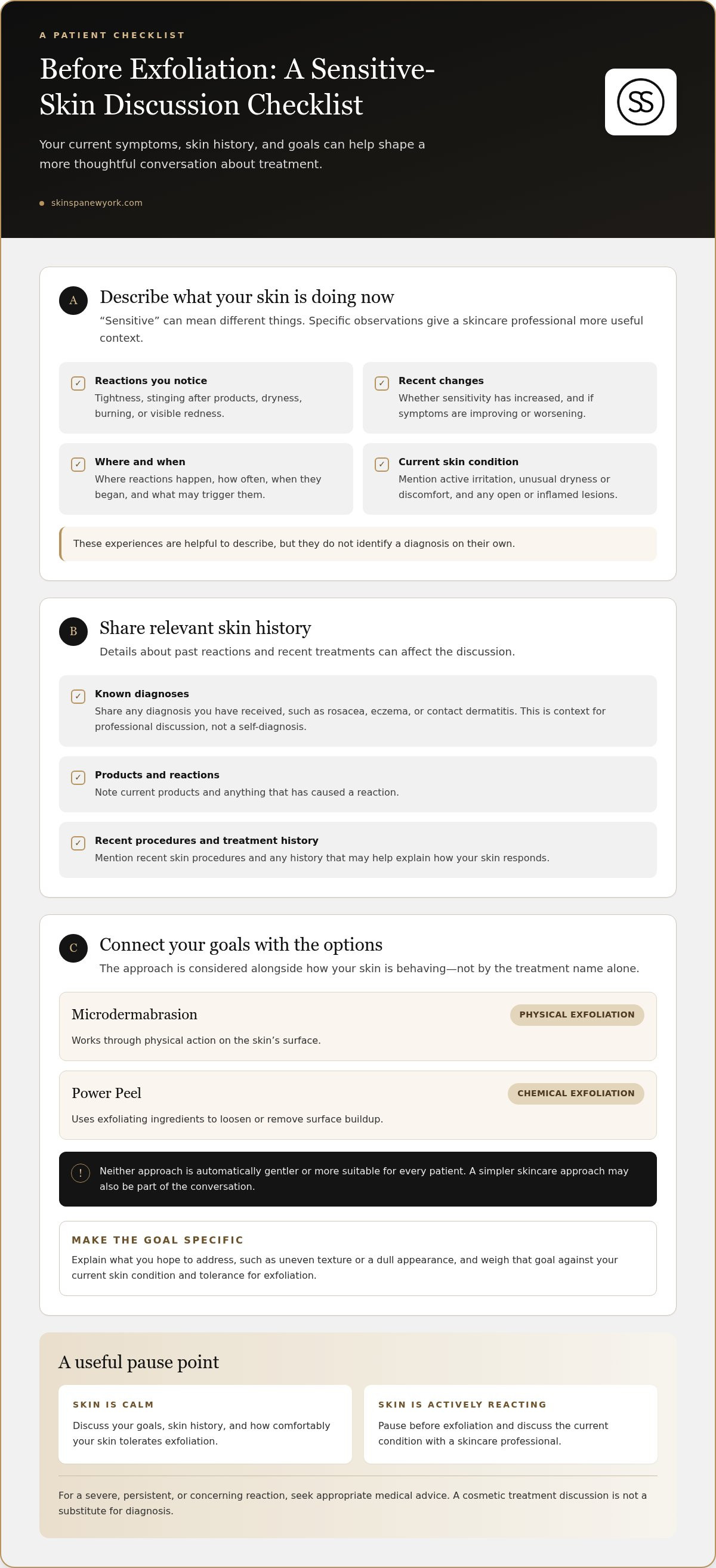
A useful assessment starts with details only you can provide: how your skin behaves, what you’ve tried, and what you hope to address. You don’t need to arrive with a diagnosis or decide in advance whether treatment is right for you. A clear conversation helps the skincare professional understand your concerns and discuss a plan suited to your skin on the day.
Use this sequence to prepare:
- Describe your symptoms. Note when sensitivity occurs, how it feels, and what you can see. For example, explain whether stinging follows cleansing or redness appears after a particular product.
- Share your skin history. Mention known diagnoses or allergies, recent procedures, exfoliation, and skincare changes. Bring a list or photos of the products you currently use if that helps you recall them accurately.
- Clarify your goal. Explain what you’d like to improve, such as the feel of your skin’s texture or its appearance. Share what matters most so the discussion can focus on a relevant approach.
- Discuss a tailored plan. Ask how your reported sensitivity and current skin condition will inform the treatment recommendation, and what alternatives or adjustments might be considered.
What to share during the assessment
Be specific about timing and patterns: when symptoms began, how often they occur, and whether anything seems to trigger them. Include persistent redness, burning, unusual dryness, or a recent increase in reactivity. Share any known skin diagnosis, allergy, recent exfoliation, procedure, or change in your routine. If your skin looks or feels irritated on the day, ask how that would affect the recommendation before proceeding.
Questions to ask about comfort and aftercare
It’s reasonable to ask how the treatment approach can reflect your comfort level and what signs should prompt follow-up. Ask which aftercare instructions apply to your specific treatment, including whether any of your current products or routine should be adjusted. Don’t stop prescribed or regular skincare products based on general advice alone; recommendations depend on your history and professional assessment. Instructions should be clear enough for you to follow at home.
Aftercare can depend on the treatment selected and your skin’s response, so avoid assuming that another patient’s routine or recovery experience will apply to you. Before you leave the discussion, make sure you understand what to do if your skin feels unusually uncomfortable and whom to contact for guidance. This is also a good moment to raise any concern you didn’t get to mention earlier.
If you’re still weighing whether is microdermabrasion good for sensitive skin applies to your situation, bring these details into a personalized conversation rather than relying on a general rule. Review your microdermabrasion concerns with Skin Spa as part of planning care around your skin’s needs.
How Skin Spa approaches microdermabrasion for individual skin needs
At Skin Spa, a microdermabrasion discussion starts with the patient’s needs, not a presumption that exfoliation is right for every sensitive-skin patient. Your goals, skin history, current condition, and comfort all matter. Sharing those details helps shape a more informed conversation about whether physical exfoliation fits your skincare plan or whether another approach may be worth discussing.
Skin Spa’s patient-right-to-know policy supports clear advice about products and techniques suited to helping each patient make the most of a service. That means understanding what approach is being considered, why it may align with your goals, and what relevant aftercare involves before you decide.
A personalized conversation before choosing exfoliation
Microdermabrasion and Power Peel are distinct options: one is physical exfoliation, the other chemical exfoliation. They aren’t interchangeable, and a difference in method alone doesn’t determine which is more appropriate. Discuss what you hope to address, what your skin has experienced, and whether it’s currently showing signs of irritation. Those details help clarify whether physical exfoliation may fit your goals.
If you’re wondering, is microdermabrasion good for sensitive skin, an individual conversation is more useful than a universal yes or no. Sensitive skin can describe different experiences, and the treatment discussion should reflect yours. Ask for a clear explanation of the recommended approach and any aftercare relevant to your plan. You should have the information you need to weigh comfort and suitability before choosing.
Choosing a next step with confidence
Before deciding, make sure you understand four points: which exfoliation approach is being discussed, how your skin history and present condition inform its suitability, how comfort will be considered, and what aftercare applies to your treatment. If anything feels unclear, ask for it to be explained in straightforward terms. A thoughtful recommendation should respond to your circumstances rather than promise a particular result or assume microdermabrasion is right for every patient.
Skin Spa offers microdermabrasion as an option within personalized skincare planning. Whether you’re considering it or comparing it with Power Peel, you can bring your questions and concerns into the conversation. Your treatment plan should make sense for your skin, your goals, and your comfort. Skin Spa serves patients in New York, Boston, and Miami.
Explore microdermabrasion treatment options and discuss personalized care at Skin Spa.
Choose your next step with confidence
You don’t need to arrive with a definite answer to “is microdermabrasion good for sensitive skin?” Start with an honest account of how your skin feels and what you hope to address. That gives the conversation a practical foundation and helps you decide whether to explore exfoliation now or revisit it when your skin’s needs are clearer.
At Skin Spa, Microdermabrasion and Power Peel are distinct physical and chemical exfoliation options. The patient-right-to-know approach supports guidance on products and techniques suited to the patient. Use that conversation to understand the approach being considered and feel comfortable with your next step.
Explore Skin Spa’s microdermabrasion treatment and take the next step toward skincare choices that feel informed and personal.
Frequently Asked Questions
Is microdermabrasion safe for sensitive skin?
It may be appropriate for some patients, but sensitivity alone can’t establish whether it’s safe for you. A useful next step is to have a skincare professional consider your current skin condition, health history, and any recent changes before recommending exfoliation. If you’re asking, “is microdermabrasion good for sensitive skin,” focus on your individual circumstances rather than a general rule. Share what your skin typically tolerates and what you hope to address.
Can microdermabrasion make redness or irritation worse?
Yes, irritation or redness may worsen, particularly if skin is already inflamed or reactive. Tell the skincare professional if redness is persistent, if products have recently started to sting, or if your skin feels more uncomfortable than usual. Also mention recent treatments and changes to your routine. If redness or irritation appears after a treatment and concerns you, follow the aftercare guidance you were given and seek professional advice.
Can I get microdermabrasion if I have rosacea or eczema?
A diagnosis of rosacea or eczema doesn’t, by itself, determine whether microdermabrasion is appropriate. Discuss the condition with a qualified medical professional and share relevant guidance with your skincare professional before scheduling exfoliation. Be especially clear about recent flares, areas that feel tender, and any treatments you’re using. The recommendation should reflect your specific condition and current skin status, rather than assuming the same approach suits every patient with that diagnosis.
Does microdermabrasion hurt on sensitive skin?
Comfort varies, so it isn’t possible to promise that treatment will feel the same for every patient. Before proceeding, explain what sensations you’re concerned about and ask how you can communicate discomfort during the appointment. If a sensation feels painful or unexpectedly intense, say so promptly rather than trying to endure it. That feedback lets the professional respond to your comfort and reassess the approach as needed.
How long does redness last after microdermabrasion?
Some patients notice temporary pinkness or redness that settles within about a day, though individual responses can vary. Follow the aftercare instructions provided for your treatment, and avoid judging your skin’s response against someone else’s experience. If redness is worsening, lasts longer than you were told to expect, or comes with significant discomfort, contact a medical professional for advice rather than attempting to treat it with additional exfoliation.
Can I wear makeup after microdermabrasion?
Ask for treatment-specific guidance before applying makeup, since the appropriate timing can depend on your skin’s response and the aftercare plan. If your face feels hot, tender, or irritated, mention that before using cosmetics, and avoid introducing unfamiliar products while you’re unsure how your skin is reacting. Patients considering microdermabrasion with Skin Spa in New York, Boston, or Miami can clarify aftercare recommendations as part of discussing their treatment.
