

Your laser session doesn't actually end the moment you leave the treatment room; in reality, the most critical phase of your transformation is just beginning. It's natural to feel a mix of excitement and hesitation as you step back into your daily routine. You've invested in the promise of permanent refinement, yet the fear of accidental irritation or choosing the wrong serum can feel overwhelming. We understand that you want more than just a service; you want the peace of mind that comes with expert guidance.
This guide provides the definitive clinical protocols for laser hair removal aftercare, designed to safeguard your skin while maximizing your results for 2026 and beyond. By mastering these professional standards, you'll ensure a seamless recovery and achieve the smooth, irritation-free skin you deserve. We will walk you through the sophisticated skincare rituals that soothe inflammation, clarify exactly when it's safe to return to your fitness routine, and reveal how to protect your investment from the subtle risks of sun exposure. This is your roadmap to a flawless recovery and a lifetime of confidence.
Key Takeaways
- Learn the precise 48-hour protocol required to manage the immediate post-treatment sensation and protect your skin's long-term health.
- Discover how the 10-day transition rule for laser hair removal aftercare optimizes hair shedding and strengthens your natural skin barrier.
- Identify the specific environmental heat sources and grooming habits that must be strictly avoided to prevent unwanted hyperpigmentation.
- Master the ability to distinguish between successful clinical markers, such as perifollicular edema, and reactions that require professional attention.
- Understand why tailoring your recovery plan to your specific Fitzpatrick skin type is essential for maximizing your aesthetic investment.
The Critical First 48 Hours: Immediate Post-Laser Protocol
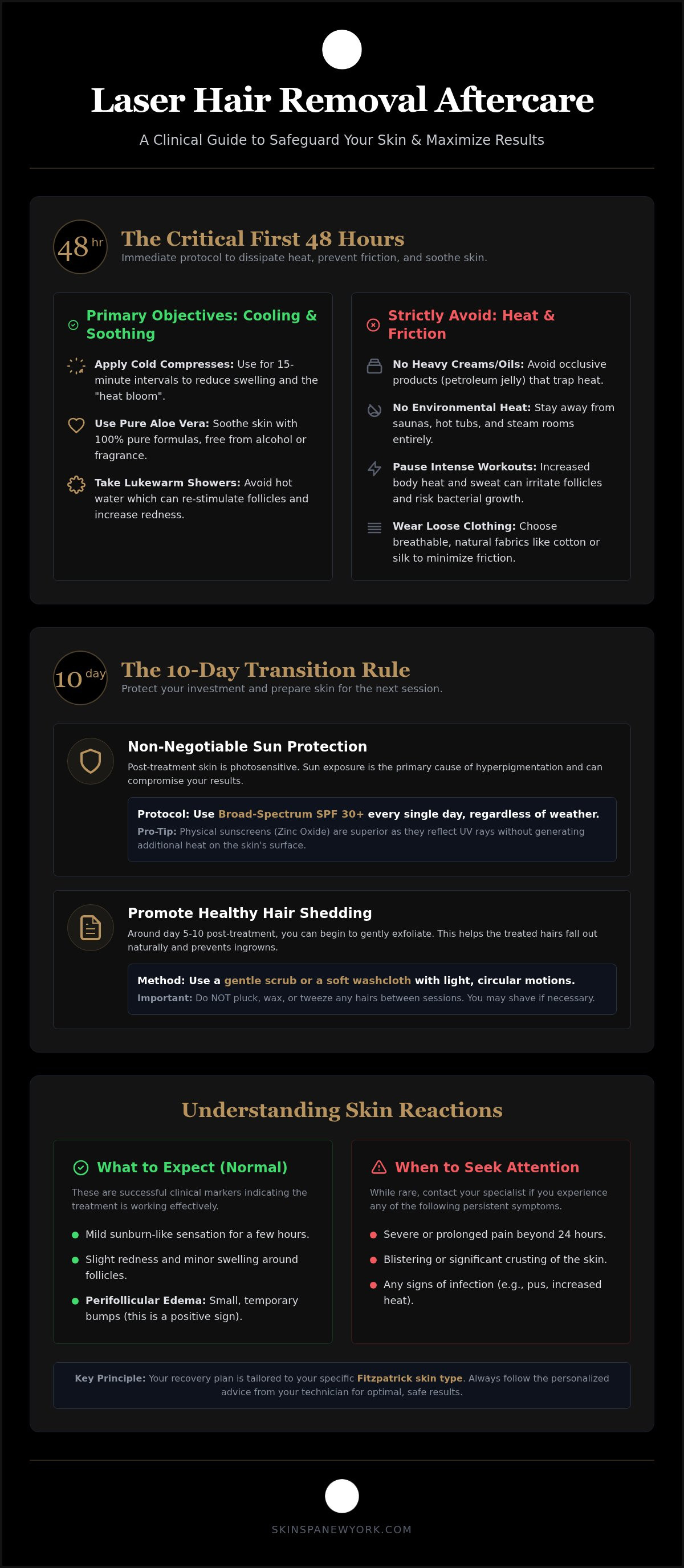
The initial 48 hours following your session represent the most influential window for your skin's long-term health. During this period, your follicles are still processing the thermal energy delivered during the laser hair removal process. Managing this internal heat with clinical precision is what separates a standard recovery from a truly refined result. It's the cornerstone of effective laser hair removal aftercare. If heat remains trapped within the dermis, it can lead to unnecessary irritation or even post-inflammatory hyperpigmentation.
You'll likely experience a sensation similar to a mild sunburn. This is a normal, expected response. However, your goal is to create a sanctuary for your skin, allowing it to settle without external interference. Professional care during these first two days focuses on two primary objectives: dissipating heat and preventing friction.
Cooling and Soothing the Treated Area
Immediate cooling is your first line of defense against edema and discomfort. We recommend applying cold compresses to the treated area in 15-minute intervals. This helps constrict the blood vessels and reduces the "heat bloom" that often follows a session. It's a simple yet vital step in maintaining your skin's composure. While it's tempting to reach for your favorite luxury moisturizers, simplicity is safer during this window.
- Pure Aloe Vera: Apply 100% pure aloe vera to soothe the area. Ensure the formula is free from alcohol or artificial fragrances, which can sting sensitized skin.
- Avoid Occlusives: Don't use heavy oils, petroleum-based jellies, or thick occlusive creams. These products act as an insulator, trapping heat inside the skin rather than letting it escape.
- Clinical Precision: If your specialist recommends a specific cooling gel, follow their instructions precisely, but always prioritize breathable, lightweight textures.
Wardrobe and Lifestyle Adjustments
The way you move and dress during these first 48 hours directly impacts your recovery speed. Friction is the enemy of healing skin. Choosing the right environment and attire ensures that your follicles can recover without being aggravated by sweat or tight fabrics.
- The Lukewarm Rule: When showering, keep the water temperature neutral. Hot water can re-stimulate the follicles and increase redness. Avoid saunas, steam rooms, and hot tubs entirely.
- Breathable Fabrics: Opt for loose-fitting garments made from natural fibers like silk, cotton, or linen. These materials allow for airflow and minimize the risk of chafing.
- Pause the Intensity: Skip the gym for at least two days. Intense exercise increases your core body temperature and induces sweating, both of which can lead to bacterial growth in the vulnerable follicles.
Skin Maintenance Between Sessions: Protecting Your Investment
Once the initial 48-hour recovery window closes, your journey toward permanent hair reduction enters a maintenance phase. This period is defined by the 10-day rule, where you transition from purely soothing treatments to active skin health management. Maintaining a robust skin barrier is essential for long-term success. Properly hydrated skin doesn't just feel better; it actually improves the efficiency of subsequent sessions. When the dermis is well-hydrated, the laser energy can target the pigment in the hair more effectively without being absorbed by dry, flaky surface skin. This ensures you get the maximum ROI from each appointment.
Your local environment plays a significant role in how you approach this care. In the dry, urban environments of New York or Boston, you'll likely need a more intensive humectant to combat moisture loss from indoor heating and wind. In contrast, the tropical humidity of Miami requires breathable, lightweight hydration to prevent congestion in the newly treated areas. It's about finding the right balance for your specific lifestyle and location to keep your skin in peak condition.
The Role of Broad-Spectrum Sun Protection
UV protection is the most vital component of your dermatologist's after-care instructions. Laser treatments make your skin temporarily photosensitive, increasing the risk of sun damage and uneven pigment. Use a broad-spectrum SPF 30+ every single day, regardless of the weather. Physical sunscreens containing zinc oxide are often superior for post-laser care because they reflect UV rays without generating additional heat on the skin surface. This is particularly important during city commutes where reflection from glass buildings in Manhattan can intensify exposure, even on cloudy days.
Exfoliation: Timing and Techniques
Patience is required before you reach for your favorite scrub. The shedding phase is the period 1-3 weeks post-treatment where dead hair is expelled from the follicle. Attempting to force this process too early can cause micro-tears in the delicate skin. After the 10-day mark, you may introduce gentle exfoliation. A soft washcloth or a mild chemical exfoliant is preferable to a physical loofah. These gentler methods support the natural shedding process without compromising the skin's integrity. Proper laser hair removal aftercare ensures that your skin remains smooth as the results of your treatment become visible. Our experts are dedicated to helping you refine your routine during your next laser hair removal appointment.
The 'Never' List: Activities and Products to Avoid
Success in hair reduction is as much about restraint as it is about proactive care. While we focus on healing, we must also identify the behaviors that can inadvertently sabotage your progress. Maintaining the integrity of the follicle is paramount. If you've spent time and resources on a professional series, you don't want to compromise those results with a simple grooming mistake. Mastering laser hair removal aftercare involves knowing exactly what to remove from your routine to protect your skin's future.
Prohibited Hair Removal Methods
Waxing, plucking, and threading are strictly prohibited during your treatment series. These methods remove the hair from the root, which is the very target the laser needs to identify during your next session. Pulling the hair out essentially resets the laser countdown. It renders your previous investment less effective because there's no pigment for the light to target. Shaving remains the only acceptable method for maintaining a smooth appearance between visits. It keeps the root intact while allowing you to manage growth comfortably and safely.
Heat, Friction, and Chemical Irritants
Environmental heat and active skincare ingredients are the primary catalysts for post-treatment complications. Avoid saunas, steam rooms, and hot yoga for at least 72 hours. These high-heat environments can trigger hyperpigmentation by overstimulating the skin's melanocytes. Similarly, you should pause the use of active ingredients such as Retin-A, AHAs, and BHAs. These components are designed to accelerate cell turnover, but on laser-sensitized skin, they can lead to severe peeling or chemical burns. This caution is particularly relevant for clients with deeper Fitzpatrick skin types, where the risk of pigmentary changes is naturally higher. Adhering to these dermatologist's after-care instructions ensures your skin remains a perfect canvas for transformation.
Exposure to chlorine or salt water should also be delayed for several days. These substances can irritate follicles that are still recovering from thermal energy. Additionally, be cautious with self-tanning products. They can leave residue that interferes with the laser's ability to distinguish between your skin and the hair pigment in future sessions. Professional laser hair removal aftercare requires a disciplined approach to these boundaries. It ensures your results are both safe and lasting while maintaining the sophisticated glow you expect from a premier clinical environment.
Identifying Normal vs. Abnormal Skin Reactions
Recognizing how your skin communicates after a session is a vital part of the recovery process. While most reactions are fleeting and purely clinical, understanding the nuance of these responses provides the confidence you need during your laser hair removal aftercare journey. It's common for guests to feel a sense of hyper-awareness regarding their skin's texture and color in the hours following treatment. Distinguishing between a healthy, productive response and a reaction that requires professional attention is the key to a stress-free experience.
Perifollicular edema might sound intimidating, but it's actually a hallmark of a successful session. These tiny, localized bumps around the hair follicles indicate that the laser energy effectively reached its target. Unlike a generalized rash, this swelling is a precise sign of follicular impact. It typically subsides within a few hours but can occasionally last up to two days. Similarly, you might notice what looks like new hair growth about two weeks after your appointment. This is usually the "shedding phase" mentioned earlier, where dead hair is simply working its way out of the skin.
Expected Side Effects and How to Manage Them
Erythema, or temporary redness, is the most frequent side effect. It should feel like a mild warmth, similar to a day spent in the sun. This redness generally peaks shortly after treatment and fades within 24 to 48 hours. If you experience mild itching, this is often a histamine reaction. It's a natural response to the thermal stimulus. You can manage this safely with a cool compress or a specialist-approved topical soothing agent. Resist the urge to pick or scratch the area. Disrupting the skin during this sensitive window can lead to secondary irritation or scarring.
When to Contact Your Skin Spa Specialist
While adverse reactions are rare in a controlled, professional environment, you should know the signs of a thermal injury. If you notice any blistering, crusting, or persistent dark spots that don't fade, reach out to your specialist immediately. These are not standard parts of the recovery process. You should also monitor for signs of infection, such as spreading warmth, pus, or extreme tenderness. At Skin Spa New York, we prioritize your comfort and safety. Our professional support system is designed to guide you through every stage of your transformation. If you have concerns about your skin's response, our expert team is here to provide guidance during your next laser hair removal session.
Elevating Your Results: The Skin Spa New York Advantage
At Skin Spa New York, we view laser hair removal aftercare as an ongoing dialogue between our specialists and your skin. It is not merely about following a list of instructions; it is about refining your daily routine to match your unique biology. Our clinical authority ensures that every step of your recovery is monitored with the same precision as the treatment itself. This personalized attention is what transforms a standard procedure into a life-changing aesthetic investment. We prioritize your comfort and results, acting as your welcoming guide through each stage of the process.
Personalized Protocols for Every Guest
Diverse skin tones require distinct approaches. A one size fits all plan fails to account for the specific needs of different Fitzpatrick skin types. Our experts customize your recovery based on your skin's melanin levels and its historical reaction to light energy. This level of customization is especially critical for sensitive areas like the face or Brazilian, where the dermis is thinner and more prone to temporary sensitivity. We provide specific product recommendations that soothe without clogging pores, ensuring your skin stays clear and vibrant. For a deeper look at our metropolitan standards, explore our Laser Hair Removal NYC: The Clinical Guide to Smooth, Professional Results.
Complementary Treatments and Long-Term Care
Your journey toward smooth skin can be further enhanced by integrating other medical-grade procedures. Treatments such as Laser Genesis or a Customized Facial can further refine skin texture and address any underlying congestion between your hair removal appointments. These services work in harmony with your laser series to promote overall skin health and luminosity. Consistency is the most vital factor in achieving permanent hair reduction. We recommend scheduling your sessions within the optimal 4-6 week window to capture hair in its active growth phase. Whether you are visiting our sanctuaries in NYC, Boston, or Miami, our team ensures your schedule remains on track for maximum efficacy. By combining professional-grade skincare with a disciplined treatment timeline, you secure the smooth, refined results you desire.
Securing Your Path to Permanent Smoothness
Your journey toward lasting hair reduction is a sophisticated partnership between professional expertise and your own commitment to recovery. By mastering the protocols of laser hair removal aftercare, you protect your skin's health while ensuring every pulse of the laser delivers its maximum potential. Remember that the first 48 hours are about cooling and calm; the subsequent weeks require diligent sun protection and a pause on any hair removal methods that disturb the follicular root. These small, disciplined steps lead to the transformative results you expect from a premier clinical environment.
With over 18 years of clinical excellence, Skin Spa New York combines state-of-the-art laser technology with personalized care plans tailored to your specific needs. Our expert specialists in NYC, Boston, and Miami are dedicated to serving as your knowledgeable guides throughout this entire aesthetic transformation. We invite you to experience the confidence that comes with professional care and a sanctuary designed for your absolute comfort. Your most radiant, smooth skin is within reach. Book Your Next Session at Skin Spa New York and let us help you achieve your long-term aesthetic goals with precision and grace.
Frequently Asked Questions
Can I exercise immediately after my laser hair removal session?
You should avoid intense exercise for at least 48 hours after your session. Physical activity increases your core body temperature and produces sweat, both of which can lead to bacterial growth in the sensitized hair follicles. This can cause unnecessary irritation or breakouts. Whether you're heading to a high-intensity studio in Manhattan or a run along the Miami coastline, it's essential to give your skin this recovery window to ensure the best results from your laser hair removal aftercare.
How long after laser hair removal can I go in the sun?
You must avoid direct sun exposure for at least two weeks following your treatment. Your skin is temporarily photosensitive, making it more susceptible to burns and hyperpigmentation. If you're navigating the sun-drenched streets of Miami or walking through the Boston Common, apply a broad-spectrum SPF 30+ daily. Protecting the treated area from UV rays is a non-negotiable step in maintaining your skin's health and preventing long-term pigmentary changes.
Is it okay to use deodorant after underarm laser hair removal?
We recommend waiting at least 24 hours before applying deodorant to the treated underarm area. Many conventional deodorants contain fragrances and chemicals that can sting or irritate follicles still recovering from the laser's thermal energy. Once the initial redness has subsided, you can resume your normal routine. Choosing a gentle, fragrance-free option for the first few days can provide additional comfort while your skin returns to its natural, calm state.
When can I start exfoliating the treated area?
You can begin gentle exfoliation approximately 10 days after your appointment. This timing aligns with the natural shedding phase, where dead hair is pushed out of the follicle. Using a soft washcloth or a mild chemical exfoliant helps this process along without causing micro-tears in the skin. Avoid aggressive physical scrubs or loofahs, as these can disrupt the skin barrier during its most vulnerable state. Patience here ensures a smoother, more refined skin texture.
What happens if I pluck or wax between laser treatments?
Plucking or waxing between sessions is strictly prohibited because it removes the hair from the root. The laser needs that root as a target for the next treatment. Removing it essentially resets your progress and makes the next session less effective. Shaving is the only acceptable method for managing growth between visits. It keeps the hair follicle intact while allowing you to maintain the polished appearance expected in professional urban environments like NYC or Boston.
Why does my skin feel itchy after the laser session?
Itching is often a normal histamine reaction to the heat delivered by the laser. Your body treats the thermal energy as a mild stimulus, resulting in a temporary itchy sensation. While it can be distracting, it's vital that you don't scratch the area, as this can lead to secondary irritation or scarring. Applying 100% pure aloe vera or a cold compress can provide immediate relief and soothe the skin effectively during this brief recovery period.
Can I apply makeup after a facial laser hair removal treatment?
You should wait at least 24 hours before applying makeup after a facial laser treatment. This allows the pores to close and the skin to settle without being obstructed by cosmetic products. If you must apply coverage sooner, opt for high-quality mineral makeup, which is less likely to cause congestion or irritation. Always ensure your application tools are meticulously clean to prevent any risk of infection while the skin is in its delicate post-laser state.
How soon can I take a hot shower or use a sauna?
Avoid hot showers, saunas, and steam rooms for 48 to 72 hours post-treatment. High temperatures can re-stimulate the follicles and increase inflammation, potentially leading to discomfort or blistering. Stick to lukewarm water when bathing and pat the skin dry with a soft towel rather than rubbing. Whether you're relaxing at home in Boston or visiting a sanctuary in Miami, keeping your skin cool is a priority for a seamless recovery.
