

The morning ritual of shaving should be a simple act of refinement, yet for those prone to chronic irritation, it often feels like a recurring battle against painful, inflamed bumps and the resulting hyperpigmentation. You've likely spent years cycling through various topical serums and specialized razors, only to find that the texture of your skin in sensitive areas remains a source of quiet embarrassment. It's exhausting to feel that the very effort you put into self-care is what's causing your skin the most distress. There's a more sophisticated path forward. Choosing laser hair removal for ingrown hairs isn't just a cosmetic upgrade; it's a clinical solution that breaks the cycle of inflammation at its biological root.
In the following guide, we'll explore how advanced medical-grade technology provides a permanent reduction in hair growth while restoring a clear, even-toned complexion. You'll discover how a tailored approach to your unique skin type can finally offer the freedom of smooth, irritation-free skin and a renewed sense of confidence in your daily life. We'll examine the precision of modern laser systems and why this professional intervention is the definitive answer to the persistent discomfort of ingrown hairs.
Key Takeaways
- Understand why traditional methods like shaving trigger Pseudofolliculitis Barbae and how to finally break the cycle of chronic inflammation.
- Learn how selective photothermolysis targets hair follicles with clinical precision, transitioning active growth into a dormant state for lasting clarity.
- Discover why investing in laser hair removal for ingrown hairs preserves your skin barrier and offers a more sustainable solution than the trauma of waxing.
- Gain insights into the essential clinical protocols for calming active irritation and preparing your skin for a professional, results-oriented session.
- Explore how advanced treatments like Chemical Peels and Laser Genesis can be integrated to resolve lingering dark spots and refine your skin's texture.
The Persistent Cycle: Why Shaving and Waxing Cause Ingrown Hairs
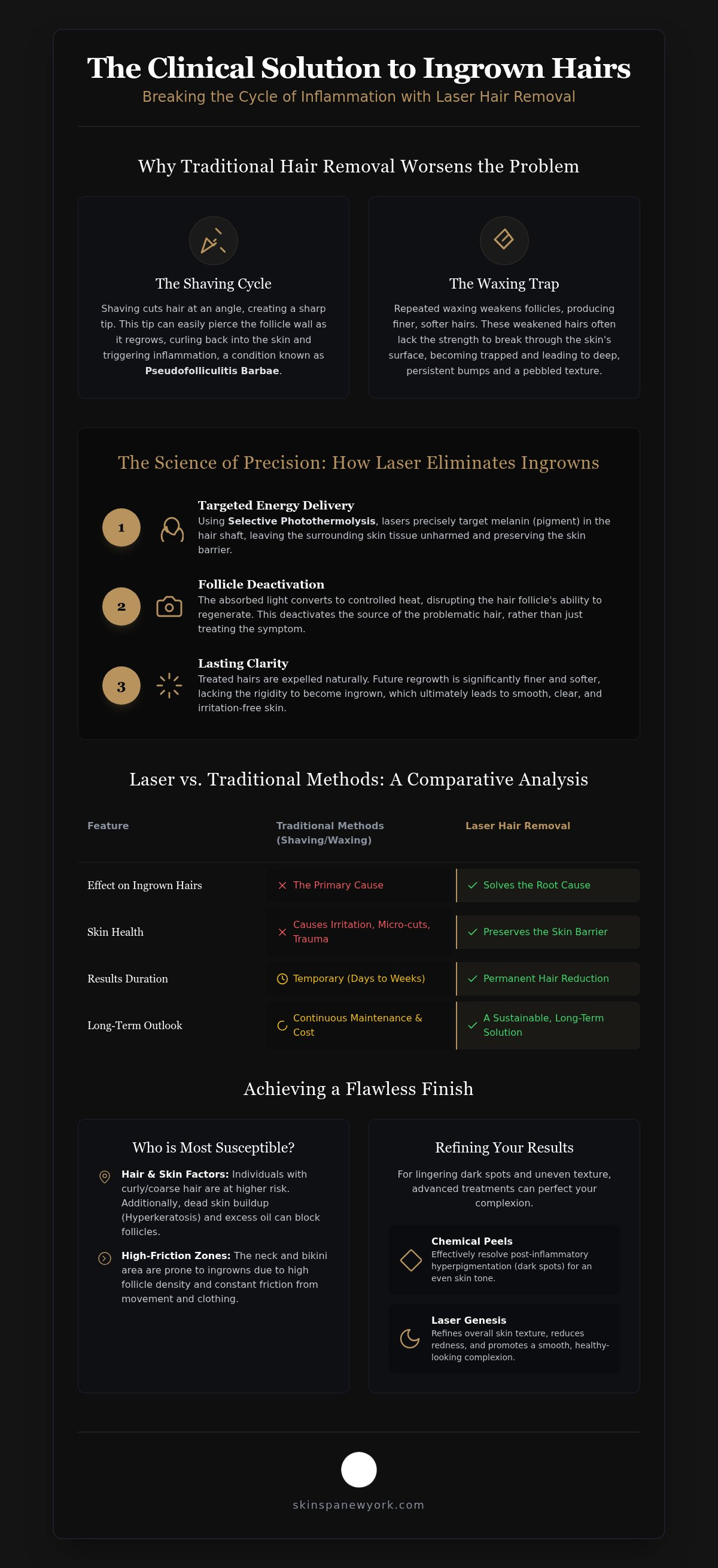
The cycle of irritation often begins with a fundamental misunderstanding of how hair interacts with the skin barrier. Clinically, the chronic presence of these painful, raised bumps is known as Pseudofolliculitis Barbae. This condition arises when the hair follicle becomes a site of internal conflict. When you shave, the blade slices the hair at an acute angle, essentially creating a sharp, spear-like hair tip. As this hair attempts to regrow, it often lacks a clear path to the surface, piercing the follicle wall and growing back into the surrounding tissue instead. This triggers a localized immune response where your body treats the trapped keratin as a foreign invader, resulting in the inflammation and discomfort you feel daily.
While many turn to waxing as a perceived upgrade, it often creates what experts call the "waxing trap." Repeatedly pulling hair from the root can eventually weaken the follicle, producing finer, softer hairs over time. While this sounds ideal, these weakened hairs frequently lack the structural integrity to break through the skin's surface. They become trapped just beneath the epidermis, leading to deep-seated congestion and a pebbled skin texture that topical exfoliants rarely resolve. Choosing laser hair removal for ingrown hairs offers a departure from this cycle by neutralizing the follicle's ability to produce these problematic hairs in the first place.
Understanding The Science of Precision: How Laser Technology Works is essential for those seeking a permanent shift in their skin health. By targeting the hair at its source, we move beyond the temporary fixes of traditional grooming into the realm of clinical resolution.
The Role of Skin Texture and Sebum
The environment of your skin significantly influences the frequency of these flare-ups. Hyperkeratosis, a process where dead skin cells accumulate and fail to shed properly, creates a literal "lid" over the follicle opening. When this buildup is combined with high sebum production common in oily skin types, it forms a dense plug that forces the hair to curl inward. In a fast-paced urban setting, friction from tailored clothing or long commutes can compress these sensitive areas, driving the hair deeper into the dermis and intensifying the inflammatory response.
Who is Most Susceptible to Chronic Bumps?
Biological factors often dictate your risk level. Individuals with curly or coarse hair patterns are naturally more susceptible because the spiral shape of the hair shaft predisposes it to re-entering the skin. The bikini area and the neck are notorious high-risk zones due to high follicle density and constant movement against clothing. Furthermore, fluctuations in hormones can alter hair thickness and growth speed, making laser hair removal for ingrown hairs an essential tool for those who find that standard maintenance no longer provides the smooth, clear results they deserve.
The Science of Precision: How Laser Technology Eliminates Ingrown Hairs
Selective photothermolysis is the core principle that transforms the health of your skin. This sophisticated process allows our medical-grade lasers to target the pigment within the hair shaft with microscopic precision. By absorbing the light energy, the follicle experiences a controlled thermal reaction that disrupts its regenerative capabilities without compromising the surrounding skin tissue. This is why laser hair removal for ingrown hairs is so effective; it doesn't just treat the symptom, it deactivates the source.
After your initial session, you'll experience what is known as the "purge" phase. Over the course of one to two weeks, the treated, trapped hairs are naturally expelled from the skin. This process often provides immediate relief from the pressure of deep-seated bumps. As the hair regrows, its diameter is significantly reduced. These finer, softer hairs lack the structural rigidity required to pierce the follicle wall or get caught beneath the skin's surface, effectively ending the cycle of inflammation. To begin your journey toward a clearer complexion, you can explore our customized MedSpa treatments designed for your specific skin goals.
Customizing the Laser for Your Fitzpatrick Skin Type
Safety and efficacy in laser treatments depend entirely on a nuanced understanding of your skin's biological profile. The Fitzpatrick scale, a classification system ranging from Type I to Type VI, guides our specialists in selecting the optimal wavelength for your unique needs. For those with lighter skin tones, the Alexandrite laser offers exceptional precision, while the Nd:YAG laser is the gold standard for safely treating deeper skin tones by bypassing surface melanin. A professional Fitzpatrick skin type assessment is the first step at Skin Spa New York to ensure your treatment is both effective and comfortable. Understanding these nuances is a key part of Preparing Your Skin for Treatment.
Thermal Damage vs. Follicle Death
Achieving permanent hair reduction requires timing and patience. Hair grows in cycles, and the laser is most effective during the Anagen, or active growth, phase, when the hair is firmly attached to the bulb. Because only a percentage of your hair is in this phase at any given time, multiple sessions are scheduled to ensure every follicle is addressed. The laser works by cauterizing the minute blood supply to the hair bulb, leading to permanent follicle miniaturization. This transition ensures that the skin remains smooth and unburdened by the thick, coarse growth that typically leads to irritation. Over time, the follicle enters a dormant state, providing a lasting reprieve from the discomfort of chronic bumps.
Laser vs. Traditional Methods: A Comparative Analysis
Traditional grooming methods often subject the skin barrier to a relentless cycle of mechanical trauma. Shaving doesn't just cut hair; it micro-exfoliates the skin, leaving it vulnerable to bacteria and environmental pollutants. Waxing, while removing hair from the root, exerts significant tension on the surrounding tissue, which can lead to micro-tears and chronic sensitivity. In contrast, laser hair removal for ingrown hairs bypasses the surface entirely. It uses light energy to target the follicle without disrupting the delicate equilibrium of the epidermis, allowing your skin to finally enter a state of recovery and renewal.
Beyond the obvious cessation of hair growth, there is an "invisible benefit" to clinical laser treatments. As the hair follicles miniaturize and growth slows, the skin's texture undergoes a visible transformation. Without the constant irritation of sharp hair tips or the aggressive pull of wax, the skin has the opportunity to heal at a cellular level. You'll notice a reduction in the redness and rough texture that often accompanies chronic folliculitis, resulting in a polished, even-toned appearance that topical creams simply cannot replicate. This transformation is a hallmark of the professional care we provide.
It's a common misconception that at-home devices offer the same clinical results as professional systems. Most consumer-grade tools lack the power and specific wavelengths required to penetrate deep enough to reach the hair bulb, especially in high-risk areas like the bikini line or neck. These devices often only stun the hair temporarily, which doesn't resolve the structural issues that cause hairs to become trapped. Professional-grade technology ensures the thermal energy reaches the required depth to break the cycle of laser hair removal for ingrown hairs effectively, providing a level of precision that handheld gadgets cannot match.
Why Waxing Can Be Counterproductive
While waxing is often marketed as a long-term solution, it carries hidden risks for those prone to congestion. If a hair is brittle, it may snap just below the skin line during a wax, creating a jagged edge that is almost guaranteed to become a deep-seated cyst. Repeated waxing can also lead to a thickening of the skin's outer layer, making it increasingly difficult for new, finer hairs to emerge. In a clinical laser environment, sanitation and precision are prioritized, eliminating the cross-contamination risks often found in high-volume waxing studios.
The Cost of Temporary Fixes
When you calculate the lifetime expense of high-quality razors, shaving creams, and specialized "bump" serums, the financial investment in a clinical solution becomes clear. There is also a significant emotional toll associated with chronic skin irritation, ranging from the daily frustration of hiding bumps to the self-consciousness felt during social or professional interactions. For the busy professional, laser hair removal nyc represents a sophisticated investment in both time and self-assurance, providing a reliable sanctuary from the endless loop of temporary fixes.
Clinical Protocol: Managing Active Bumps and Preparing Your Skin
The journey to a refined complexion begins with a comprehensive consultation. This isn't a mere formality; it's a clinical assessment where we identify the specific triggers behind your irritation. We evaluate your hair density, growth patterns, and skin sensitivity to craft a bespoke treatment plan. Approximately 48 hours before your session, focus on skin calming. If you have active inflammation, avoid aggressive exfoliants or harsh acids. Effective laser hair removal for ingrown hairs depends on this precise preparation. A fresh, clean shave on the day of your appointment is essential. While it seems counterintuitive, a smooth surface allows the laser energy to bypass the visible hair shaft and penetrate directly into the follicle bulb.
Once the session is complete, your skin requires a brief period of sanctuary. For the first 24 hours, avoid intense heat, steam rooms, or friction from tight athletic wear. These simple precautions ensure the thermal energy remains focused on the follicle rather than irritating the surrounding tissue. Our specialists, who've been perfecting these protocols since 2005, prioritize your safety through detailed skin assessments. If you're ready to transition from temporary fixes to a permanent clinical solution, book your laser hair removal session at one of our urban locations today.
Handling Infected or Cystic Ingrowns
When a bump becomes significantly inflamed or cystic, it may be too reactive for immediate treatment. In these instances, we recommend a regimen of warm compresses and gentle, non-comedogenic topical salves to reduce swelling in the days leading up to your visit. It's vital that you never attempt to "pick" or manually extract a bump. Manual interference can lead to scarring or secondary infections. Picking is never the solution. It complicates the laser hair removal for ingrown hairs process. Our experts can guide you on when a bump has sufficiently calmed for a safe, effective session.
The Importance of Sun Avoidance
Sun exposure is the most critical variable in pre-treatment safety. UV rays increase melanin activity in the epidermis, which can confuse the laser and lead to unwanted pigment changes. This is particularly relevant for our clients in Miami or those commuting through high-UV environments in NYC and Boston. We advise strict sun avoidance for at least two weeks prior to your appointment. If you must be outdoors, utilize a high-quality physical sunscreen containing zinc oxide or titanium dioxide on the treatment area. Protecting your skin from the sun ensures the laser remains focused solely on the hair follicle, maximizing both safety and your ultimate results.
The Skin Spa New York Experience: Beyond Hair Removal
At Skin Spa New York, we recognize that the resolution of chronic bumps is only the first step in your journey toward flawless skin. Years of irritation often leave behind a legacy of post-inflammatory hyperpigmentation (PIH), manifesting as persistent dark spots or a shadowed appearance in sensitive areas. Our approach to laser hair removal for ingrown hairs is inherently holistic, integrating advanced clinical treatments to restore the skin's natural radiance. By incorporating professional Chemical Peels into your regimen, we can effectively accelerate cellular turnover and erase the lingering evidence of previous congestion.
Once the hair growth is successfully neutralized, we often utilize Laser Genesis to further refine the skin's surface. This non-invasive technology stimulates collagen production, smoothing out the uneven texture that frequently accompanies long-term folliculitis. Our clinics in New York, Boston, and Miami serve as sophisticated urban sanctuaries where medical-grade technology meets personalized hospitality. We don't just provide a service; we offer a comprehensive commitment to your long-term skin health through customized aftercare plans that evolve with your results.
Treating the "Shadow" and Scars
The "bikini shadow" or neck discoloration caused by constant shaving and picking can be a significant source of self-consciousness. We address this by pairing our primary treatments with medical-grade skincare that targets melanin production at the source. Between your sessions of laser hair removal for ingrown hairs, professional exfoliation helps maintain clear follicles and encourages a bright, even complexion. This level of customization ensures that you're not just hair-free, but that your skin texture is genuinely transformed and rejuvenated.
Booking Your Sanctuary
Your first visit to our clinics is designed to be a seamless transition from the frantic pace of the city into a state of composed resolution. Whether you're visiting our hubs in the heart of NYC, the historic streets of Boston, or the vibrant atmosphere of Miami, you'll encounter a team dedicated to your comfort and confidence. Scheduling is effortless, allowing you to prioritize your self-care without disruption to your professional life. We invite you to step into our sanctuary and finally reclaim the smooth, radiant skin you deserve through professional, results-oriented care.
Reclaiming Your Skin's Natural Clarity
Choosing a permanent solution for chronic irritation is a transformative step toward lasting skin health. By moving beyond the temporary cycle of razors and wax, you address the biological root of congestion. Opting for laser hair removal for ingrown hairs ensures that the cycle of inflammation, hyperpigmentation, and discomfort is finally broken. This clinical intervention doesn't just remove hair; it restores the integrity of your skin barrier and provides a polished, even-toned texture that traditional methods cannot replicate.
With over 20 years of aesthetic expertise, Skin Spa New York utilizes medical-grade technology calibrated for all Fitzpatrick skin types. Our highly trained clinical staff across NYC, Boston, and Miami is dedicated to a journey that prioritizes your unique goals and long-term vitality. It's time to retire the frustration of temporary fixes and invest in the clear complexion you deserve. We're here to guide you through every step of this renewal with professional care and personalized attention.
Schedule Your Clinical Laser Consultation at Skin Spa New York to experience the freedom of smooth, irritation-free skin. You deserve to feel confident in your skin every single day.
Frequently Asked Questions
Can laser hair removal get rid of existing ingrown hairs?
Yes, the treatment effectively helps the body expel hairs that are currently trapped. The laser energy targets the follicle, causing the hair to detach from its base. Over the next week or two, your skin naturally pushes the dead hair to the surface. This "purge" phase provides relief from the pressure and inflammation of existing bumps, clearing current congestion while preventing any future occurrences from developing.
Is it safe to have laser hair removal on an infected ingrown bump?
We generally advise against treating a bump that's actively infected, oozing, or extremely painful. The laser's thermal energy can exacerbate acute inflammation. Our clinical staff in NYC, Boston, and Miami recommends calming the area with warm compresses first. Once the infection subsides and the skin isn't raw, we can safely proceed with laser hair removal for ingrown hairs to ensure the follicle is neutralized.
How many sessions are needed to stop ingrown hairs for good?
Most clients see a significant reduction in irritation after just two sessions, but a full series of six to eight treatments is typically required for permanent results. Since hair grows in cycles, we must catch each follicle in its active growth phase. Consistency is key to ensuring the hair becomes fine enough that it can no longer become trapped beneath the skin barrier, providing a lasting reprieve from discomfort.
Does laser hair removal help with the dark spots left by ingrowns?
While the laser primarily targets the follicle, stopping the cycle of irritation allows the skin to heal naturally. For persistent dark spots, we often integrate complementary treatments like Chemical Peels or Laser Genesis at our urban sanctuaries. These services accelerate cellular turnover and refine skin texture. The absence of new inflammation combined with professional skincare leads to a much clearer, even-toned complexion over the course of your program.
Will laser hair removal cause more ingrown hairs initially?
It's rare, but some clients notice a temporary increase in bumps as treated hairs are pushed to the surface. This isn't a new problem; it's simply the "purge" phase where the skin expels dead hair. Within a week or two, these hairs shed completely. Following our specific pre-treatment protocols helps minimize this transition, leading to the smooth, refined skin texture you've been seeking since your first visit.
What is the best laser for ingrown hairs on dark skin tones?
The Nd:YAG laser is the gold standard for safely treating deeper skin tones, specifically Fitzpatrick types IV through VI. Unlike other wavelengths, the Nd:YAG bypasses the melanin in the skin's surface and targets the hair follicle directly. This precision minimizes the risk of pigment changes or burns. At our clinics, we specialize in Fitzpatrick skin type identification to ensure every guest receives the most effective technology for their profile.
How should I prep an ingrown-prone area before my appointment?
You should arrive with a clean shave performed within 24 hours of your session. Avoid waxing or plucking for at least four weeks, as the laser needs the hair root to be present. If you have active, painful bumps, use gentle warm compresses to reduce swelling. Don't pick at the skin. Arriving with a smooth surface allows the technology to work efficiently while protecting your skin from unnecessary irritation.
Why is laser better than waxing for people with curly hair?
Curly hair is biologically predisposed to re-entering the skin, and waxing often makes this worse by snapping brittle hairs below the surface. laser hair removal for ingrown hairs is superior because it fundamentally changes the hair's structure. By thinning the hair and slowing growth, the laser removes the spear-like quality of curly hair. This prevents it from having the strength to pierce the follicle wall, providing a permanent clinical solution.
