

For years, the aesthetic industry whispered a cautionary tale; if your skin is rich in melanin, the laser isn't your friend. But what if the danger isn't the laser itself, but rather an outdated approach to technology? You've likely felt the hesitation that comes with a history of post-inflammatory hyperpigmentation warnings or the fear of burns on deeper complexions. It's a valid concern, and your safety should always be the primary focus of any aesthetic journey. We're here to show you that modern advancements have rewritten those rules, offering safe and transformative laser treatment for different skin tones across the entire Fitzpatrick scale.
You don't have to settle for persistent ingrowns or uneven texture because of your heritage. We'll explore how sophisticated devices like Laser Genesis and Morpheus8 allow for precise customization, ensuring that every guest receives a treatment plan as unique as their own skin. From understanding specific wavelengths to managing expectations for hyperpigmentation, this is your guide to achieving a clearer, more radiant glow with absolute confidence.
Key Takeaways
- Identify where your skin falls on the Fitzpatrick scale to understand how melanin interacts with light energy for safer, more predictable results.
- Explore how advanced wavelengths allow for effective laser treatment for different skin tones, prioritizing safety across the entire spectrum.
- Learn why treatments like Morpheus8 and Laser Genesis are ideal for diverse complexions, offering renewal without the downtime of traditional ablative lasers.
- Discover the vital clinical protocols, such as using pigment-regulating serums, that prepare and protect your skin before your first session.
- Gain clarity on why customized settings and provider expertise are the ultimate safeguards against complications like post-inflammatory hyperpigmentation.
Understanding the Fitzpatrick Scale: Why Your Skin Tone Matters
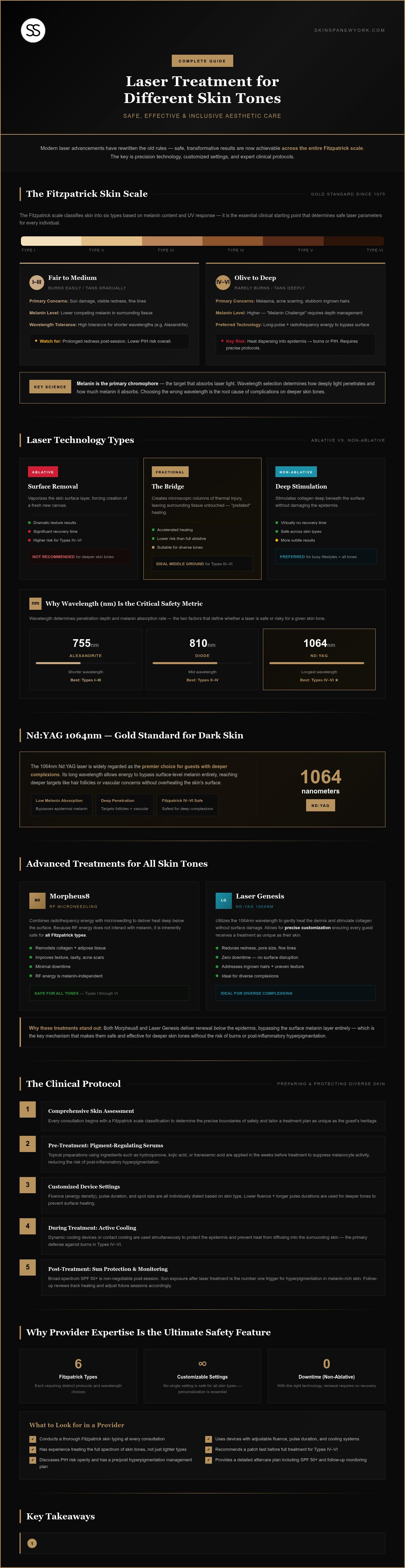
The foundation of any successful aesthetic result is a deep, clinical understanding of the canvas. In our practice, we categorize this canvas using the Fitzpatrick Skin Phototype scale, a classification system ranging from Type I to Type VI. Developed in 1975, this scale remains the gold standard for predicting how skin will respond to ultraviolet light and, more importantly, how it interacts with laser energy. It's the essential starting point for every guest because it dictates the boundaries of safety and the potential for transformation.
To understand the science, you must understand chromophores. In the context of laser treatment for different skin tones, melanin is the primary chromophore, the specific target that absorbs the laser's light. Early laser technology was somewhat rudimentary; it often couldn't distinguish between the melanin in a hair follicle and the melanin in the surrounding skin. This limitation meant that for many years, individuals with deeper complexions were told that lasers simply weren't for them. Today, the narrative has changed. Modern precision allows us to select specific wavelengths that respect the skin's natural pigment while effectively addressing concerns like texture and hair removal.
Fitzpatrick Types I-III: Fair to Medium Tones
Guests within the Type I to III range typically have fair to medium complexions that burn easily or tan gradually. Their primary concerns often center around sun damage, visible redness, and the emergence of fine lines. Because there's less competing melanin in the surrounding tissue, these skin types generally have a high tolerance for shorter wavelengths, such as the Alexandrite laser. While the risk of post-inflammatory hyperpigmentation is lower for these types, they are often prone to prolonged redness after a session. We focus on controlled delivery to ensure the skin recovers quickly, leaving behind a refreshed and even appearance.
Fitzpatrick Types IV-VI: Olive to Deep Tones
For those with olive, brown, or deep skin tones, the approach shifts toward sophisticated depth management. These types are more likely to experience melasma, acne scarring, or stubborn ingrown hairs. The "Melanin Challenge" is a clinical reality where we must prevent heat from dispersing into the epidermis, which could lead to burns or scarring. However, safe doesn't mean ineffective. By utilizing long-pulse technology and radiofrequency energy, we can bypass the surface entirely. This allows us to treat the underlying issues with the same efficacy as lighter skin types, ensuring that laser treatment for different skin tones is inclusive, powerful, and, above all, predictable. Every consultation begins with this assessment, ensuring your treatment plan is as unique as your heritage.
Ablative vs. Non-Ablative: Choosing the Right Laser Technology
Choosing the right technology is an exercise in precision and personalization. In the world of aesthetics, lasers generally fall into two categories: ablative and non-ablative. Ablative lasers are designed for a dramatic texture overhaul. They work by vaporizing the surface layer of the skin, essentially forcing the body to create a fresh, new canvas. While the results are often striking, the recovery period is significant. In contrast, non-ablative lasers stimulate collagen production deep beneath the surface without damaging the epidermis. This approach offers a more subtle renewal with virtually no recovery time, making it a favorite for those with busy metropolitan lifestyles.
Fractional technology serves as the vital bridge between these two extremes. Instead of treating the entire skin surface, fractional lasers create microscopic columns of thermal injury, leaving the surrounding tissue untouched. This "pixilated" approach accelerates healing and significantly lowers the risk profile for diverse complexions. When considering laser treatment for different skin tones, the most critical safety metric is the wavelength, measured in nanometers (nm). The wavelength determines how deeply the light penetrates and how much of it is absorbed by the melanin in your skin, which is the key to avoiding unwanted side effects.
The Nd:YAG 1064nm: The Gold Standard for Dark Skin
The 1064nm Nd:YAG laser is widely regarded as the premier choice for guests with deeper complexions. Its long wavelength allows the energy to bypass surface-level melanin entirely, reaching deeper targets like hair follicles or vascular concerns without overheating the skin's surface. Nd:YAG is the safest choice for Fitzpatrick IV-VI due to its lower melanin absorption rate. It provides a reliable path to smooth, clear skin without the fear of thermal injury. If you are curious about which wavelength best suits your unique goals, a bespoke consultation can provide the clarity and confidence you need.
Erbium vs. CO2 Lasers: When to Proceed with Caution
CO2 lasers are legendary for their ability to erase deep wrinkles and severe scarring. However, their high heat output carries a substantial risk of post-inflammatory hyperpigmentation (PIH) for those with olive or brown skin. Erbium lasers offer a gentler ablative alternative. They are absorbed more efficiently by the water in your skin, leading to less "collateral" heat and faster healing times. Regardless of the technology used, we prioritize safety by utilizing test patches. This clinical step allows us to observe your skin's unique response in a small, discreet area before proceeding with a full treatment, ensuring your results are as safe as they are transformative.
Advanced Treatments for All Tones: Morpheus8 and Laser Genesis
Traditional skin resurfacing often felt like a blunt instrument, especially for those with melanin-rich skin. The industry has evolved. We now prioritize sophisticated modalities that offer high efficacy without the aggressive risks of the past. By shifting the focus from the surface to the deeper layers of the dermis, we can provide transformative laser treatment for different skin tones with unprecedented safety. This evolution is best represented by two of our most sought-after services: Morpheus8 and Laser Genesis.
These treatments don't just improve aesthetics; they address underlying structural concerns. For many guests, this means a simultaneous approach to correcting hyperpigmentation and resolving persistent ingrown hairs. This dual-action capability is why modern technology has largely replaced the need for high-heat, high-downtime procedures that once dominated the market. We focus on results that feel as good as they look, ensuring your skin's health is never compromised for the sake of a quick fix.
Morpheus8: Subdermal Remodeling Without Surface Risk
Morpheus8 is a masterclass in precision. It combines microneedling with radiofrequency (RF) energy to bypass the epidermis entirely. The device uses tiny, insulated needles to deliver thermal energy directly into the subdermal layers. Because the heat is released deep within the tissue rather than on the surface, the risk of pigmentary changes is virtually eliminated. This makes it a premier choice for skin tightening and contouring, particularly in our Boston and NYC clinics where guests demand high-performance results with minimal interruption to their schedules. If you're looking for advanced architectural skin renewal, our Morpheus8 NYC treatments offer a safe, clinical solution for all Fitzpatrick types.
Laser Genesis: The Multi-Tone Rejuvenator
Often referred to as a "lunchtime" laser, Laser Genesis is celebrated for its ability to treat a wide array of concerns without any visible downtime. It works by gently warming the dermis to stimulate natural collagen production. This process is highly effective for refining pores, smoothing texture, and calming the redness associated with "maskne" or urban pollutants. Its safety profile is so robust that it remains a viable laser treatment for different skin tones even during the brighter months in Miami. While sun protection remains a non-negotiable part of the protocol, the gentle nature of Laser Genesis ensures that your path to a radiant, even complexion is steady and secure, regardless of the season or your skin's natural depth.
The Clinical Protocol: Preparing and Protecting Diverse Skin
Achieving flawless results isn't solely dependent on the technology used during your session. It's a journey that begins weeks before you step into our sanctuary. For those seeking laser treatment for different skin tones, the clinical protocol is built around one central goal: keeping the skin's pigment-producing cells in a state of calm. When melanocytes are overstimulated, the risk of complications increases. This is why we adhere to a strict four-week rule regarding active sun exposure. UV light acts as a catalyst, making your skin hypersensitive to the thermal energy of the laser. By avoiding the sun and prioritizing protection, you ensure your skin is in the optimal state for renewal.
In metropolitan hubs like New York City and Boston, we often refer to the colder months as "laser season." The shorter days and reduced UV index provide a natural safeguard, allowing guests to undergo more intensive treatments with peace of mind. However, the protocol remains just as meticulous regardless of the calendar. Post-treatment cooling is another non-negotiable step. By rapidly bringing the skin's temperature back to baseline, we minimize the inflammatory response that often leads to post-inflammatory hyperpigmentation (PIH). It's this proactive approach that transforms a routine procedure into a premier aesthetic experience.
The Role of Tyrosinase Inhibitors
Think of tyrosinase inhibitors as a "volume knob" for your skin's pigment production. Ingredients like Kojic acid, Vitamin C, and medical-grade Hydroquinone work by blocking the enzyme responsible for creating melanin. When these are integrated into your routine, they prevent melanocytes from "over-firing" during the body's natural healing process. We recommend a focused two-week preparation period using a bespoke regimen of medical-grade skincare to stabilize your complexion. This preparatory phase is the secret to achieving that coveted, even glow without the worry of rebound darkening. To start your journey with a professional assessment, you can schedule your consultation online today.
Sun Protection in High-UV Markets
In high-UV environments like Miami, sun protection is an art form. We prioritize physical sunscreens containing zinc oxide or titanium dioxide over chemical alternatives. Physical blockers sit on top of the skin, reflecting heat and light away rather than absorbing it. This is particularly crucial after laser resurfacing or hair removal, when the skin's barrier is temporarily more vulnerable. Reapplication every two hours is the gold standard for maintaining your results. For an added layer of recovery, a customized facial serves as the perfect post-laser hydration boost, replenishing moisture and soothing the dermis to ensure your laser treatment for different skin tones delivers lasting, radiant success.
Why Provider Expertise is the Ultimate Safety Feature
While the evolution of medical-grade devices has made laser treatment for different skin tones more accessible than ever, the technology is only as effective as the hands that guide it. A sophisticated laser in the hands of an untrained technician remains a risk. At Skin Spa New York, we prioritize ongoing education that focuses specifically on the nuances of ethnic skin safety. This ensures our providers don't just follow a manual; they understand the physiological response of melanin to various energy levels. Expertise isn't just about operating a machine. It's about recognizing the subtle signs of skin distress before they become complications.
The most significant danger in modern aesthetics is the "one-size-fits-all" approach. Many devices come with factory presets for different Fitzpatrick types, but these settings are merely starting points. A seasoned professional assesses your skin's immediate reaction, adjusting pulse duration and cooling mechanisms in real-time. This level of customization is what prevents thermal injury and ensures that your path to clearer skin is both safe and effective. Choosing a medical-grade environment for your procedures provides the clinical oversight and high standards necessary to support your skin's recovery and long-term health.
During your initial consultation, you should feel empowered to ask specific questions to gauge the level of care you'll receive. Consider asking the following:
- Which specific laser wavelengths do you recommend for my unique skin tone?
- How much experience do you have treating guests with my specific Fitzpatrick type?
- What integrated cooling techniques will be used to protect my skin during the session?
Setting Realistic Expectations for Results
Safety often requires a more measured pace. For deeper skin tones, we may utilize more conservative energy settings to avoid overstimulating melanocytes. This approach might mean you need a few additional sessions to reach your goal, but it ensures the results are achieved without the risk of scarring or rebound pigmentation. We view aesthetic care as a journey of transforming skin health rather than a quick fix for a single spot. This conservative philosophy leads to superior, more natural-looking outcomes that respect the integrity of your skin.
Your Journey at Skin Spa New York
Whether you visit us in the heart of Manhattan, the historic streets of Boston, or the vibrant neighborhoods of Miami, you'll find a consistent standard of high-tech care. We've designed our spaces to be a reliable sanctuary where clinical results meet high-end hospitality. Our goal is to make you feel like a valued guest, providing personalized attention that prioritizes your comfort and confidence. We believe that everyone deserves access to the latest aesthetic advancements regardless of their heritage. Schedule your expert skin consultation today.
Elevate Your Skin Health with Clinical Precision
Modern aesthetics has moved beyond the "one-size-fits-all" era, replacing outdated risks with sophisticated, pigment-safe protocols. You've learned that achieving a clearer, more refined complexion is no longer limited by your position on the Fitzpatrick scale. By utilizing advanced Nd:YAG and radiofrequency technologies, we can target concerns like texture, scarring, and hair removal while keeping the skin's surface entirely protected. Safety isn't just about the machine; it's about the expert technicians who customize every setting to your unique biology.
With premier locations in NYC, Boston, and Miami, Skin Spa New York serves as your reliable sanctuary for transformation. Our providers are extensively trained in the nuances of laser treatment for different skin tones, ensuring that every guest receives a plan as individual as their own skin. We invite you to experience the synergy of high-tech results and high-end hospitality. Your journey toward a more radiant, confident version of yourself begins with a conversation. Book Your Personalized Skin Assessment today and discover the difference that clinical expertise makes. We look forward to guiding you toward your most luminous skin yet.
Frequently Asked Questions
Is laser hair removal safe for dark skin tones?
Yes, laser hair removal is entirely safe for dark skin tones when the provider utilizes the 1064nm Nd:YAG wavelength. This specific technology bypasses the melanin in the skin's surface to target the hair follicle directly, which prevents thermal injury to the surrounding tissue. It's a gold standard in our clinics to ensure effective hair reduction without compromising the integrity of deeper complexions.
Can laser treatments cause permanent skin discoloration?
Permanent discoloration is extremely rare in a professional, medical-grade environment, though improper settings can lead to long-term changes. Most instances of darkening are temporary post-inflammatory hyperpigmentation, which typically resolves with proper topical care and time. This underscores the vital importance of choosing a provider who specializes in laser treatment for different skin tones and understands the safety margins required for each Fitzpatrick type.
What is the best laser for treating acne scars on brown skin?
Morpheus8 is widely considered the premier choice for treating acne scars on brown skin because it utilizes radiofrequency energy to remodel tissue from within. By delivering heat deep beneath the surface through insulated needles, it avoids the pigment-rich epidermis and significantly reduces the risk of scarring. Laser Genesis also serves as an excellent, gentler alternative for refining texture and smoothing minor imperfections without any downtime.
How do I know my Fitzpatrick skin type?
Your Fitzpatrick skin type is determined through a clinical assessment of your genetic heritage and how your skin naturally reacts to sun exposure. The scale ranges from Type I, which always burns and never tans, to Type VI, which is deeply pigmented and rarely burns. Our providers perform this evaluation during your initial consultation to calibrate the precise energy settings needed for your specific profile.
What is Post-Inflammatory Hyperpigmentation (PIH) and how can I avoid it?
PIH is a temporary darkening of the skin that occurs as a protective response to inflammation or thermal injury. You can minimize this risk by utilizing tyrosinase inhibitors, such as Vitamin C or Kojic acid, for at least two weeks before your session. Additionally, ensuring the skin is properly cooled immediately after treatment helps quiet the melanocytes and prevents the overproduction of pigment during the healing phase.
Can I get laser treatment if I have a tan?
You must avoid laser treatments if you have an active tan from the sun, tanning beds, or topical bronzers. Tanned skin has a higher concentration of active melanin on the surface, which can cause the laser to target the skin itself instead of the intended deeper concern. We require guests to wait at least four weeks after significant sun exposure before proceeding with a session to ensure maximum safety and efficacy.
How many laser sessions will I need for my skin tone?
The number of sessions varies based on your goals, but guests with deeper skin tones may require a slightly higher number of treatments compared to fair skin. We often utilize more conservative energy settings to prioritize safety, which leads to a more gradual but ultimately more stable transformation. Most guests see significant improvement in their specific concerns after a series of four to six sessions of laser treatment for different skin tones.
Does laser treatment for dark skin hurt more?
Laser treatment for dark skin doesn't inherently hurt more than it does for lighter skin types. The sensation is often described as a mild snapping or warming feeling, which is well-managed through integrated cooling technologies and topical numbing when necessary. Our focus is on maintaining your comfort throughout the experience, ensuring a serene and professional atmosphere during every visit to our sanctuary.
