

A truly effective treatment should never feel like a luxury afterthought; it is a clinical necessity for the high-performing professional balancing the rigors of city life. You have likely experienced the frustration of a "fluff" massage that provides temporary relaxation but fails to address the underlying chronic tension in your neck and shoulders. As the global market for professional massage therapy is expected to reach $22.62 billion by 2026, the industry is shifting toward a more sophisticated, results-oriented model that prioritizes physiological outcomes over mere pampering.
We understand that your time is your most valuable asset and you require a sanctuary that offers both modern elegance and measurable physical relief. This guide will help you decode the complexities of different modalities, from the rhythmic precision of a Swedish massage to advanced bodywork tailored for mobility. You will discover how to select a treatment that reduces cortisol and improves circulation, ensuring your wellness routine is as efficient and refined as the rest of your life. We are moving beyond the surface to explore the clinical benefits and expert techniques that define a premier therapeutic experience.
Key Takeaways
- Learn how evidence-based massage therapy shifts your nervous system from a fight-or-flight state to restorative parasympathetic dominance for lasting systemic balance.
- Utilize a professional framework to select the ideal modality based on whether you require acute physical recovery or general systemic renewal.
- Identify your specific "Urban Pain Profile" to help your licensed expert customize every stroke for maximum tension relief and improved mobility.
- Master the essential preparation steps, such as optimal hydration and light nutrition, to enhance your body’s receptivity during the therapeutic window.
- Understand the importance of a sophisticated, clinical environment in ensuring your treatment respects your time and delivers measurable wellness results.
Understanding Massage Therapy: More Than a Luxury Ritual
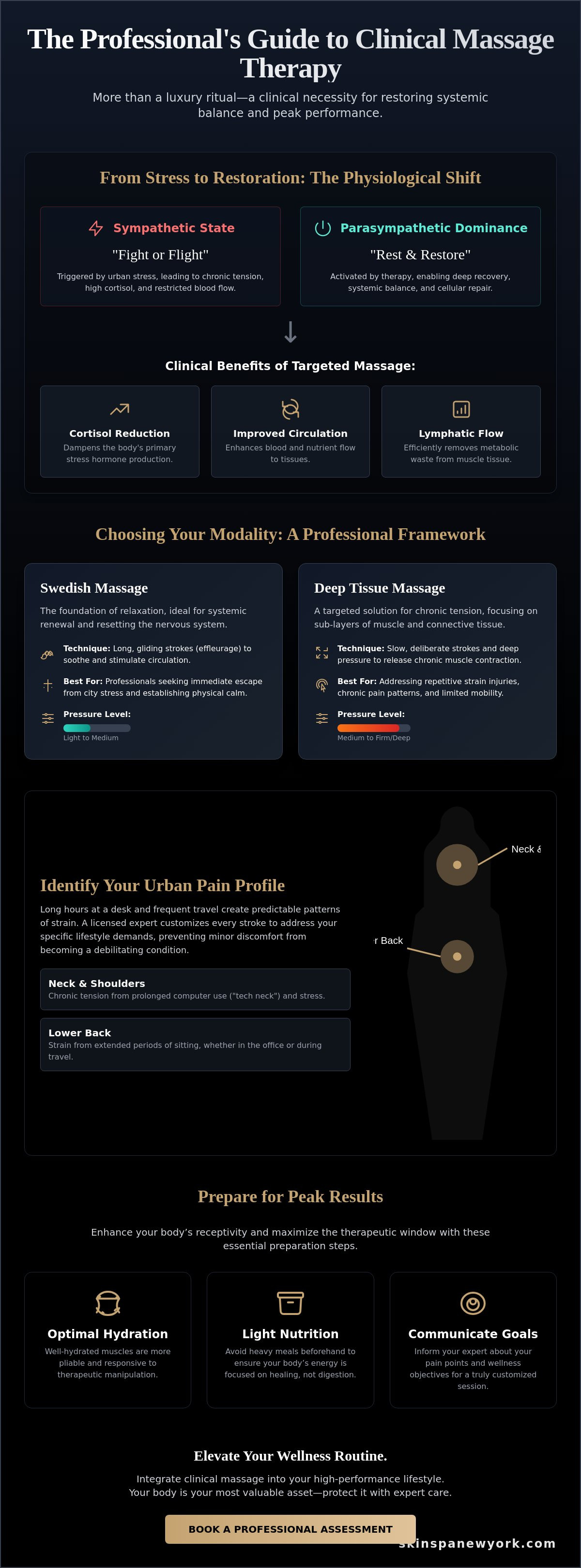
While many view a spa visit as an occasional indulgence, professional massage therapy is actually a precise, evidence-based discipline. It involves the intentional manipulation of soft tissues to restore systemic balance throughout the body. Instead of just feeling relaxed, your body undergoes a profound physiological transformation during a session. This process facilitates a critical shift from the sympathetic nervous system, often called the fight-or-flight response, to the parasympathetic state of dominance. This is where true recovery happens.
In a high-end clinical environment, the experience begins well before the first technique is applied. A licensed expert performs a thorough assessment of your muscle condition and range of motion to identify areas of restricted blood flow or chronic contraction. This level of scrutiny ensures that the treatment is safe and effective. We believe that customized wellness should be the standard baseline rather than a premium add-on. Every session is calibrated to your unique physiological needs and the specific demands of your lifestyle.
The Clinical Science of Touch
When a therapist applies targeted pressure, they are stimulating mechanoreceptors located within your skin and muscles. These specialized sensory organs send immediate signals to the brain that effectively dampen pain and reduce the production of cortisol. This physical interaction also encourages lymphatic flow, which is essential for the efficient removal of metabolic waste from your tissues. Reviewing the history and techniques of massage reveals a long-standing commitment to these biological principles of healing. Myofascial release is a specialized technique used to restore elasticity to the connective tissue that surrounds and supports your muscles.
Massage as a Preventive Health Strategy
For the modern urban professional, regular sessions are a vital defense against chronic repetitive strain injuries caused by long hours at a desk or frequent travel. Addressing these issues early prevents minor discomfort from evolving into a debilitating condition. There is a direct, undeniable link between physical ease and the mental clarity required to perform at your peak in a fast-paced environment. Integrating these treatments into a comprehensive medical spa routine ensures that your body remains as resilient as your ambitions. By maintaining a proactive stance on your well-being, you protect your most valuable asset: your health.
Choosing Your Modality: A Comparison of Professional Techniques
Selecting the right modality requires an honest assessment of your current physical state. Are you managing acute pain from a specific repetitive strain, or is your goal to combat the general fatigue of a demanding week? Understanding this distinction is the first step in a professional massage therapy consultation. While it's tempting to assume that deeper pressure always yields better results, the most effective treatments are often those that respect the body’s natural threshold for release. High-quality bodywork is a collaborative process where your feedback ensures the transition between different techniques remains both comfortable and clinically productive.
Swedish Massage: The Foundation of Relaxation
For those entering a sanctuary for the first time or simply needing to reset, Swedish massage offers a refined introduction to professional bodywork. It utilizes long, gliding strokes known as effleurage to stimulate circulation and soothe the nervous system. This modality serves as a baseline for restoration, making it an ideal choice for urban professionals seeking an immediate escape from city stress. It isn't just about pampering; it's about establishing a foundation of physical calm that allows the rest of your systems to function at their peak.
Deep Tissue and Lymphatic Drainage: Targeted Solutions
While Swedish techniques address the surface, Deep Tissue focuses on the sub-layers of musculature and connective tissue. It is designed to release chronic patterns of tension, often resulting in what clients describe as "good pain." This sensation is a productive release of tight fibers, which is distinctly different from the sharp discomfort of an injury. In contrast, Lymphatic Drainage is a specialized technique focused on fluid movement rather than muscle manipulation. It is frequently the preferred choice for post-operative recovery or reducing systemic puffiness. Current research on massage therapy benefits suggests that these targeted approaches can significantly improve mobility and recovery times when applied by a licensed expert.
Specialized Enhancements and Tailored Muscle Care
To accelerate the therapeutic impact of your primary session, consider incorporating specialized enhancements. Localized heat or clinical-grade aromatherapy can deepen the state of relaxation, allowing your therapist to work more efficiently on stubborn knots. These additions are not mere accessories; they are precision tools that customize the experience to your specific physiological needs. To find the right fit for your wellness goals, you can browse the full collection of tailored body treatments available at our premier locations. By combining foundational techniques with modern enhancements, you create a comprehensive path to renewal.
The Customization Framework: Matching Treatment to Lifestyle
Modern life in a high-velocity metropolitan setting dictates specific physical patterns that often lead to chronic discomfort. We categorize these recurring issues into "Urban Pain Profiles," which allow our licensed experts to modify your session with clinical precision. For instance, "The Tech Neck" profile addresses the cervical strain and pectoral tightness caused by prolonged digital device usage. In these cases, your therapist focuses on the anterior neck muscles and the upper thoracic spine to restore postural alignment. Conversely, "The High-Heel Hiker" requires intensive work on the calves and lower back to alleviate compression. Even "The Jet-Lagged Traveler" profile exists to address systemic inflammation and fluid retention after long-haul flights. This tailored approach ensures that every minute of your massage therapy session is dedicated to your specific physiological needs.
Assessing Your Muscle Condition
During your initial consultation, provide your therapist with details about your daily routine and any recent physical stressors. It is helpful to distinguish between "trigger points," which are highly localized knots of muscle fiber, and general muscular soreness. Professional therapists use a palpation assessment to map out tension areas and determine the underlying condition of the soft tissue before beginning the treatment. This diagnostic step is essential for creating a roadmap for your session. Understanding the physical and mental benefits of massage helps you communicate your goals more effectively, whether you seek pain resolution or cognitive clarity.
Synergistic MedSpa Treatments
In a sophisticated wellness environment, bodywork does not exist in a vacuum. It plays a critical role in optimizing the results of advanced aesthetic procedures. Massage therapy complements Morpheus8 NYC treatments by improving tissue health and local circulation, which can enhance the skin's natural remodeling process. When you combine body sculpting services with lymphatic drainage, you accelerate the removal of metabolic debris and reduce post-treatment puffiness. This is the core of the Skin Spa approach; we view medical aesthetics and manual therapy as a single, holistic path to renewal. To maintain these clinical results, most professionals recommend a frequency of one session every two to four weeks. Integrating your sessions with Morpheus8 body contouring creates a comprehensive regimen that addresses both the structural and aesthetic aspects of your well-being.
Preparing for Your Session: Maximizing the Therapeutic Window
The efficacy of professional bodywork depends largely on the state of your body and mind before you even reach the table. To achieve the most profound results, you must view your treatment as a comprehensive cycle rather than an isolated sixty-minute event. This "therapeutic window" begins several hours before your appointment and extends well into the following day. By following a structured protocol, you ensure that your tissues are receptive and your nervous system is primed for the shift into a restorative state. A well-prepared guest arrives with a calm heart and a body that is ready to release the accumulated stressors of the urban environment.
Pre-Treatment Protocol
Success starts with a graceful transition. We recommend arriving at the sanctuary at least fifteen minutes early to shed the mental weight of the city rush. This buffer allows your heart rate to stabilize and your mind to quiet, making the initial minutes of your session more productive. Regarding attire, comfort is paramount; however, professional draping is a standard of care that respects your boundaries while allowing the therapist access to specific muscle groups. You should always feel empowered to communicate your comfort levels clearly. To prevent internal discomfort during the session, avoid heavy meals or excessive caffeine for at least two hours prior to your arrival. A light, protein-rich snack is acceptable, but a full digestive system can interfere with the deep relaxation required for effective massage therapy.
Post-Massage Recovery and Integration
Once the session concludes, the recovery phase begins. Hydration is a clinical necessity, not a mere suggestion. As manual manipulation releases metabolic waste from the muscle fibers, your system requires an influx of water to flush these elements efficiently through the kidneys. You may experience a "post-massage glow" characterized by deep relaxation, though mild soreness in targeted areas is a normal response to deep tissue work. This sensation typically dissipates within twenty-four hours, leaving behind improved mobility and reduced tension. To sustain these benefits, consider the cumulative effect of regular care. Most urban professionals find that scheduling sessions at consistent intervals prevents the re-emergence of chronic pain patterns. To experience this level of professional care first-hand, you can schedule your next massage therapy session at one of our premier sanctuary locations. Consistency is the key to transforming a single moment of relief into a permanent state of well-being.
The Skin Spa Sanctuary: Elite Massage Therapy in NYC, Boston, and Miami
Skin Spa New York represents the premier intersection of clinical results and urban elegance. In the heart of high-velocity cities like NYC, Boston, and Miami, we provide a reliable sanctuary where professional massage therapy is elevated to a precise science. It's not just about the treatment; it's about the entire experience. Our spaces are designed to be composed and serene, offering a necessary contrast to the frantic pace of metropolitan life. When you step through our doors, you're transitioning from the noise of the street to a polished, professional atmosphere where your comfort is the absolute priority. We've crafted every detail of our environment to ensure it feels both aspirational and accessible.
Licensed Expertise and Personalized Hospitality
We maintain rigorous standards for every massage professional on our team. Each therapist is a licensed expert who undergoes continuous training to stay at the forefront of both wellness trends and clinical bodywork techniques. This ensures that your provider isn't just performing a routine but is actively assessing your muscle health and adjusting their approach in real-time. Our "Sanctuary" philosophy isn't just a design choice. It's a commitment to creating a space where you feel like a valued guest rather than just another appointment on a calendar. This warm, personalized attention is what distinguishes our approach from more clinical or impersonal facilities. You can expect a level of care that is both authoritative and deeply empathetic to your individual needs.
Booking Your Path to Restoration
Navigating our service menu is designed to be as efficient as the treatments themselves. Whether you require the foundational relaxation of a Swedish massage, the intensive focus of Deep Tissue, or the specialized fluid movement of Lymphatic Drainage, our offerings are curated for maximum impact. We don't believe in one-size-fits-all solutions. Every session is a bespoke experience, carefully tailored to align with your specific lifestyle goals and physical needs. You can easily select the treatment that fits your current "Urban Pain Profile" and secure your time in just a few clicks. The path to systemic renewal and reduced cortisol is waiting for you. We invite you to Explore our Massage and Body Collection to book your session today and experience a transformation that respects your time and your health. Our team is ready to guide you toward a more resilient, refreshed version of yourself.
Elevate Your Wellness Regimen for 2026
Professional massage therapy has evolved into a precision-engineered tool for maintaining systemic health in a demanding urban environment. You now have the framework to move beyond generic relaxation and select a treatment that addresses your specific physiological needs. Whether you're resolving chronic tension or accelerating recovery through lymphatic drainage, prioritizing a clinical approach to bodywork transforms a simple appointment into a significant investment in your long-term mobility and mental clarity.
Skin Spa New York combines over 20 years of urban wellness expertise with the refined atmosphere of our sophisticated sanctuaries in NYC, Boston, and Miami. Our Licensed Massage Therapists provide the authoritative care and personalized hospitality required to help you perform at your peak. It's time to experience a sanctuary that respects your schedule and your wellness goals with equal dedication. Browse the Massage & Body Collection to begin your journey toward a more resilient and composed version of yourself. We look forward to welcoming you into our space for a truly transformative experience.
Frequently Asked Questions
What is the difference between Swedish and Deep Tissue massage?
Swedish massage focuses on the superficial layers of muscle using long, gliding strokes to improve circulation and induce relaxation. In contrast, deep tissue techniques target the sub-layers of musculature and connective tissue to release chronic patterns of tension. While Swedish is ideal for general stress management, deep tissue is preferred for resolving specific muscular knots. Your therapist will always adjust the intensity based on your physiological response and comfort level.
How often should I get a massage for chronic back pain?
Most professionals recommend a frequency of once every one to two weeks when addressing acute chronic back pain. This consistent schedule allows the therapist to progressively break down adhesions and restore mobility before the muscles return to their habitual state of contraction. Once your condition stabilizes, you can transition to a maintenance phase of once a month. Regular massage therapy sessions ensure that minor tension doesn't evolve into a debilitating injury.
Can I get a massage if I am currently undergoing laser hair removal?
You can safely receive a massage while undergoing laser hair removal, provided you avoid the treated area for at least 24 to 48 hours. The skin is often more sensitive following a laser session, so it's essential to allow any heat or redness to dissipate before applying manual pressure. Inform your therapist about your recent laser treatment so they can customize your session and avoid any potential irritation in the designated zones.
What should I expect during my first lymphatic drainage session?
Expect a very light, rhythmic touch that feels significantly different from the deeper pressure of a traditional session. Lymphatic drainage focuses on moving fluid through the system rather than manipulating muscle fibers. You will likely feel a sense of lightness and reduced puffiness immediately following the treatment. This modality is particularly effective for post-operative recovery or systemic detoxification, helping to clear metabolic waste from the tissues with clinical precision.
Are there any risks associated with professional massage therapy?
Risks are minimal when the treatment is performed by a licensed professional, though some guests experience temporary soreness or minor bruising after deep tissue work. Certain medical conditions, such as recent blood clots or active skin infections, serve as contraindications that require a physician's clearance. A thorough initial consultation allows our experts to screen for these factors, ensuring your massage therapy session is both safe and tailored to your current health status.
How do I know which massage enhancement is right for me?
Select an enhancement based on your primary wellness goal for the day. Localized heat is excellent for melting away stubborn knots, while clinical-grade aromatherapy can deepen the psychological shift into a parasympathetic state. If you are managing systemic inflammation, a cooling enhancement might be more appropriate. Your therapist can provide a recommendation during the palpation assessment, ensuring the addition accelerates the therapeutic impact of your chosen modality.
Is it normal to feel sore after a deep tissue massage?
It is completely normal to feel mild soreness for 24 to 48 hours after a deep tissue session. This sensation, often compared to the feeling after a challenging workout, is a sign that your muscle fibers have been effectively manipulated to release chronic tension. Staying hydrated is essential during this period to help your system flush out metabolic waste. If the soreness persists beyond two days, it's helpful to mention this during your next visit.
How do I communicate my pressure preferences to the therapist?
Use a scale of one to ten to describe your desired intensity during the initial consultation. A five might represent a firm but relaxing pressure, while an eight indicates deep, therapeutic work. Don't hesitate to provide real-time feedback if the pressure needs adjustment during the session. Your therapist relies on this communication to ensure the treatment stays within your productive range of "good pain" without causing unnecessary discomfort.