

What if the most important part of your first filler appointment happens before any treatment is considered? A thoughtful conversation helps you explain what matters, understand your options, and decide whether a proposed approach feels right for you. If you’re wondering how to prepare for your first filler appointment, it’s natural to have questions about what to disclose, which treatment may suit your goals, and what to ask about afterward.
You don’t need to arrive with a perfect plan. Bring relevant health information, including medications, supplements, allergies, and previous aesthetic treatments, and be ready to describe the changes you hope to explore. Skin Spa New York offers fillers and personalized care in New York, Boston, and Miami, so an open discussion of your goals and concerns is a useful place to begin.
This guide will help you prepare questions for a licensed professional, understand how a consultation can inform individualized treatment planning, and clarify what to ask about aftercare and follow-up. The aim isn’t to settle on a predetermined result, but to leave the conversation feeling informed and comfortable about your next step.
How to Prepare for Your First Filler Appointment
Before your visit, make a current list of medications and supplements, relevant health conditions, allergies, previous injectables, and any reactions to past treatments. Write down what you hope to change, what you want to preserve, and the questions you want answered. Follow only preparation instructions from your treating professional or the practice, and don’t change medication on your own.
Key Takeaways
- Learn how to prepare for your first filler appointment by arriving informed, not by trying to diagnose yourself or choose a treatment in advance.
- Share relevant health conditions, allergies, past injectables, and previous reactions so the treating professional can review your situation.
- Ask about treatment suitability, available options, recovery guidance, follow-up, and who will provide your care.
- Use a simple appointment checklist, and follow only preparation instructions provided by your treating professional or the practice.
- Take time to review the proposed plan and clarify unanswered questions. A consultation doesn’t obligate you to proceed.
Your First Filler Appointment: What Preparation Can, and Cannot, Do
Feeling nervous before a first filler appointment is understandable. You may be unsure what to disclose, whether your goals are realistic, or what the provider will recommend. Learning how to prepare for your first filler appointment means arriving ready to talk, not diagnosing yourself or choosing a product in advance.
A filler consultation is a conversation about what you hope to change, your relevant health history, possible options, and whether treatment may be suitable for you. The provider can use what you share to discuss an approach for your circumstances. Preparation can help you express your priorities and remember important questions, but it can’t determine suitability or guarantee a particular result.
For general background, Injectable filler provides an overview of filler materials and their cosmetic and medical uses. Treat it as introductory reading, not a substitute for an individualized discussion with a licensed professional. Skin Spa New York offers fillers and provides personalized care to help clients understand products and techniques suited to their service. Ask the practice directly about its consultation process.
What happens during a first filler consultation?
Expect to discuss your goals, concerns, medical history, and questions. The provider should listen to what you want to explore before discussing possible approaches and assessing whether a recommendation fits your circumstances. The exact process can vary, so ask in advance what your appointment includes.
It’s also reasonable to ask who will provide your care and how to contact the practice if questions come up. Knowing whom to speak with and where to direct follow-up questions can make the experience clearer.
How should you set expectations before the visit?
Describe the change you’d like to explore in everyday language. For example, you might say that you want to discuss an area that looks less defined to you, rather than arriving set on a particular filler or technique. This gives the provider room to consider your goal and explain what options may be appropriate.
Recommendations depend on your circumstances and the professional’s assessment. A proposed treatment may differ from what you had in mind, and it’s fine to ask why. You can request clarification, consider the information, or take more time before deciding. A consultation is a chance to understand your options, not a commitment to proceed.
What to Share Before Your First Filler Appointment
Clear, complete information helps the provider understand your circumstances before discussing whether treatment may be suitable. As you consider how to prepare for your first filler appointment, make a current list of medications and supplements and bring it with you or have it ready to review. Don’t stop or change anything on your own. If you’re unsure whether a detail matters, share it and ask the provider.
Which health details should you discuss?
Prepare to talk about relevant medical history, allergies, previous injectables, and any reactions you experienced after past treatments. Mention recent or planned procedures, too, and ask whether their timing could affect your appointment. If pregnancy, breastfeeding, or another personal health circumstance is relevant, raise it directly with the provider. The provider can advise whether a specific detail affects your suitability for treatment.
Share your medications and supplements, health conditions, allergies, previous injectables, prior reactions, and any recent or planned procedures. This checklist helps you prepare without trying to decide what is medically significant on your own.
For additional consumer information, review the FDA’s dermal filler guidance. Use it as background, and bring questions about your own health and treatment options to your provider.
How can you explain your aesthetic goals?
Describe what you’d like to explore in your own words, and mention what you hope to preserve. For instance, you might say you’d like to discuss a feature that appears less defined while keeping your overall look familiar. You don’t need to request a specific product or technique. Your description starts the conversation, while the provider assesses which options may be appropriate.
Reference images can help you explain the qualities you’re drawn to, such as a particular balance or level of definition. Treat them as conversation aids, not a promise of an identical outcome. Individual features and circumstances vary, so ask the provider how your goal relates to the options being discussed.
Include your history with aesthetic treatments, whether injectable or otherwise, and be candid about what you liked or didn’t like. For example, say if a past result felt too subtle or more noticeable than you wanted. If you’re not sure how to describe your goal, say so. The conversation can help you refine your questions without obligating you to proceed.
Questions to Ask Before Choosing a Filler Treatment
A recommendation should make sense in light of your goals and circumstances. As part of how to prepare for your first filler appointment, write down questions that help you understand why an option is being discussed, what its limitations may be, and what other choices you have. You don’t have to decide during the conversation.
How do you assess whether a recommendation fits your goals?
Ask the treating professional to explain how the proposed approach relates to the change you described. You can also ask about possible risks, alternatives, and what it would mean to defer treatment. A clear discussion should leave room for your questions, including what the recommendation may not address. The American Academy of Dermatology offers general information about how dermatologists can diminish signs of aging. Use it as background, then ask how your circumstances affect the options being considered.
| Patient concern | Question to ask |
|---|---|
| Suitability | “Based on my goals and health history, what options may be appropriate, and why?” |
| Expectations | “What limitations or possible risks should I understand?” |
| Alternatives | “Are there other approaches, or what happens if I wait?” |
| Recovery | “What recovery guidance should I follow, and what should I clarify before treatment?” |
| Follow-up | “What follow-up arrangements are available, and how should I contact the practice with questions?” |
| Provider | “Who will provide my care, and what are their qualifications and role?” |
What should you clarify about the provider and plan?
Ask who would provide the treatment, what qualifications and experience they have, and who will be your point of contact afterward. Before agreeing to a plan, make sure you understand the options discussed and how follow-up questions are handled. Skin Spa New York offers fillers and emphasizes personalized care. You can review its product and service information for available details, then confirm specifics directly with the practice.
Fillers and Botox Cosmetic are different service categories, even though patients may consider both when exploring aesthetic treatments. If you’re comparing them, review the available Botox Cosmetic information separately and ask a licensed professional which questions apply to your goals. Don’t assume advice about one treatment automatically applies to another.
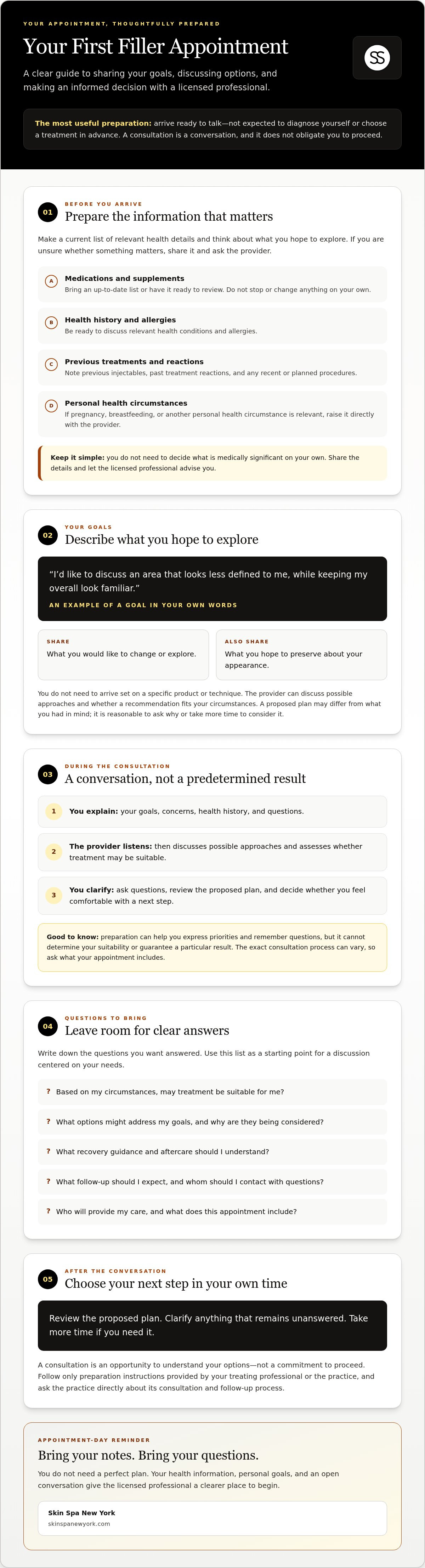
A Practical Checklist for the Day of Your Filler Appointment
A little organization can make it easier to focus on the conversation instead of trying to remember details on the spot. If you’re thinking about how to prepare for your first filler appointment, keep the day’s essentials simple and follow only instructions provided by your treating professional or the practice. General advice from elsewhere may not apply to your situation.
What should you bring and confirm?
Before leaving, check your appointment details and ask the practice whether it needs any information from you in advance. Bring identification if requested, along with a written record of relevant health details. A note on your phone or a paper list can help you share information accurately and keep your questions close at hand.
- 1. Confirm the logistics. Check your appointment time and location, and ask the practice what to bring or complete beforehand.
- 2. Bring health information. Have an up-to-date list of medications and supplements, allergies, relevant health history, prior injectable treatments, and any previous reactions.
- 3. Write down your questions and goals. Note what you’d like to discuss, what you hope to preserve, and anything you want clarified about the plan or follow-up.
Use preparation instructions from your treating professional or the practice as your guide. Don’t independently stop or change medication, add products, or impose pre-appointment restrictions based on general online advice. If you can’t find the instructions or aren’t sure what applies, contact the practice before your visit.
What if you feel uncertain during the visit?
Pause and ask. If a term is unfamiliar, request a plain-language explanation. If you don’t understand why an option is being recommended, ask how it relates to your goals and what alternatives you can consider. You can also ask what follow-up arrangements are available and how to contact the practice if questions arise later.
Your comfort matters. You may take time to consider the information rather than deciding immediately. If something about your health has changed, or a concern comes up during the appointment, tell the provider before agreeing to treatment. It’s appropriate to ask for clarification or pause while you think through the plan.
If you’re considering fillers at Skin Spa New York, you can review the filler offering as you prepare questions for your appointment. Confirm details about the practice’s current process directly with the team.
After the Consultation: Make an Informed Next-Step Decision
A consultation gives you information to consider, not an obligation to proceed. Before making a decision, review the proposed plan and whether it reflects the goals you discussed. You should feel able to explain what treatment is being recommended, why it may suit your circumstances, and what questions remain.
How can you decide whether to proceed?
Consider whether the provider addressed your priorities and explained the plan in terms you understand. If anything feels unclear, ask for more information before agreeing. You may want to clarify:
- How the proposed approach relates to your goals, and what its limitations may be.
- What alternatives you could consider, including waiting or choosing not to proceed.
- What risks the provider wants you to understand, and what follow-up they recommend.
- What aftercare information applies to your situation, if you decide to have treatment.
It’s reasonable to take time to reflect, request clarification, or decline if you don’t feel comfortable or sufficiently informed. A careful decision matters more than making one during the appointment. Recommendations and recovery guidance are individual, so direct personal questions to the treating professional rather than relying on general advice or expecting a particular result.
What should you do if questions come up afterward?
Write down any questions that arise after you leave, then contact the treating practice through the contact pathway they provided. Before you leave, confirm whom to reach and what follow-up the provider recommends. For instructions related to your health or treatment, ask the practice rather than relying on generic online guidance.
Preparing for your first filler appointment is ultimately about having an informed, comfortable conversation, then choosing your next step at your own pace. Skin Spa New York offers fillers and emphasizes personalized care to help clients understand suitable products and techniques. Explore Skin Spa New York’s filler information and contact the practice directly with questions about its current consultation process.
Take Your Next Step With Clarity
Knowing how to prepare for your first filler appointment starts with arriving ready for an open, informed conversation. Bring accurate health information, describe the changes you hope to explore, and ask how a proposed plan fits your goals. You don’t need to choose a treatment in advance, and a consultation doesn’t obligate you to proceed.
Before deciding, make sure you understand the options discussed, any limitations or risks the provider explains, and what follow-up or aftercare information applies to you. If questions remain, ask for clarification or take time to consider your next step. Guidance from the treating professional is more relevant to your situation than general online advice.
Skin Spa New York offers fillers and states its commitment to exceeding clients’ expectations. Its client-right-to-know policy advises each client on products and techniques suited to maximize the benefits of their service. To explore the filler offering and discuss your questions, explore filler services and discuss personalized care.
With clear information and room to make your own decision, you can approach the experience at a pace that feels right for you.
Frequently Asked Questions
How should I prepare for my first filler appointment?
Prepare to discuss your goals and share accurate health information, rather than choosing a product or deciding what treatment you need in advance. Make a current list of medications and supplements, relevant health conditions, allergies, previous injectables, and any prior reactions. Write down questions you want answered, too. Follow only preparation instructions provided by your treating professional or the practice, and ask them to clarify anything you’re unsure about.
What information should I bring to a filler consultation?
Bring a current medication and supplement list, relevant medical history, allergy information, and details about previous aesthetic treatments or reactions. Note any recent or planned procedures and ask the provider whether their timing matters for your appointment. You can also write down the changes you hope to explore and what you’d like to preserve. If you’re unsure whether a detail is relevant, share it for the provider’s review.
Should I stop taking medication before getting fillers?
Don’t stop, skip, or change prescribed medication on your own before a filler appointment. Share your medication and supplement list with the treating professional, and ask whether anything needs to be discussed with your prescribing clinician. Advice can depend on your health circumstances and treatment plan. If you receive instructions, make sure you understand who provided them and whom to contact if you have questions before the appointment.
Can I ask for a consultation without deciding to get filler?
Yes. A consultation can help you discuss your goals, health history, possible options, and suitability before making a decision. You can ask questions, request clarification, and take time to consider the information. You aren’t obligated to proceed with treatment simply because you attended a consultation. If you don’t feel comfortable or informed, it’s appropriate to pause, ask for more detail, or decide not to move forward.
What questions should I ask before choosing a filler treatment?
Ask why the provider is discussing a particular approach for your goals, what limitations and possible risks to understand, and whether alternatives or waiting are options. Clarify who will provide your care, what follow-up is recommended, and whom to contact with questions afterward. Ask for recovery and aftercare guidance specific to the proposed plan. Clear answers can help you assess whether you understand the recommendation well enough to make a decision.
What happens during a first filler appointment?
A first appointment may include a discussion of your goals, health history, concerns, and questions, followed by a professional assessment of whether a treatment option may be suitable. The exact process can vary by practice, so confirm what your appointment includes. Don’t assume treatment will take place during the same visit. Ask who will provide care, what options are being considered, and how to get in touch with the practice afterward.
How do I know whether a filler recommendation is right for me?
A recommendation should be explained in relation to your goals and circumstances. Ask why the provider is suggesting that approach, what alternatives and limitations apply, what risks to consider, and what follow-up is recommended. You should feel that your questions have been answered in language you understand. If you’re comparing providers in New York, Boston, or Miami, apply the same questions and take time to choose a plan that feels informed and comfortable.
