

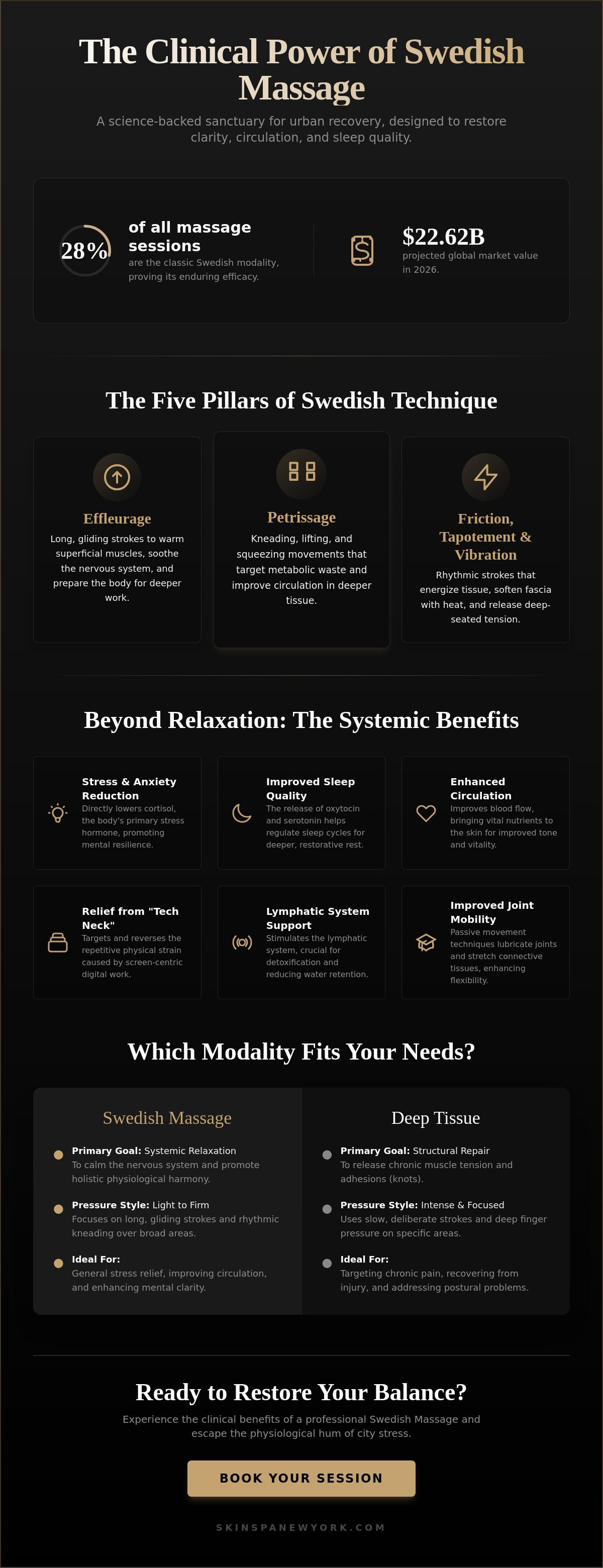
Did you know that despite the rise of complex niche therapies, the classic swedish massage still accounts for 28% of all sessions in a global market projected to reach $22.62 billion in 2026? It's easy to dismiss this modality as a simple indulgence, yet its enduring popularity stems from a deep, clinical efficacy that modern science is only beginning to fully quantify. You probably recognize the heavy tension that settles into your neck after hours of computer work, or the mental burnout that follows a week in the city. It's exhausting to feel like your body is constantly on high alert.
In this guide, you'll discover how these refined techniques serve as a sanctuary for urban recovery, backed by physiological evidence. We'll clarify the confusion between different massage styles and show you exactly how a professional session can restore your mental clarity, circulation, and sleep quality. From the rhythmic flow of effleurage to the targeted relief of petrissage, we're exploring the science-backed secrets of the world's most trusted relaxation therapy.
Key Takeaways
- Learn the clinical foundation of the five specific strokes designed to optimize oxygen flow and facilitate your body's natural detoxification.
- Understand how a professional swedish massage supports the lymphatic system and enhances joint mobility through expert passive movement techniques.
- Distinguish between systemic relaxation and structural repair to determine whether you need general stress relief or targeted deep tissue intervention.
- Master essential spa etiquette, including professional draping standards and pre-treatment decompression, for a seamless sanctuary experience.
- Discover how to pair classic massage with advanced treatments like Laser Genesis or body sculpting for a comprehensive, full-body renewal.
Defining the Swedish Massage: A Clinical Approach to Relaxation
Swedish massage is far more than a simple spa luxury; it's a systematic application of five specific strokes to the body’s soft tissues. While a clinical sports massage focuses on specific athletic injuries or performance enhancement, the Swedish approach prioritizes holistic physiological harmony. Its primary objective is to increase the oxygen flow in the blood and release metabolic toxins from the muscles. For those seeking a comprehensive overview of massage therapy, it's clear that this foundational modality serves as the gold standard for therapeutic restoration.
Swedish massage is a modality that balances rhythmic pressure with clinical anatomy to foster total body renewal.
The Five Pillars of Swedish Technique
- Effleurage: These long, gliding strokes are designed to soothe the nervous system and warm the superficial muscles. It's the essential introductory phase that prepares your body for deeper work.
- Petrissage: This kneading movement targets deeper metabolic waste within the tissue. By lifting and squeezing the muscle, the therapist encourages the clearance of cellular debris and improves circulation.
- Friction, Tapotement, and Vibration: These varied rhythms stimulate blood flow and provoke a positive muscle response. Friction creates localized heat to soften fascia; tapotement involves rhythmic tapping to energize the tissue; and vibration provides a delicate tremor that releases deep-seated tension.
The Science of the "City Stress" Sanctuary
Living in high-velocity environments like Manhattan or Miami creates a constant physiological hum of stress. A professional swedish massage effectively lowers cortisol levels, which is a critical requirement for anyone navigating a high-pressure career. This reduction in the body's primary stress hormone allows the nervous system to shift from a state of hyper-vigilance into a restorative mode.
The benefits extend to your sleep hygiene as well. The release of oxytocin and serotonin during a session helps regulate sleep cycles, providing the deep rest that busy professionals often lack. These strokes are also exceptionally effective at addressing "Tech Neck." By targeting the repetitive strain caused by digital work, the therapy reverses the physical toll of our screen-centric lives. It's an efficient way to recalibrate both your posture and your peace of mind.
The Physiological Benefits: Beyond Surface-Level Comfort
While the immediate sensation of a swedish massage is undeniably pleasant, the systemic impact on your physiology is where the true transformation occurs. It's not just about muscle relaxation; it's about optimizing the body's internal machinery. Increased circulation doesn't just feel warm. It brings vital nutrients to the skin's surface, creating a visible "glow" and improving overall skin vitality and tone. Research into what science says about massage therapy suggests that these physiological shifts also support the immune system by reducing inflammatory markers and improving the body's natural defense mechanisms.
Beyond the soft tissue, therapists often incorporate passive movement techniques during a session. By gently moving your limbs through their natural range of motion, the treatment helps lubricate joints and stretch connective tissues. This leads to a measurable improvement in flexibility, making it an excellent proactive measure for those who feel "stiff" from the urban commute or long hours at a desk.
Circulatory and Lymphatic Optimization
The rhythmic strokes of a swedish massage are strategically directed toward the heart. This technique assists venous return, which lightens the load on your cardiovascular system and improves the efficiency of blood flow. Simultaneously, the pressure stimulates the lymphatic system. This is crucial for detoxification and reducing the puffiness or water retention often caused by sedentary office work. Because these techniques mobilize metabolic byproducts, staying hydrated after your session is a clinical necessity to help your kidneys flush those released toxins.
Mental Resilience and Cortisol Regulation
In a city that never stops, the mind is frequently overstimulated. Swedish massage creates a necessary "sensory vacuum," a quiet space where the brain can disconnect from digital noise. This touch therapy has a direct clinical link to the reduction of physical anxiety symptoms, such as a racing heart or shallow breathing. By consistently lowering cortisol levels, regular sessions help you build cumulative resilience. You're not just recovering from today's stress; you're preparing your nervous system for tomorrow's challenges.
Integrating these sessions into a monthly wellness routine ensures that your body remains as polished and high-performing as your professional life. If you're ready to experience this level of clinical care, consider booking a swedish massage at a sanctuary designed specifically for urban recovery and total body renewal.
Swedish vs. Deep Tissue: Which Modality Fits Your Needs?
A common misunderstanding persists in the wellness industry that a swedish massage is strictly a "light" or "gentle" treatment. In reality, the distinction between Swedish and Deep Tissue isn't merely about the amount of force applied, but rather the intent and the layer of tissue being targeted. While Swedish techniques focus on systemic relaxation and surface-level tension, they can certainly be delivered with firm, purposeful pressure. Understanding this nuance is essential for selecting the treatment that aligns with your current physical state.
The primary goal of a swedish massage is to calm the nervous system and improve circulation, whereas Deep Tissue is designed to address chronic structural issues and persistent musculoskeletal knots. It's the difference between recalibrating your entire body after a stressful week and rehabilitating a specific injury or chronic postural misalignment. When choosing your path, consider whether you feel generally "tight" and overstimulated or if you're experiencing localized, sharp discomfort that limits your movement.
The Pressure Spectrum
Within the Swedish framework, pressure is typically categorized as light, medium, or firm. Light pressure is ideal for lymphatic drainage and sensory calming. Medium pressure begins to engage the muscle fibers, while firm pressure provides a deep, satisfying release without the intense focus on specific adhesions found in Deep Tissue work. For those new to professional bodywork, Swedish is the safer, more accessible entry point. It allows your body to acclimate to therapeutic touch before you graduate to the more intense, localized work of Deep Tissue for specific, stubborn knots.
Choosing Your Treatment Path
To determine the best approach for your session, use this brief checklist to evaluate your needs:
- Recovery: Are you physically exhausted from travel, exercise, or a demanding urban lifestyle?
- Relaxation: Is your primary goal to reduce mental burnout and improve your sleep quality?
- Rehabilitation: Do you have specific "trigger points" or long-term injuries that require intense, focused pressure?
If you answered yes to recovery or relaxation, a swedish massage is your ideal modality. It's also important to remember that professional bodywork involves a dialogue. You should feel empowered to communicate with your therapist mid-session to adjust pressure. Many clients find the most value in a hybrid approach; they might request a Swedish flow for the majority of the session to soothe the nervous system, with a few minutes of deeper, targeted work on a specific area of concern. This ensures you leave the sanctuary feeling both physically relieved and mentally composed.
The debate between "good pain" and "bad pain" is also relevant here. A therapeutic release might feel intense, but it should never cause you to hold your breath or tense your muscles in a protective guard. If the pressure feels sharp or causes distress, it has crossed the line from clinical efficacy into counterproductive strain.
Preparing for Your Sanctuary: Etiquette and Expectations
Stepping into a high-end sanctuary for a swedish massage is as much about mental preparation as it is about physical relief. To derive the maximum clinical benefit from your session, you should allow yourself a brief period of pre-treatment decompression. Arriving at least fifteen minutes early allows your heart rate to settle and your mind to transition away from the frantic pace of the city. This quiet interval is the first step in signaling to your nervous system that it is safe to begin the recovery process.
Clear communication is the bridge between a good treatment and a transformative one. During your initial intake, be specific about your "trouble zones." If you've been experiencing the repetitive strain of digital work or the localized tension of a long commute, let your therapist know. This allows them to customize the rhythmic strokes of the swedish massage to address your unique physiological needs. Regarding your diet, it's best to enjoy a light meal an hour before your appointment. Avoid heavy, rich foods or excessive caffeine, as these can interfere with your body's ability to remain in a restful, parasympathetic state.
The Art of Professional Draping
One of the most common questions for those new to bodywork involves the undressing process. Professional spas adhere to a rigorous standard known as "draping." This practice ensures your modesty and comfort are maintained at all times. You'll be provided with a private space to undress to your comfort level; most guests choose to leave on undergarments, though this is optional. Throughout the session, the therapist only uncovers the specific area being worked on. Feeling secure and respected is a clinical prerequisite for the parasympathetic nervous system to engage, allowing for deeper muscle release and more effective detoxification.
Maximizing the Afterglow
The benefits of your session shouldn't end when you leave the table. Post-massage recovery is a critical phase where your body continues to flush metabolic byproducts. We recommend avoiding strenuous exercise for at least 24 hours to allow your tissues to settle. For busy professionals in NYC, Boston, or Miami, integrating bodywork into a broader self-care routine is the most effective way to maintain long-term resilience. A monthly cadence is considered the clinical gold standard for wellness, preventing the accumulation of chronic tension before it leads to burnout.
Many of our guests find that pairing their bodywork with other MedSpa treatments, such as a Customized Facial or body sculpting, creates a comprehensive approach to urban skin and body health. Experience the difference of a professionally curated session by booking your swedish massage at one of our premier locations today.
The Skin Spa New York Experience: Advanced Wellness
Skin Spa New York defines the intersection of clinical results and high-end hospitality. Our licensed therapists possess a deep understanding of what we call "urban anatomy," recognizing the unique physical tolls that a fast-paced metropolitan lifestyle takes on the body. We don't view a swedish massage as an isolated luxury. Instead, we position it as a vital component of a comprehensive wellness strategy. This approach ensures that every guest receives personalized attention that addresses both immediate tension and long-term recovery goals.
Choosing a professional sanctuary means trusting experts who prioritize your confidence and comfort. Our environments are designed to be modern, elegant, and efficient, reflecting the standards of the world-class cities we serve. By combining clinical authority with a warm, welcoming guide, we help you transition from the friction of the street to a state of composed renewal.
Synergy Between Massage and Aesthetics
The true power of our approach lies in the synergy between traditional bodywork and advanced aesthetic treatments. For instance, a swedish massage is the perfect recovery companion to Morpheus8 body treatments. While Morpheus8 focuses on subdermal contouring and skin tightening, the rhythmic strokes of a massage support the lymphatic system in processing metabolic byproducts and managing post-treatment swelling.
Massage also serves as an excellent preparation for the skin. The increased circulation ensures that tissues are well-oxygenated and highly receptive to the clinical-grade serums used in a Signature Facial or a Specialized Peel. Many of our guests opt for a "Total Transformation" package, which pairs bodywork with MedSpa treatments like Laser Genesis or body sculpting. This integrated method ensures your physical recovery matches your aesthetic aspirations.
Your Local Sanctuary in NYC, Boston, and Miami
We've strategically located our spas to ensure that clinical-grade care is always within reach. Whether you're navigating the energy of Midtown Manhattan, the historic streets of Back Bay in Boston, or the vibrant pulse of Brickell in Miami, our sanctuaries are designed for seamless accessibility. We understand that your time is valuable. Our goal is to provide a steady, composed pace that allows you to recalibrate without disrupting your schedule.
You're invited to step out of the city's frantic rhythm and into a space of polished serenity. From the moment you arrive, you're treated as a valued guest in a professional environment dedicated to your total body health. Discover how a customized approach to wellness can transform your daily experience of urban living.
Reclaiming Your Physical and Mental Equilibrium
Swedish massage remains the cornerstone of therapeutic bodywork because it addresses the modern friction of city life with scientific precision. You've seen how these rhythmic techniques optimize your circulation, lower cortisol, and prepare your skin for advanced aesthetic treatments. By prioritizing a monthly cadence, you transform a simple session into a proactive pillar of your long-term health strategy. It's about more than just a moment of quiet; it's a clinical commitment to your body's ability to recover and thrive in a demanding environment.
Since 2005, Skin Spa New York has provided over 20 years of urban wellness expertise. Our licensed therapists specialize in clinical relaxation, ensuring every guest receives the refined, personalized care they deserve. With convenient locations across Manhattan, Boston, and Miami, your next moment of polished serenity is never far away. We invite you to experience the difference of a sanctuary that values both your time and your results. Book Your Sanctuary: Schedule a Swedish Massage at Skin Spa New York and take the first step toward a more resilient, refreshed version of yourself. We look forward to being your partner in total body renewal.
Frequently Asked Questions
Is Swedish massage better than deep tissue for stress?
Swedish massage is generally the more effective choice for systemic stress reduction because it focuses on calming the nervous system. While deep tissue targets structural misalignments, the rhythmic strokes of a Swedish session encourage the release of serotonin and dopamine. This makes it an ideal sanctuary for those experiencing mental burnout or the physical hyper-vigilance common in high-pressure urban environments.
What should I wear during a Swedish massage at a professional spa?
You should undress to your personal comfort level, as professional therapists utilize strict draping standards to ensure your modesty. Most guests choose to leave on their undergarments while others prefer to remove them for a more seamless experience. Regardless of your choice, only the area being actively worked on will be uncovered, allowing you to feel secure and relaxed throughout the session.
How much should I tip for a massage in NYC or Miami?
Gratuities in major metropolitan areas like NYC or Miami typically range between 18% and 25% of the service value. This reflects the standard for high-end hospitality and professional bodywork services. While tipping is always at your discretion, it's a meaningful way to acknowledge the expertise and personalized attention provided by your licensed therapist during your treatment.
Can I get a Swedish massage if I am pregnant?
Yes, swedish massage is a safe and beneficial option for expectant mothers, provided you have passed the first trimester. It's essential to inform your therapist about your pregnancy so they can utilize specialized positioning and pillows for your safety. This modality is particularly effective at reducing the swelling and lower back tension frequently associated with the later stages of pregnancy.
How often should I get a Swedish massage to see clinical benefits?
Scheduling a session once every four weeks is considered the clinical gold standard for maintaining cumulative wellness benefits. Regular sessions prevent the long-term accumulation of "tech neck" and chronic stress, ensuring your nervous system remains balanced. For those navigating particularly high-stress periods, a bi-weekly cadence may be recommended to provide more intensive physiological support and recovery.
Will I feel sore after a Swedish massage session?
Significant soreness is rare after this type of session, though you may experience a mild sensation similar to a light workout. Because the techniques prioritize circulation and soft tissue relaxation rather than intense structural manipulation, any discomfort usually dissipates within 24 hours. Staying well-hydrated after your appointment helps facilitate the removal of metabolic byproducts and minimizes any temporary sensitivity in the muscles.
Can I combine a Swedish massage with a facial on the same day?
Combining a massage with a Customized Facial on the same day is an excellent way to achieve a full-body renewal. The increased circulation from the bodywork enhances the delivery of nutrients to the skin, making your facial treatments even more effective. This "total transformation" approach allows you to address both physical tension and aesthetic goals in a single, efficient visit to the sanctuary.
What is the difference between Swedish massage and aromatherapy?
Swedish massage refers to the specific physical techniques and strokes used to manipulate soft tissue, while aromatherapy is the therapeutic use of essential oils. Many professional environments offer aromatherapy as an enhancement to a Swedish session to further engage the senses. While the massage provides the physical release of tension, the oils provide an additional layer of sensory calming to support your mental clarity.
