

The option that can be dissolved isn’t automatically the safest choice for every patient. If you’re asking, “what is the safest type of dermal filler,” the answer depends on more than the material. The treatment area, your individual needs, and the injector’s qualifications and experience all matter. It’s understandable to feel uncertain when different claims make one product sound universally safer, especially since some fillers can’t be dissolved with the enzyme used for hyaluronic acid fillers.
This guide explains the main filler categories and what their differences may mean for safety, including the flexibility hyaluronic acid fillers can offer. No filler is risk-free. Temporary bruising and swelling can occur, and rare complications can be serious, so choosing a qualified, licensed professional is essential to making an informed decision.
You’ll learn what to ask about the filler material, product packaging, treatment area, and provider’s experience before proceeding. A personalized assessment can help you discuss options in light of your goals and medical history. Skin Spa New York lists fillers among its aesthetic services and emphasizes guidance tailored to each patient’s needs.
Key Takeaways
- The answer to “what is the safest type of dermal filler” depends on the patient, treatment area, and plan, not just the filler material.
- Hyaluronic acid, calcium hydroxylapatite, poly-L-lactic acid, and polymethylmethacrylate fillers differ in their characteristics and reversibility considerations.
- Ask how your treatment goal and facial anatomy inform the choice of filler category and treatment approach.
- Before treatment, discuss your medical history, medications, allergies, and previous fillers. Ask how to verify the product and provider’s qualifications.
- Consider suitability through a personalized assessment, with clear discussion of risks, consent, and follow-up arrangements.
What Is the Safest Type of Dermal Filler? Start With the Direct Answer
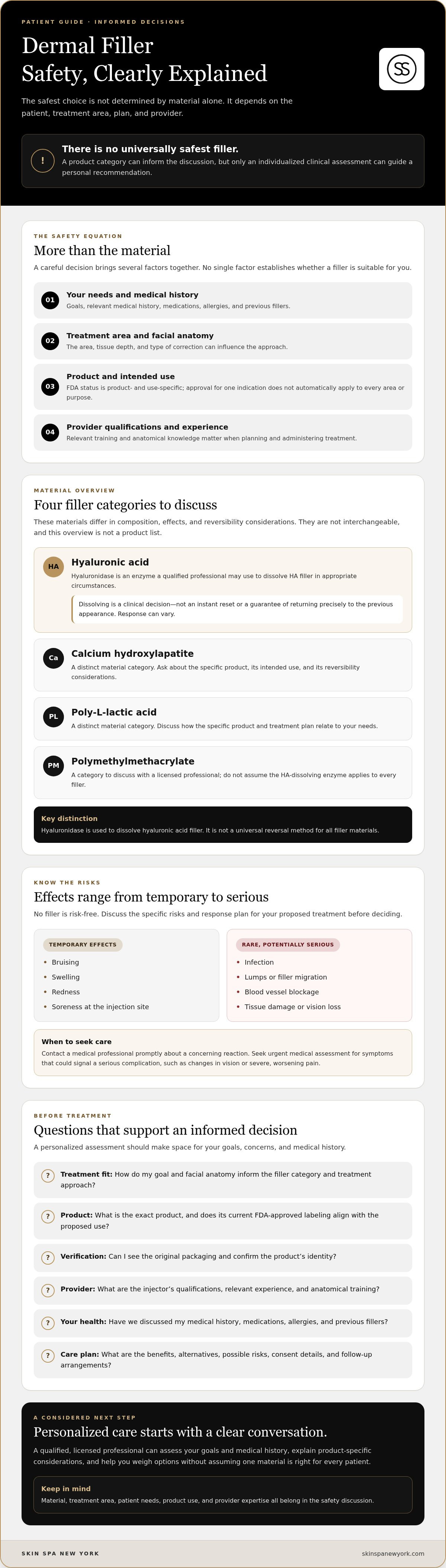
No filler type is safest for every patient or treatment area. If you’re asking what is the safest type of dermal filler, the practical answer is that safety depends on the product and its intended use, your facial anatomy and medical history, the treatment plan, and the injector’s expertise. A material may have advantages or limitations, but that doesn’t establish whether it’s suitable for you.
Your facial structure and treatment goal both matter. The area being treated, tissue depth, and type of correction can influence which product a qualified, licensed professional recommends. A material’s general safety profile describes broad characteristics, not the risks or likely outcome of an individual procedure. A filler category can inform the conversation, but only an individualized clinical assessment can guide a personal recommendation.
Why there is no universal safest filler
Different areas of the face have distinct anatomy, and a treatment intended to restore volume may call for a different approach than one addressing a line. The same filler may not be suitable for every area or patient. An assessment should consider your goals, relevant medical history, and treatment area rather than rely on a general product ranking. For background on the range of materials and uses, see this overview of injectable fillers.
FDA clearance or approval is product- and use-specific. A product’s status for one indication doesn’t automatically mean it’s approved for every treatment area or purpose. Before proceeding, ask which product is being considered, whether the proposed use aligns with its current FDA-approved labeling, and where to check current FDA information.
What patients should mean by filler safety
Safety involves more than choosing a material. It includes an appropriate treatment indication, an authentic product, clear informed consent, and administration by a trained professional with relevant anatomical knowledge. Ask to see the product’s original packaging and confirm its identity before treatment. You should also have the opportunity to discuss benefits, alternatives, possible risks, and what to do if a concern arises.
Temporary effects can include bruising, swelling, redness, and soreness at the injection site. Less common but serious complications can include infection, lumps, filler migration, or a blood vessel blockage that may cause tissue damage or vision loss. No filler is risk-free, and risk can’t be judged by material alone. A careful discussion should help you understand the specific considerations for your proposed treatment and decide whether to proceed.
How Dermal Filler Materials Differ in Reversibility and Risk
Material matters because fillers don’t all behave the same way in the body. They differ in composition, intended effect, and whether they can be dissolved. Hyaluronic acid (HA) is a widely used filler material. Calcium hydroxylapatite (CaHA) and poly-L-lactic acid (PLLA) are other material categories, but they aren’t interchangeable with HA. These are general examples, not a list of products offered by Skin Spa New York.
Reversibility can be an important part of discussing what is the safest type of dermal filler, but it doesn’t establish which material is right for a particular patient. The FDA’s information on FDA-approved dermal fillers can help patients understand that approval and permitted uses are specific to individual products and indications. Ask a licensed professional to confirm the current status and intended use of the exact product being considered.
Hyaluronic acid fillers and hyaluronidase
Hyaluronidase is an enzyme a qualified professional may use to dissolve HA filler in appropriate circumstances. This can provide an option if a correction is needed, but it isn’t an instant reset or a guarantee that the treated area will return precisely to its previous appearance. The response can vary, and dissolving filler is a clinical decision that requires professional assessment.
It’s also not a substitute for careful product selection, sound technique, or timely care. Contact a medical professional promptly about a concerning reaction. Seek urgent medical assessment for symptoms that could signal a serious complication, such as changes in vision or severe, worsening pain.
Other materials and why reversibility differs
CaHA and PLLA have different compositions and effects from HA. Hyaluronidase is used to dissolve hyaluronic acid filler, so don’t assume it can reverse fillers made from other materials. Their suitability depends on the treatment goal, your anatomy and medical history, and the product’s current approved uses. A professional can explain what can and can’t be adjusted if a concern arises.
Before deciding, ask which material is proposed, why it fits the treatment area, whether it can be dissolved, and what the plan would be if you experience a complication. These questions can make the discussion of benefits, limitations, and risks more specific. Skin Spa New York lists fillers among its aesthetic services and emphasizes discussing options suited to each patient’s needs. Ask directly which materials and treatment approaches are currently available.
Comparing Filler Safety: Match the Material to the Treatment Area
A filler’s material is only one part of the decision. Facial anatomy, tissue depth, the change you’re seeking, and your medical history all inform a professional’s assessment. The types of dermal fillers differ in their general characteristics and how concerns may be addressed, but a category alone can’t determine what’s appropriate for you.
| Material category | General characteristics | Reversibility considerations | Question to ask |
|---|---|---|---|
| Hyaluronic acid (HA) | A commonly used filler material for adding volume or softening lines. | Hyaluronidase may dissolve HA filler in appropriate circumstances; response can vary. | Is this product suitable for my goal, and what could dissolving it involve? |
| Calcium hydroxylapatite (CaHA) | A distinct material used for structural support and deeper correction in certain cases. | It isn’t dissolved with hyaluronidase. | What are the alternatives, and how would concerns be managed? |
| Poly-L-lactic acid (PLLA) | A biostimulatory material that works gradually by encouraging collagen production. | It isn’t dissolved with hyaluronidase. | How does its gradual effect fit my treatment goal? |
| Polymethylmethacrylate (PMMA) | A longer-lasting material with different properties from HA and biostimulatory fillers. | It isn’t dissolved with hyaluronidase. | What are its limitations, and what options exist if I’m dissatisfied? |
How treatment area changes the safety discussion
Lips, cheeks, and the under-eye area have different structures and may involve different tissue depths and treatment considerations. These examples aren’t recommendations. A product considered for one area isn’t automatically suitable for another. The professional should explain how the proposed treatment relates to your anatomy and goal, and confirm that its use aligns with current product labeling and clinical judgment. No area is risk-free.
Questions to ask when comparing filler options
Before deciding, ask which material and specific product are proposed, why they fit your goals, and whether there are alternatives. Clarify expected limitations, relevant aftercare, and how the provider would respond to a complication. Ask where you can review current product information, including approved uses. These questions make the discussion of “what is the safest type of dermal filler” more specific to your circumstances, rather than turning it into a general ranking.
Skin Spa New York lists fillers among its aesthetic services and emphasizes guidance tailored to each patient’s needs. Patients interested in discussing fillers can ask which materials and treatment areas are currently offered and what assessment would inform a personalized recommendation.
How Patients Can Reduce Avoidable Dermal Filler Risks
Choosing a filler is only one part of a safe treatment decision. Before booking, make sure you understand who will perform the procedure, what product is being considered, and how questions or concerns will be handled afterward. Product choice cannot replace qualified assessment, careful technique, and safe practice.
What to verify before booking a filler treatment
Ask who will perform the injection, then independently verify that person’s current professional credentials. You can also ask about their training and experience with the proposed treatment area. A qualified professional should be willing to discuss the product and the reason for the recommendation without pressuring you to proceed.
- Product identity: Ask for the product name and intended use. Confirm the packaging is sealed and original before treatment, and ask how the product and treatment details will be documented.
- Informed consent: Discuss expected benefits and limitations, alternatives, and possible complications. Take time to ask questions before agreeing.
- Follow-up plan: Ask what aftercare is recommended, whom to contact with concerns, and what steps to take if you develop symptoms that need prompt attention.
If you can’t get clear answers about the provider, product, or safety plan, pause and seek more information before deciding. Feeling comfortable asking questions is part of making an informed choice.
Medical history, consent, and post-treatment concerns
Share relevant medical conditions, medications and supplements, allergies, and previous filler treatments, including the material if you know it. This information can affect an assessment and help the professional consider your circumstances. Don’t stop prescribed medication unless the clinician who manages it advises you to do so.
Consent should give you a clear understanding of the proposed treatment, its potential benefits and limitations, alternatives, and material risks. You should have the chance to ask questions and decide without feeling rushed. If any part of the plan is unclear, ask for an explanation in language you understand.
After treatment, seek urgent medical attention for severe or worsening pain, vision changes, or unusual skin changes such as marked discoloration. These symptoms can have different causes, and only a medical professional can assess them. Don’t wait for a routine follow-up if symptoms feel urgent.
If you’re considering fillers, explore Skin Spa New York’s aesthetic services and ask what options and assessment are currently available. Skin Spa New York lists fillers among its services and emphasizes guidance suited to each patient’s needs.
Choosing a Dermal Filler Provider: A Personalized Next Step
Deciding what is the safest type of dermal filler isn’t just a matter of comparing materials. A considered choice starts with your goals, then weighs your anatomy, medical history, treatment area, and the product’s characteristics. A qualified professional should explain why an option may suit your needs, what its limitations are, and what alternatives you can consider. You should have enough information to decide without feeling rushed.
What a thoughtful filler consultation should clarify
Use the conversation to understand the proposed plan, not simply to select a product. Share what you hope to address and any concerns about reversibility or complications. Ask how your history and the intended treatment area affect suitability, and whether another approach or no treatment may be appropriate.
- Which filler material and specific product are being considered, and why?
- Is the proposed use consistent with the product’s current labeling?
- What results and limitations should I realistically understand?
- What are the material risks, alternatives, aftercare, and plan for responding to complications?
Clear answers help you understand the reasoning behind a recommendation. If an answer is unfamiliar, ask for it to be explained in plain language. Skin Spa New York describes advising each patient on products and techniques suited to their needs. Specific materials, providers, and protocols should be confirmed directly with the practice.
When to pause and seek another opinion
It’s reasonable to pause if you can’t confirm who will perform the treatment, what product is proposed, whether packaging is authentic, or how consent and complications will be addressed. Don’t proceed until your questions have been answered to your satisfaction. If you remain uncertain about suitability or the recommendation, consider seeking an independent opinion from a qualified medical professional.
A safe decision is an informed one. Clarify your goals, review your personal suitability, compare relevant material characteristics, and understand the safety plan before choosing whether to proceed. Patients interested in fillers can discuss their needs and questions with Skin Spa New York as they explore its aesthetic services, without assuming a particular filler or outcome will be recommended.
Make Your Filler Decision With Confidence
There isn’t one safest filler for every patient. The right discussion considers your goals, anatomy, medical history, treatment area, and the material’s characteristics. Hyaluronic acid fillers may be dissolvable with hyaluronidase in appropriate circumstances, while other materials can’t be reversed in the same way. That flexibility is worth discussing, but it doesn’t remove the need for careful assessment or make any treatment risk-free.
So, what is the safest type of dermal filler for you? A qualified professional can help assess suitability, explain alternatives and limitations, identify the product being considered, and review risks and follow-up plans. Skin Spa New York emphasizes advising each patient on products and techniques suited to their needs, reflecting a patient-right-to-know approach. The practice lists fillers among its aesthetic services, but confirm current availability and treatment details directly.
Bring your questions and take the time you need to make an informed choice. Explore Skin Spa New York’s aesthetic services and start a conversation about your needs and options in New York, Boston, or Miami.
Frequently Asked Questions
Is hyaluronic acid filler the safest type of dermal filler?
Not for every patient or treatment area. Hyaluronic acid (HA) fillers have a practical distinction: a qualified professional may use hyaluronidase to dissolve them in appropriate circumstances. That doesn’t make them risk-free or automatically the right choice. If you’re asking what is the safest type of dermal filler for you, discuss the proposed product, treatment area, medical history, and injector’s qualifications with a licensed professional.
Can dermal filler be dissolved if a patient dislikes the result?
Sometimes, depending on the filler material. Hyaluronidase may dissolve HA filler, but it doesn’t dissolve every type of filler, and the response can vary. It isn’t an instant reset or a guarantee that the area will return exactly to its previous appearance. A qualified professional should assess the concern and explain suitable options. Seek prompt medical care for symptoms that could indicate a serious complication, rather than waiting to address them as a cosmetic concern.
What happens if dermal filler enters a blood vessel?
Filler in a blood vessel can block blood flow and cause serious harm, including tissue damage or, in rare cases, vision loss. Warning symptoms may include severe or worsening pain, unusual skin color changes, or vision changes. These symptoms require urgent medical assessment. Contact emergency medical services or seek emergency care immediately for vision changes or other severe symptoms. Ask the provider in advance how complications are recognized and what steps to take if they occur.
Are some types of dermal filler safer for the under-eye area?
No filler category should be assumed safe for every under-eye patient. This area has specific anatomy, so suitability depends on an in-person assessment, treatment goals, and the exact product and proposed use. The FDA has not approved a filler specifically for under-eye tear trough treatment, so ask whether a proposed use is off-label and what that means. A licensed professional can explain potential benefits, alternatives, and risks before you decide.
How can a patient check whether a dermal filler is FDA-approved?
Look up the exact product on the FDA’s current dermal filler information and check its labeling for the approved treatment area and indication. Approval for one use doesn’t mean approval for every area or purpose. Ask the provider for the product name, intended use, and original packaging, then compare those details with FDA information. If the proposed use differs from the labeling, ask the professional to explain that clearly before consenting.
Can a patient have an allergic reaction to dermal filler?
Yes, an allergic or other adverse reaction is possible, though the type and likelihood depend on the product and individual patient. Tell the professional about allergies, prior reactions, relevant medical conditions, and previous filler treatments before proceeding. Ask what reactions may occur and when to seek care. Severe symptoms, difficulty breathing, or rapidly worsening swelling need urgent medical attention. Don’t assume a past filler treatment rules out a reaction to a different product.
How should a patient choose a qualified dermal filler provider?
Ask who will perform the treatment, then independently verify their current professional credentials and relevant training. Confirm the product’s identity, discuss your goals and medical history, and make sure consent covers alternatives, limitations, risks, aftercare, and a plan for concerns. Pause if answers are unclear or you feel pressured. Patients exploring options in New York, Boston, or Miami should verify provider qualifications and current filler availability directly with the practice they’re considering.
