

The most sophisticated laser technology in the world can be undone by something as simple as a hot shower or your favorite scented moisturizer. While you've likely spent months dreaming of the freedom that comes with permanent hair reduction, the initial hours following your session require a disciplined approach to protect your skin's integrity. It's completely natural to feel a sense of urgency to return to your daily routine, especially when faced with the temporary redness or "chicken skin" texture that often follows a treatment. However, knowing exactly what to avoid after laser hair removal is the difference between a seamless transformation and unnecessary irritation.
We believe that your aftercare should feel as refined and professional as the treatment itself. This guide outlines the essential "clinical quarantine" protocols designed to safeguard your results and prevent complications like hyperpigmentation or scarring. You'll discover the specific thermal windows to observe, the skincare ingredients to pause, and the lifestyle adjustments necessary to ensure your investment leads to a radiant, polished appearance. By following these professional restrictions, you can move forward with the calm confidence that your skin is receiving the expert care it deserves.
Key Takeaways
- Understand the critical 48-hour thermal window and why managing heat is essential for preventing follicular irritation.
- Learn exactly what to avoid after laser hair removal regarding UV exposure and activities that can compromise your skin's recovery.
- Identify the aggressive active ingredients and artificial fragrances in your skincare routine that must be paused to prevent chemical sensitization.
- Discover the gold standard for post-treatment grooming and why extraction methods must be replaced with gentle shaving.
- Gain insight into how clinical experts at Skin Spa New York customize aftercare protocols to ensure a smooth, professional transformation.
The 48-Hour Thermal Window: Why Immediate Aftercare Matters
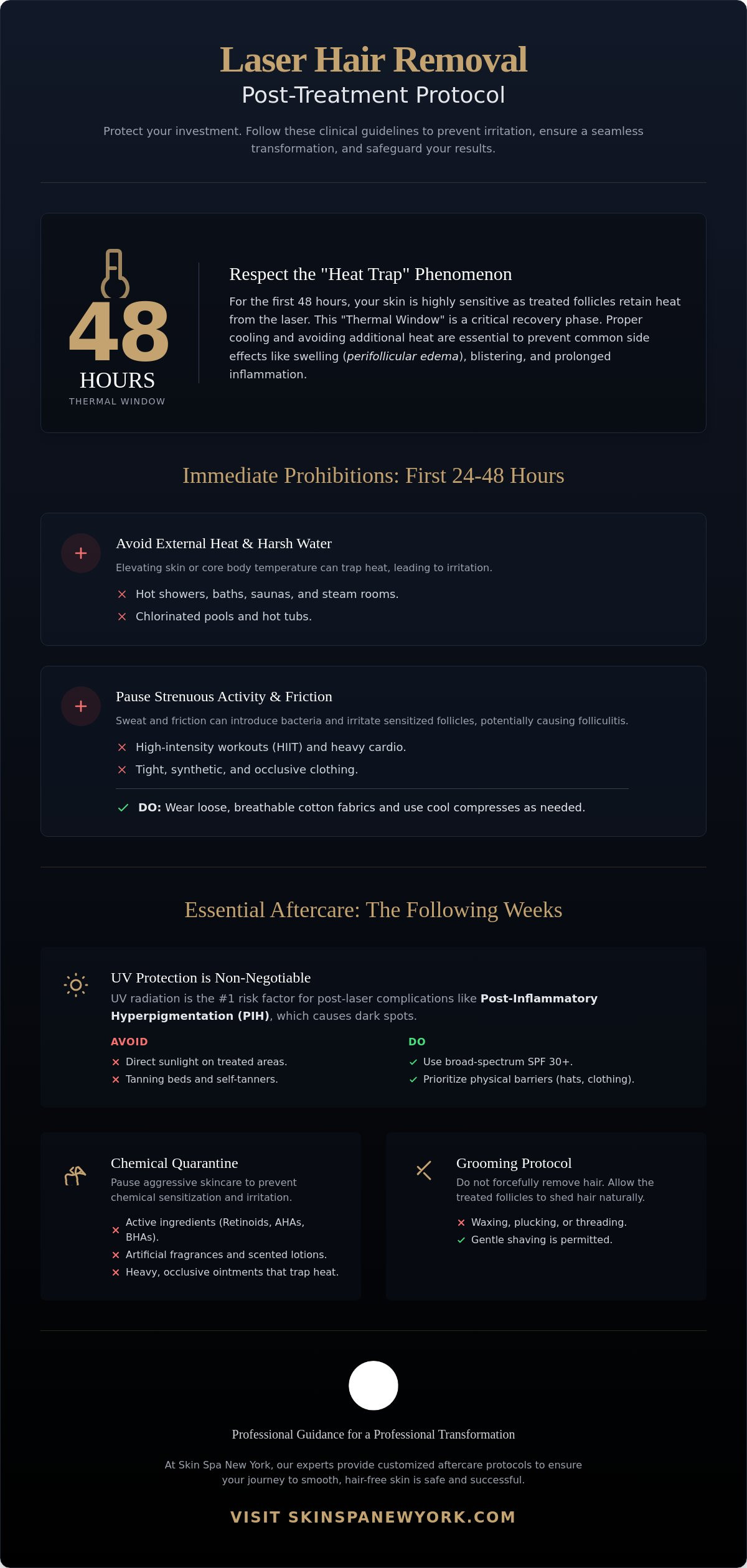
Understanding what to avoid after laser hair removal starts with respecting the skin's need for a low-temperature environment. The moment you step out of your treatment room, your skin enters a delicate phase known as the Thermal Window. During these first 48 hours, the treated area remains uniquely sensitive to both internal and external heat sources. The laser works by targeting melanin in the hair follicle, converting light into heat to disable the growth center. This process is highly effective, but it leaves the surrounding tissue in a state of heightened reactivity. Treating your skin as a sanctuary during this time isn't just about comfort; it's a clinical necessity to prevent common Laser hair removal side effects such as perifollicular edema. This condition, which manifests as swelling around the follicles, can become uncomfortable if the skin isn't allowed to cool properly.
Managing the 'Heat Trap' Phenomenon
Immediately after your session, you'll likely notice a sensation similar to a mild sunburn. This occurs because the hair follicles are holding onto the residual energy from the laser. We refer to this as the Heat Trap. One of the most critical things regarding what to avoid after laser hair removal is applying heavy, occlusive ointments or wearing tight, synthetic clothing that prevents the skin from breathing. These trap the heat against the dermis, which can lead to blistering or prolonged inflammation. Instead, use light, cool compresses to stabilize the skin's temperature. Ensure the compress is cool rather than ice-cold, as extreme temperatures can further shock the sensitized tissue.
Immediate Prohibitions for the First 24 Hours
The first day of recovery requires a total pause on activities that elevate your core body temperature. Your skin needs time to settle without the added stress of internal heat or external irritants. To protect your results, observe these strict prohibitions for at least 24 hours:
- Hot showers, steam rooms, and saunas that introduce external heat.
- High-intensity interval training (HIIT) and heavy cardio that cause sweating.
- Chlorinated pools and hot tubs that contain harsh chemicals.
- Tight, synthetic clothing that traps heat and causes friction.
In sensitive areas like the bikini line, friction is a primary concern. Repetitive physical motion can lead to folliculitis, an inflammation of the hair follicles that disrupts the healing process. Stick to loose, breathable cotton fabrics and keep your environment cool to ensure a smooth transition through this initial phase.
Environmental Hazards: Protecting Your Skin from UV and Heat
Environmental factors pose a significant threat to freshly lasered skin, extending well beyond the initial 48-hour thermal window. While your internal temperature stabilizes relatively quickly, the external world remains a challenge for several weeks. Ultraviolet (UV) radiation is particularly aggressive on skin that's just undergone a laser session, as the treatment temporarily compromises the natural protective barrier. Following a dermatologist's after-care instructions is paramount to avoid long-term damage and ensure your skin heals with a smooth, even tone. In urban centers like NYC or Boston, the combination of urban heat and humidity can trap pollutants against the skin; meanwhile, the intense coastal sun in Miami requires a different level of vigilance altogether.
During the recovery phase, we recommend prioritizing physical barriers over chemical sunscreens. While SPF is essential, some chemical filters can irritate sensitized follicles in the first few days. Wide-brimmed hats, umbrellas, and UV-protective clothing provide a reliable shield without the risk of chemical absorption. If you're navigating a high-exposure environment, understanding what to avoid after laser hair removal becomes your primary defense against environmental stressors. This proactive approach ensures that your journey toward permanent hair reduction isn't sidelined by preventable external irritation.
The Sun Exposure Quarantine
Direct sunlight can trigger Post-Inflammatory Hyperpigmentation (PIH), a condition where the skin develops dark spots in response to trauma and UV light. Unprotected UV exposure represents the single most significant risk factor for post-laser complications due to its ability to trigger rapid, irregular melanin production in healing tissue. To maintain a polished appearance, we prohibit the use of tanning beds and self-tanning lotions for at least 14 days post-treatment. These products can interfere with the skin's natural shedding process and mask potential irritation that needs professional attention.
Managing Sweat and Humidity
Sweating isn't just a temperature concern; it's a hygiene issue that can lead to bacterial growth in open follicles. Tight-fitting gym wear is particularly problematic, as it creates a warm, moist environment that invites infection. This often manifests as folliculitis or miliaria, a prickly heat rash that causes significant discomfort and redness. To stay comfortable in humid climates, consider the following adjustments:
- Opt for loose, moisture-wicking cotton fabrics that allow the skin to breathe.
- Stay in climate-controlled environments during the hottest parts of the day.
- Rinse the treated area with cool water if you experience unavoidable sweating.
- Avoid heavy body butters that can clog pores in high-humidity settings.
If you live in a high-UV region or have a lifestyle that involves frequent outdoor activity, the specialists at Skin Spa New York can help you tailor an environmental protection plan that fits your specific needs. Taking these extra precautions allows you to enjoy the benefits of your treatment without compromising your skin's health.
Chemical Quarantine: Skincare and Topicals to Avoid
While your daily skincare routine is likely a source of pride and self-care, the days following your treatment require a temporary "chemical quarantine." Laser energy leaves the dermis in a state of heightened sensitivity, meaning products that usually leave you glowing could now cause significant distress. Navigating what to avoid after laser hair removal involves more than just skipping your morning scrub. It requires a clinical understanding of how specific active ingredients interact with sensitized tissue. During this phase, your skin's barrier is temporarily compromised, making it susceptible to chemical burns or localized allergic reactions from ingredients that are normally perfectly safe.
It's a common misconception that "natural" or "organic" products are inherently safer during recovery. In reality, botanical extracts and essential oils like peppermint, cinnamon, or citrus can be highly irritating. These ingredients often trigger vasodilation, which reintroduces heat to the follicles and disrupts the cooling process we established as critical in the initial 48-hour window. To maintain a refined, comfortable appearance, you must prioritize simplicity and physiological safety over complex formulations.
The 'No-Fly' List of Skincare Ingredients
Medical-grade actives are the primary concern during your recovery. You should pause the use of all retinoids, including over-the-counter retinol and prescription Tretinoin, for at least five to seven days. These ingredients accelerate cell turnover and can lead to excessive peeling or raw patches on lasered skin. Similarly, Alpha Hydroxy Acids (AHAs) like glycolic or lactic acid, and Beta Hydroxy Acids (BHAs) such as salicylic acid, must be strictly avoided. These acids can cause chemical burns on the sensitized epidermis. We also recommend pausing Vitamin C serums for 3 to 5 days, as the acidic nature of stabilized Vitamin C can cause intense stinging and redness.
- Retinoids and Vitamin A derivatives (pause for 7 days).
- Chemical exfoliants including AHAs and BHAs (pause for 5 to 7 days).
- Physical exfoliants, loofahs, and abrasive sponges that cause micro-tears.
- Artificial fragrances and high-alcohol toners that strip the skin's moisture.
Safe Alternatives for Post-Laser Hydration
Your goal during this period is to support the skin's natural barrier without introducing new stressors. Focus on hypoallergenic, fragrance-free moisturizers that feature ceramides or lipids. These ingredients help "glue" the skin cells back together, sealing in moisture and keeping bacteria out. Pure Aloe Vera is an excellent choice for calming the epidermis, provided it's free from alcohol and artificial dyes. It offers a cooling sensation that mimics the effect of a compress without clogging the follicles. If you're unsure about a specific product in your cabinet, don't hesitate to consult your Skin Spa New York professional. We can provide a customized list of approved topicals based on your specific skin type and the area being treated, ensuring your path to smooth skin remains uninterrupted and elegant.
Grooming and Physical Activity Restrictions
The journey to effortless, silky skin involves a transition from traditional hair removal methods to a more disciplined, clinical approach. Once you begin your sessions, your grooming habits must shift to protect the integrity of the hair follicles. The most critical rule regarding what to avoid after laser hair removal is any form of hair extraction. While it might be tempting to reach for the tweezers when you see new growth, doing so disrupts the very cycle the laser is designed to terminate. Your body requires a specific window to expel the treated hair naturally, a process often referred to as shedding.
This shedding typically occurs between one and three weeks post-treatment as the disabled hair works its way out of the follicle. After a single laser hair removal session, most individuals experience a 10 to 25 percent reduction in hair in the treated area, so seeing some remaining growth is a normal part of the professional process. You might notice small black specks, sometimes called pepper spots, appearing on the skin's surface. Resist the urge to aggressively exfoliate these areas. Forcing the hair out before the follicle is ready can lead to irritation or micro-scarring. Instead, allow the skin to renew itself at its own pace, maintaining a polished appearance through gentle, approved methods.
Physical activity also plays a role in how quickly your follicles recover and heal. While we discussed the immediate thermal window previously, prolonged physical strain can continue to impact the healing rate of the treated follicles. Excessive friction from tight athletic gear or repetitive movements can cause the sensitized area to become inflamed or develop rashes. If you're an active individual, choosing low-impact movements and breathable fabrics will ensure your skin remains calm as it transitions through the shedding phase. This careful management ensures your investment is protected and your results remain consistent.
The Dangers of Waxing, Plucking, and Epilating
Pulling hair from the root effectively resets the biological clock on your results. The laser requires the hair anchor or root to be present to absorb the energy during your next session. If the root is removed through waxing or plucking, the laser has no target, rendering that portion of your treatment ineffective. To ensure the highest level of efficacy, waxing must be avoided for the entire duration of your laser package. Sticking to shaving ensures the follicle remains intact for the next scheduled clinical intervention.
The Shaving Timeline
Shaving is the only permitted method of hair removal between sessions because it leaves the root intact for future treatments. However, timing is essential for skin health. We recommend waiting at least 72 hours before your first post-laser shave to ensure all initial sensitivity has subsided. Always use a fresh, clean razor to minimize the risk of introducing bacteria into the treated follicles. If you see any lingering redness or small bumps, delay shaving for another day or two to prevent further irritation. For those ready to experience a more refined approach to hair reduction, you can book your next laser hair removal session at one of our premier locations to ensure your results are managed by experts.
Professional Guidance at Skin Spa New York
Achieving a flawless, hair-free appearance is a collaborative journey between your clinical specialist and your daily commitment to aftercare. At Skin Spa New York, we bridge the gap between high-end hospitality and medical precision, ensuring that every guest feels supported long after they leave our treatment room. While understanding what to avoid after laser hair removal is vital for your safety, having a dedicated partner to guide you through the nuances of recovery provides a level of confidence that generic online advice simply cannot match. Our specialists across our locations in NYC, Boston, and Miami are deeply familiar with the environmental factors that impact your skin, from urban pollutants to coastal humidity, and we customize every protocol to suit your unique skin type and lifestyle.
We view hair removal as one component of a comprehensive approach to well-being and aesthetic refinement. For guests looking to enhance their results, we often discuss the benefits of integrating other advanced treatments. For instance, Laser Genesis can be a sophisticated addition to your routine, helping to improve skin texture and tone while you work toward permanent hair reduction. This holistic perspective ensures that your journey toward a more polished version of yourself is efficient, effective, and tailored to your specific goals.
When to Contact Your Skin Spa Specialist
It is normal to experience mild redness or a slight "sunburned" sensation for a day or two after your session. These are signs that the laser has successfully targeted the follicles. However, our commitment to guest safety means we are always available to address any concerns that fall outside the typical recovery experience. If you notice rare side effects such as blistering, significant crusting, or unexpected pigment changes, please reach out to us immediately. You can easily connect with our expert teams in New York, Boston, or Miami to receive professional guidance and reassurance. We prioritize your comfort and the integrity of your results above all else.
Building a Comprehensive Aesthetic Plan
The most successful transformations occur when services are thoughtfully layered. Many of our guests choose to combine their hair removal sessions with other precision treatments, such as Botox Cosmetic, to achieve a rejuvenated and refreshed appearance. Maintaining the recommended 4 to 6 week treatment interval is essential for targeting hair in the active growth phase, which is the key to achieving permanent results. By staying consistent with your appointments and following our clinical aftercare protocol, you ensure that your investment in yourself yields the highest possible returns. We invite you to book your next session today to maintain your progress and continue your journey toward effortless, radiant skin.
Your Path to Lasting Silkiness and Skin Health
Achieving permanent hair reduction is a journey that rewards patience and precision. By respecting the initial thermal window, pausing aggressive chemical actives, and adhering to strict clinical grooming standards, you protect the integrity of your results. Knowing what to avoid after laser hair removal is more than a simple precaution; it's a commitment to your skin's long-term transformation and health. These protocols ensure that your recovery remains as smooth and polished as the professional services we provide.
Founded in 2005, Skin Spa New York brings over 20 years of aesthetic expertise to every guest we serve. With premier locations across Manhattan, Brooklyn, Boston, and Miami, we utilize state-of-the-art laser technology specifically calibrated for all Fitzpatrick skin types. Our specialists are dedicated to ensuring your experience is both effective and exceptionally comfortable. When you're ready to continue your journey toward effortless skin, we invite you to Book Your Next Laser Hair Removal Session at Skin Spa New York. We look forward to welcoming you back into our sanctuary and helping you maintain your radiant, confident appearance.
Frequently Asked Questions
Can I wear makeup immediately after laser hair removal on my face?
You should wait at least 24 hours before applying makeup to any treated facial area. Your skin requires this window to breathe and cool down without the interference of heavy pigments, oils, or potential irritants found in cosmetics. If you must apply coverage after the first day, choose a high-quality mineral makeup that won't clog the sensitized follicles. This precaution helps prevent localized breakouts and ensures the skin's barrier remains intact during the initial recovery phase.
Is it okay to go swimming in a chlorinated pool after my session?
Avoid swimming in chlorinated pools for at least 48 hours after your session. Chlorine is a harsh chemical that can cause intense irritation or stinging on skin that's been sensitized by laser energy. Additionally, public pools can harbor bacteria that might lead to infection in the open follicles while they are still healing. Stick to cool, clean water at home until any initial redness and sensitivity have completely subsided.
How long should I wait to exercise after laser hair removal?
We recommend waiting 24 to 48 hours before resuming any high-intensity physical activity. Exercise increases your internal body temperature and induces sweating, which can trap heat in the follicles and lead to a heat rash or folliculitis. For those wondering what to avoid after laser hair removal to ensure a smooth recovery, skipping the gym is a top priority. Once the skin feels cool and calm to the touch, you can safely return to your routine.
What happens if I accidentally get sun exposure after my treatment?
If you accidentally get sun exposure, immediately apply a broad-spectrum SPF 30 or higher and move to a shaded area. Freshly treated skin is extremely vulnerable to UV damage, which can lead to post-inflammatory hyperpigmentation or dark spots. Keep a close eye on the area for any signs of blistering or unusual darkening over the next few days. If you notice persistent irritation or pigment changes, contact your specialist at Skin Spa New York for professional guidance on soothing the tissue.
Can I use deodorant after underarm laser hair removal?
You should avoid applying deodorant for at least 24 hours following underarm laser hair removal. Many standard deodorants contain alcohols and artificial fragrances that can cause intense stinging or chemical irritation on sensitized skin. If you feel it's necessary to use something, a fragrance-free, natural powder may be used sparingly after the first day. This allows the delicate underarm area to heal without being compromised by harsh topical chemicals or blocked pores.
Why does my skin feel itchy after laser, and what should I avoid doing?
Itching is a common part of the healing process as the treated hairs begin to shed from the follicles. It's vital that you don't scratch the area, as this can cause micro-tears and lead to infection, irritation, or scarring. Instead, apply a thin layer of pure, chilled aloe vera to soothe the sensation and provide immediate relief. If the itching is accompanied by hives or significant swelling, please reach out to our clinical team for a professional assessment.
When can I resume using my Retinol or anti-aging creams?
You can typically resume using Retinol or other anti-aging creams five to seven days after your treatment. These "active" ingredients are designed to increase cell turnover, which is far too aggressive for skin that's still recovering from laser energy. Reintroducing these products too early can cause peeling, rawness, or chemical sensitivity. Start with a small amount to ensure your skin is ready for these potent formulations before returning to your full daily skincare regimen.
Can I take a hot bath if I only had my legs treated?
Even if you only had your legs treated, you should avoid hot baths for at least 48 hours. Hot water increases your overall core body temperature and promotes vasodilation, which can reintroduce heat to the treated area and cause unnecessary inflammation. While it's tempting to soak, it's much safer to use lukewarm water for your showers during the initial recovery. This helps maintain the internal "thermal window" necessary for a comfortable and complication-free transformation.