

A refreshed look doesn’t require changing the features that make your face yours. Brotox injections for men in Boston use Botox to temporarily relax targeted facial muscles, softening expression lines while allowing natural movement. Results typically begin within 3 to 5 days, reach their full effect within 10 to 14 days, and last 3 to 4 months.
If you’re considering Brotox injections for men in Boston, it’s natural to want clear answers about what treatment can address and how it may affect your face. This guide explains how Botox works, which areas it can treat, what to expect, and how to prepare safely.
You’ll also learn what to discuss about your goals, facial expressions, and health history with a qualified professional, so you can make a more informed decision.
Key Takeaways
- Learn how Botox temporarily relaxes targeted facial muscles to soften expression lines while preserving a natural-looking appearance.
- Compare common treatment areas, including frown lines, forehead furrows, and crow’s feet, and understand what each can address.
- Know what to expect from the timeline of results and why their duration can vary from patient to patient.
- Review health considerations that can affect candidacy, then prepare for treatment with practical steps to help manage bruising.
- Understand how personalized treatment planning can align the approach with your facial features and aesthetic goals.
How Botox relaxes facial muscles and reduces dynamic wrinkles
Botox temporarily reduces signals that prompt targeted muscles to contract. For men considering facial treatment, the key is choosing areas that match their expressions and goals.
Muscle Relaxation and Dynamic Wrinkles
Dynamic wrinkles form when facial muscles repeatedly contract during expressions such as frowning or raising the eyebrows. Botox temporarily blocks nerve signals that trigger those contractions, allowing selected muscles to relax and the overlying skin to appear smoother. It targets specific muscles, not the entire face. A clinician assesses how your expressions create lines before planning treatment.
Botox and Dysport for Male Wrinkles
Botox and Dysport contain the same active ingredient, botulinum toxin, and are used for expression-related facial wrinkles. Common treatment areas include frown lines between the eyebrows and lines that appear when the forehead moves. Product choice and placement should reflect your facial movement and desired appearance. Discuss which expressions you’d like to soften while preserving natural movement.
Masseter Botox targets the jaw muscles at the sides of the face. Relaxing them may soften a prominent jaw appearance and address clenching or teeth grinding. This differs from injections for forehead or frown lines because the masseter muscles are involved in chewing. During planning, describe when you clench, where you feel tension, and whether jaw shape is also a concern. These details help clarify your treatment goals.
Natural-looking results depend on thoughtful placement and an appropriate treatment plan. Men may have stronger facial muscles, so the amount used can vary by person and treatment area. The aim is to soften selected lines without removing the expressions that make your face recognizable. Botox’s effects are temporary, but cannot be reversed once treatment takes effect. Discuss how much movement you want to preserve before injections.
The FDA has approved Botox for cosmetic use since 2002, and it is also approved for several medical uses. Approval does not mean every use is right for every patient. A medical assessment should consider the treatment area, muscle activity, health history, and the result you want. For example, a patient focused on frown lines needs a different plan from someone seeking jaw-muscle relaxation for clenching.
Cosmetic Botox is not covered by insurance in Boston. Because it is considered cosmetic, plan to pay for treatment out of pocket.
Treatment areas including frown lines, crow’s feet, and forehead furrows
Botox planning starts with the lines you notice during specific expressions. The glabella, forehead, and outer-eye area are common treatment choices for men. A consultation connects each concern with the facial movement behind it instead of treating every visible line alike. If you’re considering Brotox injections for men in Boston, describe the expressions you’d like to soften to focus the discussion.
When comparing providers, review the injector’s credentials, training, and experience with facial injections. Look for reviews that discuss consultation quality, clear explanations, and natural-looking results. Compare written treatment plans and what they include, not just a headline price. Cost depends on the areas treated, amount of product, and treatment plan; request a quote for your proposed treatment.
At a consultation, describe what you’d like to change, such as a deep furrow between the brows or fine lines beside the eyes. The provider assesses your face at rest and during expressions, then discusses which areas may suit your goals. Ask how the proposed placement could affect movement in your forehead or around your eyes. Before treatment begins, the plan should clearly explain the areas and intended effect.
Forehead lines appear when you raise your brows, while frown lines form between them during a concentrated expression. Crow’s feet sit beside the eyes and may become more visible when you smile. These areas require distinct placement because they involve different muscles and movements. Under-eye bags differ from crow’s feet, and Botox does not address them in the same way.
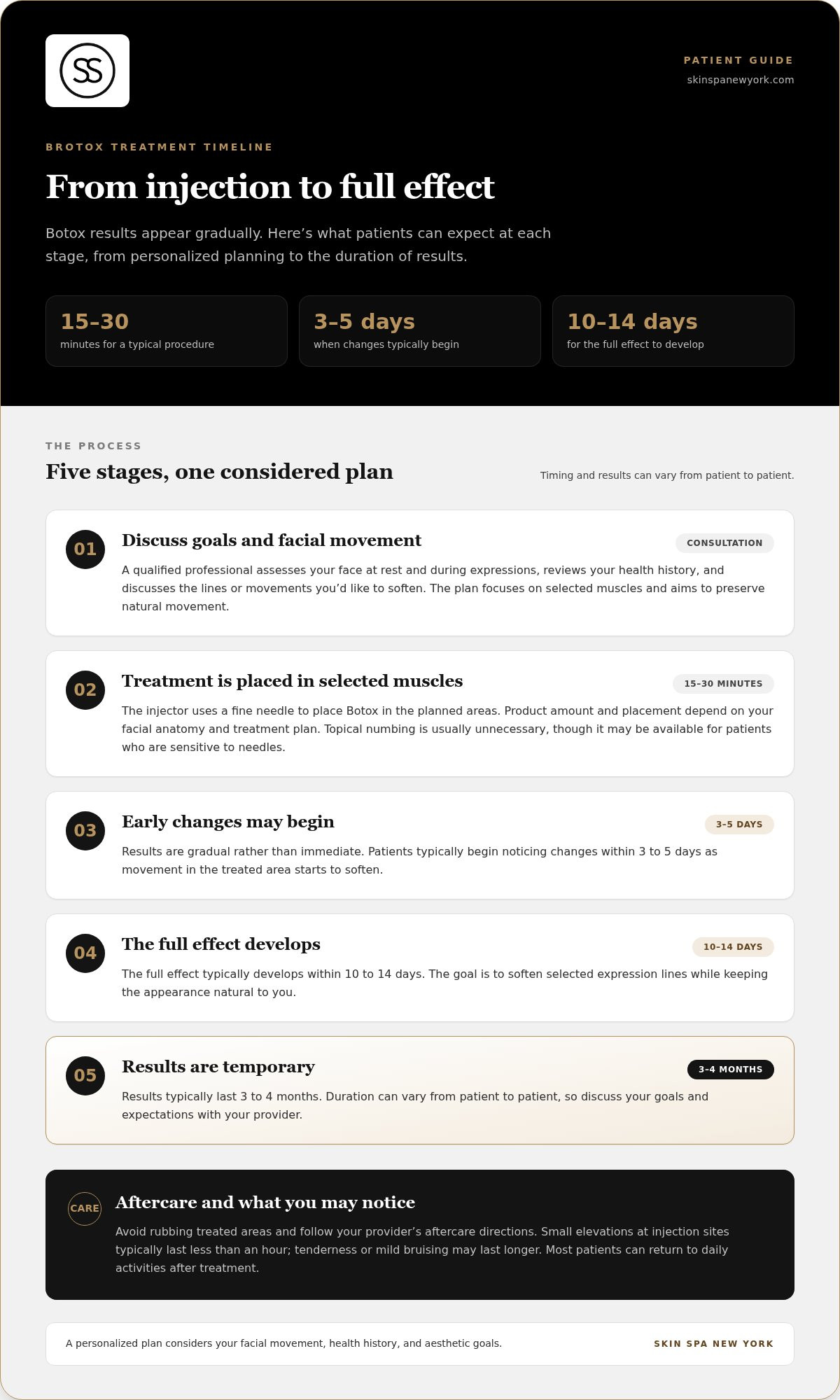
During treatment, the injector uses a fine needle to place Botox in selected muscles. The approach and product amount depend on the planned areas and your facial anatomy. A typical procedure takes 15 to 30 minutes. Topical numbing is usually unnecessary, although it may be available for patients sensitive to needles.
Before the appointment, share your health history and medications during the consultation. Follow the specific preparation instructions you receive, and don’t stop prescribed medication without guidance from its prescriber. After injections, avoid rubbing the treated areas and follow your provider’s aftercare directions. Small elevations at injection sites typically last less than an hour; tenderness or mild bruising may last longer.
Most patients can return to daily activities after treatment, so many schedule injections around work rather than taking extended time off. If your role involves strenuous exercise or significant heat exposure, plan around your aftercare instructions. If you’re considering Brotox injections for men in Boston, use the consultation to discuss your work plans, facial goals, and appropriate treatment areas. A focused conversation can clarify your next step.
How long does it typically take to notice the effects of BOTOX®, and how long do they last?
Botox results appear gradually rather than immediately after injections. Patients typically begin noticing changes 3 to 5 days after treatment, with the full effect developing within 10 to 14 days. For someone planning Brotox injections for men in Boston, this timeline helps distinguish early changes from the finished result. A forehead line, for example, can soften as movement in the treated area decreases.
Use the full-effect timeline when deciding how to schedule treatment before an important occasion. Assess your appearance after 10 to 14 days instead of judging the outcome in the first few days. Changes during the early period are part of the treatment’s gradual onset. A patient who focuses on frown lines can observe how those lines look during ordinary expressions as the effect develops.
In Boston, Botox results usually last 3 to 4 months. With long-term maintenance, results may last up to 6 months. Facial movement gradually returns as the effect fades, and expression lines can become visible again. These timeframes offer a practical planning guide, rather than a reason to schedule repeat treatment automatically. Your preferences and the changes you observe help inform future decisions.
Brotox injections for men in Boston may target different areas, but tracking facial movement can help you assess your concerns. If crow’s feet are your focus, notice how the outer-eye area looks when you smile. If your forehead is the priority, observe its movement when you raise your brows. Paying attention to specific expressions gives you clearer information than relying on a general impression.
A typical Botox procedure takes 15 to 30 minutes. Appointment length depends on the number of injections and areas treated, so a plan addressing several regions can take longer than a focused treatment. Keep the procedure duration separate from the results timeline: injections happen during the appointment, while visible changes unfold over subsequent days.
For a clear personal record, write down your treatment date and note changes early on and after the full effect develops. Also record when facial movement starts to return. These observations can help you explain what you liked and what you might adjust in a future plan. They’re useful when discussing separate areas, since the forehead and eye area may feel different to you.
Use the usual 3-to-4-month duration as a reference when considering future scheduling, not as a fixed requirement. Brotox injections for men in Boston are a personal aesthetic choice; your preferred degree of movement and how long you want to maintain the effect can guide the conversation about next steps.
Candidate eligibility and health considerations
Botox candidacy depends on health history, treatment goals, and the muscles involved. In Boston, patients must be 18 years or older to seek Botox injections. Men and women can receive treatment, but an age threshold alone doesn’t establish that injections suit a person’s circumstances.
Pregnancy and nursing are important considerations. People who are pregnant or nursing are advised not to get Botox injections. Share this information during your medical assessment, even if you’re seeking treatment only for forehead wrinkles or frown lines. Discussing it beforehand allows the clinician to consider your situation before planning injections.
A history of neuromuscular disease is another important factor. Botox affects signals involved in muscle contraction, and people with a history of neuromuscular diseases are advised to avoid injections because complications could worsen. Tell the clinician about your diagnosis and relevant health history before selecting a treatment area. Raise this information before a treatment plan is made.
Be specific about your goals. Someone concerned about lines that appear while frowning has a different treatment question from someone seeking a change in jaw appearance. Botox targets muscle activity; fillers serve a different aesthetic purpose. Naming the change you want, such as softer frown lines or a less prominent jaw, helps clarify whether Botox fits your goal.
A useful consultation involves more than pointing to a wrinkle. Explain when the line appears, whether it concerns you at rest or during expression, and what movement you want to preserve. Mention previous Botox treatment and describe the result. These details help shape a plan around your facial expressions rather than a generic target.
Ask how the proposed treatment relates to your health history and intended result. If you have a neuromuscular diagnosis, raise it before deciding on injections. If you’re pregnant or nursing, disclose that clearly. Discussing these considerations directly supports an informed decision without minimizing potential complications.
Plan for downtime realistically. Most men can return to daily routines after treatment, but going back to work doesn’t mean the effects appear immediately. Distinguish practical recovery from the results timeline: you may resume ordinary activities while the aesthetic effect develops over subsequent days. This can help you plan your workday without expecting wrinkles to change instantly.
Before proceeding, summarize your priority in one sentence, such as, “I’d like to soften forehead lines while keeping natural movement.” Then review the proposed treatment area, health considerations, and expected effect with the clinician. This helps ensure your decision reflects your goals and relevant safety factors.
Preparing for injections and managing bruising
Before a cosmetic appointment, share your medications and health history with the injector. Men’s Health Boston advises avoiding blood thinners such as aspirin, ibuprofen, and fish oil 24-48 hours before treatment. These products may affect bruising, but don’t stop prescribed medication without speaking with the clinician who manages it. Ask for personalized guidance if a medication change could affect your health.
Men’s Health Boston also advises avoiding alcohol the night before Botox treatment. Keep your appointment plans simple and arrive with a clear idea of the areas you want treated. For example, note whether you’re concerned about the glabella, the area between the eyebrows, or forehead lines. Being specific helps focus the discussion and supports a considered treatment plan.
At your appointment, tell the injector about any recent changes to your medicines or health. If you’re sensitive to needles, mention it before treatment; topical numbing is usually unnecessary but may be available. The injector can explain the planned injection sites and aftercare beforehand. Clear communication helps you understand what to expect and what to avoid afterward.
After injections, follow these practical steps:
- Don’t rub the treated area for 4 hours after treatment, as Men’s Health Boston advises.
- Skip intense exercise for the rest of the day, as Men’s Health Boston recommends.
- Avoid strenuous activity or excess heat for 24 hours after treatment.
Small elevations where the needle entered typically last less than an hour. Tenderness or mild bruising may last a day or two. These temporary effects can occur even when treatment is carefully performed. If you’re planning around a meeting, photograph, or social event, allow for possible injection marks rather than expecting your skin to look smooth immediately.
Most men can return to daily routines after treatment, but follow the specific aftercare instructions you receive. Returning to work doesn’t mean you should resume strenuous exercise or heat exposure that day. If you notice a concern or have a question about a reaction, contact the treating practice for guidance. Keep your appointment date and aftercare details handy when describing what you’ve noticed.
Preparing thoughtfully can make the experience more straightforward: review medicines beforehand, share relevant details, and follow the aftercare schedule. For patients considering Botox Cosmetic, explore treatment options and discuss your facial goals with the care team.
Skin Spa New York: Laser Hair Removal
Skin Spa New York offers Botox Cosmetic for patients considering treatment for expression-related facial lines. After learning how Botox works and what preparation involves, consider whether a personalized plan aligns with your aesthetic goals. Discuss the areas you’d like addressed, the movement you want to preserve, and any health considerations that may shape your decision.
Skin Spa New York also offers Customized Facial and Microneedling treatments for patients interested in other approaches to skin rejuvenation. Each treatment serves a different purpose, so your next step depends on the concern you want to address. To discuss Botox Cosmetic and your treatment goals, contact Skin Spa New York.
Choose a Next Step That Reflects Your Goals
Deciding whether to pursue Brotox injections for men in Boston starts with what you want to preserve as much as what you hope to soften. Bring your priorities and health considerations to a conversation with a qualified professional, then take time to consider whether the proposed approach feels right for you.
Skin Spa New York offers Botox Cosmetic alongside other aesthetic treatments, including Customized Facial, Microneedling, and Laser Hair Removal. If you’re exploring facial rejuvenation or a separate skin concern, consider which treatment best matches your needs.
For a thoughtful conversation about your goals and available treatments, contact Skin Spa New York. Take the next step at a pace that feels comfortable, with a plan centered on your preferences.
Frequently Asked Questions
What is Botox® Cosmetic and how does it work?
Botox Cosmetic is an injectable botulinum toxin treatment used to soften certain expression lines. Its effect is temporary and limited to the muscles selected for treatment. The cosmetic product has been FDA-approved for cosmetic use since 2002. During planning, patients can point out the expressions they want to soften and those they want to keep, helping make the desired appearance clear before treatment.
Does Botox hurt?
Topical numbing is usually unnecessary for Botox injections, but may be available if you’re sensitive to needles. Mention needle sensitivity before treatment so comfort options can be discussed. You can also ask the injector to explain the planned injection areas before starting. This gives you the chance to raise concerns and understand what the appointment involves.
How long does a typical treatment take?
A typical Botox procedure takes 15 to 30 minutes. At a Boston clinic, treatment can take up to an hour, depending on the number of injections and areas treated. If your plan includes several facial regions, ask how much time to allow for the full appointment. This can help you schedule work or other commitments without assuming every treatment takes the same amount of time.
How should I prepare for BOTOX® injections?
Before your appointment, make a clear list of medications and supplements to discuss with the treating professional. Men’s Health Boston advises avoiding aspirin, ibuprofen, and fish oil 24-48 hours before treatment, and avoiding alcohol the night before. Don’t stop prescribed medication without speaking with the clinician who manages it. If any preparation advice conflicts with your medical needs, discuss it with that clinician first.
How long do the results last?
Botox results usually last 3 to 4 months, though duration varies. Rather than using a calendar alone to judge when to revisit treatment, note when you first see facial movement returning and which treated areas change. For example, record whether the forehead or the area around the eyes changes first. Those observations give you specific information to discuss when considering future treatment.
Is Botox only for women?
No. Botox is suitable for men and women. Men may seek treatment for frown lines, forehead lines, or crow’s feet, with placement guided by facial movement and desired appearance. The goal isn’t to follow a gender-based template. Describe which lines bother you and which expressions you want to preserve, then discuss whether the proposed areas fit those priorities.
Is Botox safe for men?
Botox isn’t suitable for every patient, so disclose relevant health information before treatment. People who are pregnant or nursing are advised not to receive injections, and a history of neuromuscular disease is a reason to avoid them. Discuss any previous reaction or concern with the treating professional. Cosmetic Botox isn’t covered by insurance in Boston, so account for its cosmetic nature when planning.
What is Brotox and how do Botox injections work for men?
“Brotox” is an informal term for men’s cosmetic Botox treatment, not a separate injectable. Treatment can address expression lines, with areas selected according to each patient’s face and goals. Men may need a different amount because their facial muscles can be stronger. Share whether you want a subtle change or a specific line softened, and discuss how much movement you’d like to retain.
