

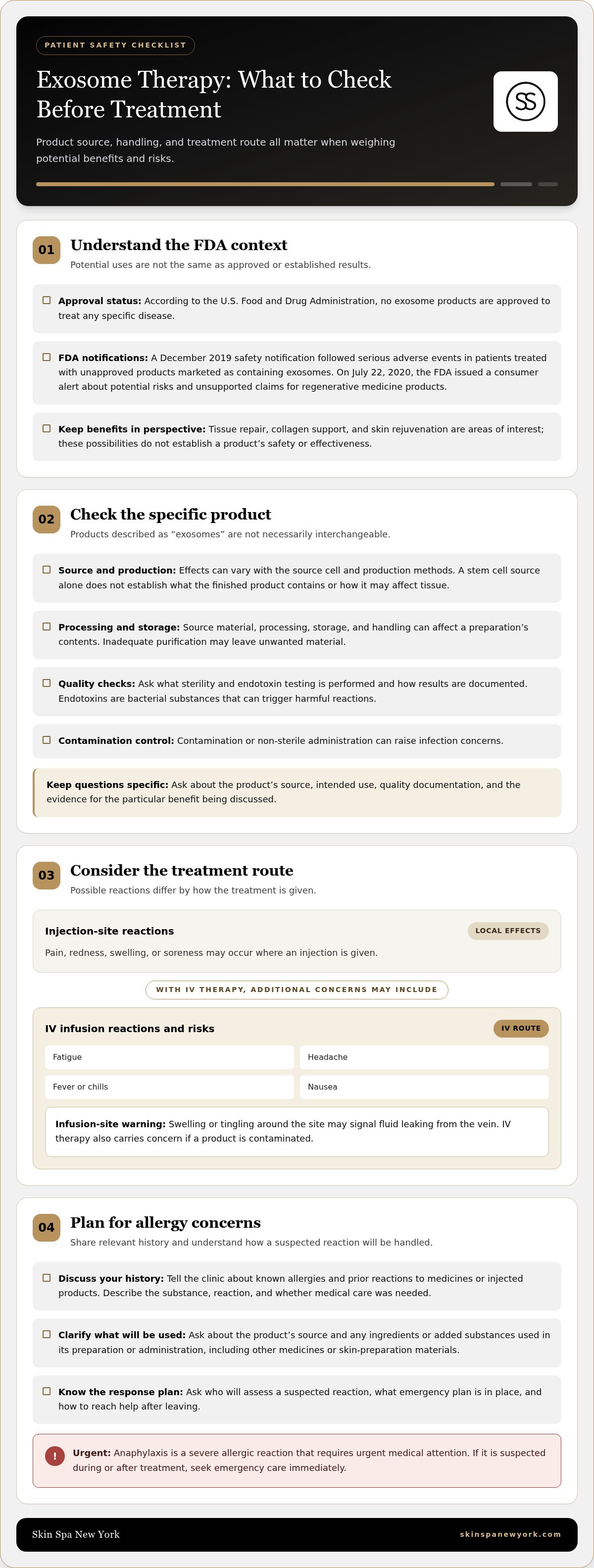
Possible side effects include pain, redness, swelling, or soreness where an injection is given; with IV therapy, fatigue, headache, fever, chills, or nausea may also occur. For patients weighing what the side effects of exosome therapy are, the route of administration and the product’s safety matter: an IV infusion carries risks beyond temporary injection-site reactions, including complications if fluid leaks from the vein or a product is contaminated.
Exosome treatments are also discussed for potential tissue-repair and skin-rejuvenation benefits, but those possibilities shouldn’t be mistaken for established results. According to the U.S. Food and Drug Administration, no exosome products are approved to treat any specific disease, and the agency has warned about unapproved products and unsupported treatment claims.
This guide covers potential benefits, common reactions, allergic concerns, and specific risks of exosome IV therapy. It also explains the FDA’s safety warnings and why a product’s source and handling matter when considering treatment.
Key Takeaways
- Potential benefits include support for tissue repair and skin rejuvenation, but these possibilities should be weighed against the limits of current evidence.
- According to the U.S. Food and Drug Administration, no exosome products are approved to treat any specific disease; its warnings about unapproved products are important context when considering treatment.
- Injection-site pain, redness, swelling, or soreness can occur, while reactions may differ with IV, joint, or skin treatments.
- With exosome IV therapy, pay attention to symptoms such as swelling or tingling around the infusion site, which may signal a fluid leak.
- Learn how allergic reactions, product handling, and treatment route can affect safety before weighing possible benefits.
FDA safety notification and unapproved exosome products
Exosomes are small vesicles that help cells communicate by carrying biological signals. Their effects can vary with the source cell and production methods, so products described as “exosomes” are not necessarily interchangeable. A stem cell source alone does not establish what a finished product contains or how it may affect tissue. Possible skin rejuvenation and collagen support are areas of interest, but these possibilities do not establish a product’s safety or effectiveness.
The U.S. Food and Drug Administration issued a public safety notification in December 2019 after serious adverse events in patients treated with unapproved products marketed as containing exosomes. On July 22, 2020, the FDA issued a consumer alert about potential risks and unsupported claims for regenerative medicine products. The alert addressed claims that such products could prevent, treat, or cure diseases or conditions. According to the U.S. Food and Drug Administration, no exosome products are approved to treat any specific disease.
Product quality depends on more than its label. The source material, processing, storage, and handling can affect a preparation’s contents. Inadequate purification may leave unwanted material, while contamination or non-sterile administration can raise infection concerns. Endotoxin testing matters because endotoxins are bacterial substances that can trigger harmful reactions. Ask which quality checks are performed on the specific product, including sterility and endotoxin testing, and how the results are documented. These questions clarify the safeguards used without assuming all products follow the same process.
Before treatment, ask the clinic about the product’s source, intended use, and documentation of purification, sterility, and endotoxin testing. Ask what risks apply to the planned route, such as an IV infusion or injection, and what evidence supports the specific benefit being discussed.
Source variation matters because exosomes reflect signals from the cells that release them. A preparation derived from one cell type may differ from another in its contents and biological activity. Production techniques can also influence those signals, making broad claims about all exosome products difficult to interpret. For example, a claim about collagen or skin rejuvenation should relate to the exact product and treatment method, not simply the word “exosome.”
Before proceeding, use FDA notifications as context when evaluating claims and product information. Clear answers about sourcing, testing, and intended use help distinguish a specific treatment plan from general promises about regenerative effects.
Allergic reactions and anaphylaxis
Allergic reactions and anaphylaxis are different from expected discomfort around an injection site. A change after treatment does not, by itself, identify its cause. The timing, symptoms, route of administration, and substances used during the appointment all help explain what happened. For example, if a new reaction occurs after an infusion, report when it began and how it changed rather than assuming the exosome product was the only possible trigger.
Anaphylaxis is a severe allergic reaction that requires urgent medical attention. If you suspect anaphylaxis during or after treatment, seek emergency care immediately. Do not wait for a routine follow-up or try to determine the cause alone. The treating clinic should know what happened, but emergency response takes priority when a serious reaction is suspected.
Before treatment, discuss known allergies and prior reactions to medicines or injected products. Be specific: name the substance, describe the reaction, and explain whether you needed medical care. If the exact trigger is uncertain, describe the circumstances. A reaction to a medicine is useful information even if you do not know which ingredient caused it.
Ask the clinic about the product’s source and every ingredient or added substance used in its preparation or administration. Ask whether the exosomes come from a human or another source and what information is available about processing. Clarify what will be used alongside the product, such as skin-preparation materials or other medicines. These questions keep the discussion specific to the planned treatment rather than relying on broad claims about exosomes as a category.
Clinics should explain how they respond if a patient develops a suspected allergic reaction. Ask who will assess you, what emergency plan is in place, and how to reach help after leaving. A clear answer matters before a procedure, especially if you have a history of severe reactions. Understand the difference between reporting a mild change and seeking emergency care for a potentially serious event.
After treatment, record when symptoms begin, what they feel like, and whether they change. Share this information with medical professionals. Do not repeat treatment after a suspected serious reaction without medical assessment. The same caution applies if a reaction follows a product marketed for tissue repair or another disease-related purpose. Claims that a product may stimulate tissue repair do not establish that it is suitable for a particular patient or free from allergy risk.
Common and possible side effects
After an exosome injection, the most noticeable effects may be local: pain, redness, swelling, or soreness around the injection site. These reactions can follow needle punctures and may settle within a few days. Localized redness, swelling, and soreness are also reported to usually resolve within 48 hours. The timing and intensity can differ, so note when symptoms begin and whether they improve.
Bruising is another possible effect, particularly after repeated needle punctures. It usually fades over one to two weeks. A small bruise near an injection site, for example, may change in appearance as it heals. Track its size and progression, and share changes with the treating professional, especially if discomfort or swelling is also increasing.
Effects are not limited to the treatment area. USA Sports Medicine identifies fatigue as a possible side effect and also lists headache, fever, and chills. Mild fever or fatigue may occur after the first infusion. These symptoms differ from redness at an injection site, so note whether they are localized or affect how you feel overall.
Temporary joint or muscle soreness can also follow exosome IV therapy. You might notice aching away from the infusion site rather than tenderness where the needle entered. Exosomes carry proteins and other signals involved in cell communication, but their role in regeneration or healing does not mean every response will feel comfortable. Report new or persistent symptoms and explain when they started.
An inflammatory response is another consideration, particularly with products from different biological sources. Exosomes isolated from synoviocytes in patients with osteoarthritis can increase inflammatory cytokine secretion. This finding illustrates why biological activity may vary; it does not mean every exosome treatment causes inflammation. It also cautions against assuming a product intended to enhance tissue repair will have the same effect in every setting.
A simple symptom record can make follow-up more useful. Note the treatment route, affected area, symptom, when it began, and whether it is improving. For example, distinguish injection-site soreness from a headache or fever after an infusion. Share these details with the treating professional. If symptoms worsen, persist, or concern you, contact the treating clinic promptly for guidance.
Possible side effects of exosome IV therapy
An IV infusion introduces an exosome preparation through a vein, so possible effects include reactions around the infusion site and symptoms affecting the whole body. Reported IV-related effects include fatigue, headache, fever, chills, nausea, and temporary muscle or joint soreness. These symptoms can be difficult to distinguish from unrelated ones, so their timing and progression are useful details for the treating professional.
A fluid leak from the vein is a specific concern during an infusion. Swelling or tingling around the blood vessel may signal leakage, and symptoms can gradually intensify if it remains untreated. Alert the medical professional administering the infusion if the area begins to swell or tingle. Tracking whether these sensations spread or worsen helps explain what is happening.
Headache and nausea are also described as rare possible effects of exosome IV therapy. Fatigue may be noticeable after an infusion, and mild fever has been reported after a first infusion. These effects do not identify their own cause. Tell the treating professional what began, when it started, and whether it is changing, particularly if several symptoms occur together.
The preparation itself matters. Exosomes are vesicles, not stem cells; products used in IV therapy are described as cell-free and non-replicating. They carry signals that may affect cell function, but their source and production methods influence their contents. A product discussed in an aesthetic context or for growth factors should not automatically be assumed to have the same properties or purpose as an IV preparation.
Administration conditions also affect risk. IV procedures carry a small risk of infection, and the risk increases if a product is contaminated or given using non-sterile practices. Administration and observation in a clinical setting with trained medical professionals are important. Ask what product is being used, how it is handled, and what process is followed if swelling or tingling appears during the infusion.
Long-term safety information is limited, including the absence of twenty-year studies on exosome therapy. That gap matters for IV use because the infusion exposes the body beyond a single skin or joint treatment area. Possible tissue-repair or regenerative effects do not establish long-term safety or prove that an IV treatment will deliver a particular benefit.
The practical takeaway is to distinguish a brief, localized needle reaction from symptoms during an infusion, such as increasing swelling or tingling around the vein. Tell the administering professional promptly about changes, and seek urgent medical assessment if symptoms are severe or rapidly worsening.
What side effects occur with different exosome treatments, such as joint, skin, hair, or IV therapy?
The route of administration shapes where reactions may occur. A joint injection affects the treated joint, while microneedling-based skin treatment can leave temporary changes on the skin’s surface. IV therapy involves infusion-site and whole-body considerations. Hair and scalp applications depend on how the product is applied, so the treatment method matters more than the label alone.
After a joint injection, temporary sensitivity around the treated area usually fades within 48 to 72 hours. A patient might notice tenderness or soreness when moving the joint. Track where discomfort occurs and whether it eases over that period. New or increasing symptoms should be reported to the treating professional, particularly when they interfere with normal movement.
Skin treatment combined with microneedling may cause mild redness, swelling, or sensitivity. These effects can last up to 7 days. The microneedling itself creates tiny punctures, so the treated area may feel tender as it settles. Rare possible effects of exosome treatment include bruising and hyperpigmentation, or darker patches of skin. Note changes in the treated area, including their timing and appearance.
For hair or scalp treatment, the delivery method matters. If the procedure uses needle punctures, local redness, swelling, soreness, or bruising may occur around those points, as with other injection-based treatments. Expected reactions also depend on whether the scalp is treated with microneedling or another method. Ask which technique is planned and what scalp changes should prompt follow-up.
IV therapy differs because the product enters a vein rather than a specific joint or skin area. Possible effects include symptoms at the infusion site and reactions affecting the body, such as fatigue or headache. Swelling or tingling around the vein can indicate an IV fluid leak, and these symptoms may intensify if untreated. Alert the professional administering the infusion when they begin.
Comparing treatments means considering both the route and any combined procedure. For example, redness after microneedling may reflect the skin procedure, while tenderness after a joint injection occurs at the injection site. This distinction helps you describe symptoms clearly. Record the treatment type, affected area, onset, and progression, then share those details with the treating professional. Severe or worsening symptoms call for prompt medical attention, rather than an assumption that they are routine healing.
Skin Spa New York: Laser Hair Removal
Skin Spa New York offers Laser Hair Removal for patients seeking long-term hair reduction, along with Customized Facial, Microneedling, and Botox Cosmetic treatments for distinct aesthetic goals. These services address concerns such as unwanted hair or skin rejuvenation; they are separate from assessing a reaction to exosome therapy.
If you experience symptoms after exosome treatment, seek appropriate medical assessment rather than relying on an aesthetic service to address them. For a separate skin or hair goal, a personalized discussion can help clarify which treatment aligns with your priorities and what to expect.
Contact Skin Spa New York to discuss your aesthetic treatment goals.
Choose a thoughtful next step for your goals
Deciding whether to pursue an emerging treatment is separate from choosing care for an aesthetic goal. Keep those decisions distinct: symptoms after an infusion call for appropriate medical attention, while concerns about skin or unwanted hair can guide a conversation about aesthetic options. Understanding possible side effects of exosome therapy can help you describe your concerns clearly and consider what matters most before deciding.
For aesthetic care, Skin Spa New York offers Laser Hair Removal, Customized Facial treatments, and Microneedling. Each addresses a different goal, so the right starting point depends on what you hope to address and which treatment you are considering. A focused conversation can help you explore those options without confusing them with medical assessment of a reaction.
If you’re ready to discuss an aesthetic treatment, contact Skin Spa New York. A considered next step can help you move forward with greater clarity and confidence.
Frequently Asked Questions
What are exosomes and what is the purpose of this treatment?
Exosomes are tiny vesicles released by cells that carry signals between cells. Treatments use preparations containing exosomes with the aim of influencing processes such as tissue repair or skin rejuvenation. The intended purpose depends on how the product is made and applied: a skin-focused procedure and an IV infusion are not interchangeable. Claims about a possible benefit should be considered in the context of the specific product and treatment method.
Could Side Effects Show Up Later?
Yes, symptoms may become noticeable after treatment rather than during it, and timing can vary with the route and product. Long-term safety data are lacking, so delayed effects are difficult to characterize. Keep a record of when symptoms start, where they occur, and how they change. For example, note whether a new skin change follows a local treatment or a symptom begins after an infusion.
Are Exosomes safe?
Exosome therapy cannot be described as established safe for every use. According to the U.S. Food and Drug Administration, no exosome products are approved to treat any specific disease. Safety also depends on the product’s source, preparation, handling, and administration. If considering treatment, distinguish a proposed aesthetic use from a proven medical treatment and review the product and procedure details before deciding.
What are the risks?
Risks vary with the product and how it is administered. Potential concerns include infection from contaminated material or non-sterile administration, reactions around an injection or infusion site, and other symptoms after treatment. The FDA has also reported serious adverse events involving unapproved products marketed as containing exosomes. The route matters: a vein infusion, joint injection, and skin procedure involve different areas and procedural considerations.
When Will You See the Results?
Reported timelines vary by treatment and desired outcome. Some reports describe changes within a few days, while USA Sports Medicine says improvements may appear within a few weeks or months. These timelines are not reliable forecasts for every patient. The product, treatment area, and individual response all affect what changes may be noticed and when. Ask what outcome is being measured, such as skin appearance or joint symptoms.
What side effects have been reported after exosome therapy?
Patients often ask, “What are the side effects of exosome therapy?” Reported effects include local pain, redness, swelling, soreness, and bruising after injections or skin procedures. Fatigue, headache, fever, chills, nausea, and temporary muscle or joint soreness have also been described, particularly in relation to IV therapy. The combination of symptoms matters: a skin reaction at the treated area differs from feeling unwell after an infusion.
What are the serious risks and complications of exosome injections?
Serious concerns include infection related to contamination or non-sterile administration, and severe reactions that need urgent medical attention. For IV delivery, increasing swelling or tingling around the vein can signal fluid leakage and warrants immediate attention from the administering professional. The FDA’s December 2019 safety notification followed serious adverse events in patients treated with unapproved products marketed as containing exosomes. Seek urgent care for severe or rapidly worsening symptoms.
How common are side effects of exosome therapy, and what is known about their incidence?
A single frequency estimate cannot describe every exosome treatment because products, sources, preparation methods, and administration routes vary. Long-term safety data are also lacking, and reported reactions range from local injection effects to symptoms after IV treatment. A rate from one product or procedure may not apply to another. Consider the specific route and product information, and ask how adverse events are monitored and documented for that treatment.
