

For chronic pain, some people begin with massage 1-2 times per week; once symptoms stabilize, sessions may shift to every 2-4 weeks. If you’re wondering how often you should get a professional massage, use this as a starting rhythm rather than a fixed calendar.
Ongoing pain can make it hard to know whether to book massage more often, wait longer, or change your approach. Stress, desk-related strain, and how your body responds between sessions can all affect what schedule feels useful.
This article explains how massage frequency may vary with chronic pain, high stress, and work-related tension, why consistency can help you assess a routine, and when to discuss your plan with a medical professional or massage therapist. You’ll have a clearer idea of what to consider when choosing a schedule that fits your needs.
Key Takeaways
- For chronic pain, an initial schedule may be more frequent, then ease to every 2-4 weeks as symptoms stabilize.
- High-stress professionals may find a regular rhythm helpful, with sessions often spaced about 2 weeks apart.
- For work-related strain, a focused series of 3-8 sessions with less than 2 weeks between visits may support mobility.
- Track how your pain, tension, and movement respond between appointments to help guide your schedule.
- Massage can complement care, but it doesn’t replace prescribed medication, physiotherapy, or regular exercise.
1. Massage for chronic pain and musculoskeletal conditions
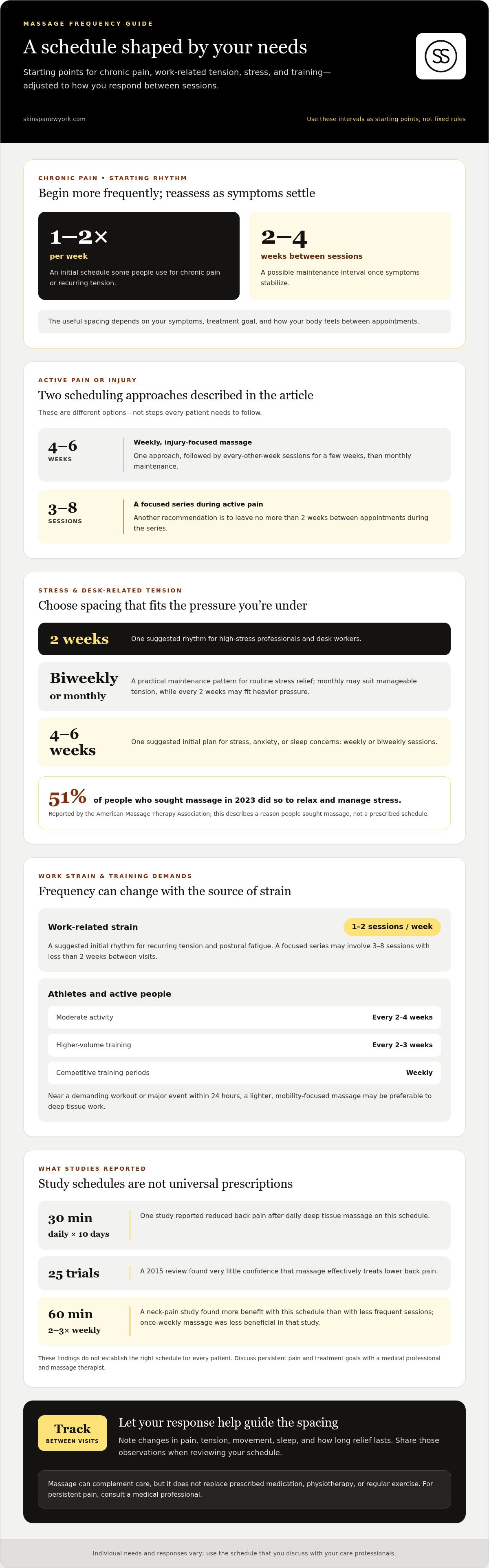
For chronic pain, an initial schedule is often 1-2 sessions per week. The question of how often you should get a professional massage depends partly on symptoms and treatment goal. As symptoms stabilize, some people shift to maintenance sessions every 2-4 weeks.
For active pain or an injury, a short, structured series can help address discomfort and support movement. One approach is weekly, injury-focused massage for 4-6 weeks, then every other week for a few weeks. Monthly sessions can follow for maintenance. Another recommendation is 3-8 sessions, with no more than two weeks between appointments during active pain. These are different scheduling approaches, not steps every patient must follow.
Massage type matters, too. One study reported reduced back pain after daily 30-minute deep tissue massage for 10 days. That intensive schedule is a study finding, not a general recommendation for every person with back pain. A 2015 review of 25 trials found very little confidence that massage effectively treats lower back pain. Massage can be part of a broader plan, but that evidence calls for realistic expectations.
For neck pain, a study found that 60-minute massages two or three times per week showed more benefit than less frequent schedules. A 60-minute session once a week was less beneficial in that study. These results don’t establish the right schedule for every neck-pain patient. Share the location, duration, and pattern of pain with your massage therapist so the treatment focus and spacing address your needs.
Does massage frequency vary by type or goal? Yes. The schedule can differ for injury-focused treatment, chronic pain, back pain, and neck pain. Your goal, the area being treated, and how your body responds between sessions all help shape a useful plan.
For athletes and active people, frequency can follow training demands. During moderate activity, massage every 2-4 weeks is one suggested schedule; higher-volume training may call for sessions every 2-3 weeks, while competitive training periods may warrant weekly massage. Athletes and weekend warriors may also choose weekly to every two weeks. Near a demanding workout or major event within 24 hours, a lighter, mobility-focused massage may be preferable to deep tissue work.
Before booking massage for persistent pain, consult a medical professional or physician, then discuss your symptoms and goals with your massage therapist. Massage doesn’t replace prescribed medication, physiotherapy, or regular exercise. Keeping a simple record of pain, movement, and relief between sessions can help inform future recommendations.
2. Massage for high-stress professionals and desk workers
High-pressure work can leave tension building across the shoulders, neck, and back. For high-stress professionals and desk workers, a massage every 2 weeks is one suggested rhythm. That interval offers a regular pause in demanding schedules without making weekly appointments the default. Daily habits matter, too: long desk hours, limited movement, and intense workloads can influence how often a patient seeks care.
For routine stress relief, biweekly or monthly massage can be a practical maintenance schedule. A monthly appointment may suit someone whose tension is manageable between visits, while every 2 weeks may better match a period of heavier pressure. After initial concerns improve, some people continue biweekly or monthly sessions. Notice whether stress or muscle tightness returns before the next appointment, and use that pattern to assess the spacing.
Stress, anxiety, and sleep concerns may call for a more consistent initial plan. One suggested approach is weekly or biweekly massage over 4-6 weeks. Another recommendation is a session every 2 weeks to support relaxation and restorative sleep. These schedules describe different approaches, not a requirement to attend at a particular frequency. A patient can track sleep quality, daily tension, and how long relief lasts between appointments.
Massage frequency also depends on lifestyle. For example, a desk worker with back-to-back meetings may have different tension patterns from someone who takes movement breaks throughout the day. The American Massage Therapy Association reported that 51% of people who sought massage in 2023 did so to relax and manage stress. That figure highlights stress relief as a reason people seek massage, not a prescribed schedule for every patient.
In the United States, professional massage prices depend on factors such as location, session length, massage type, and the provider’s service details. Since needs and appointment preferences vary, there is no single national rate. Consider these practical details alongside frequency when planning regular appointments.
To make each visit more useful, note when tension appears, which areas feel tight, and whether your sleep changes after a session. Share these observations with your massage therapist and discuss whether the interval still suits you. For example, if stress rises during a recurring busy period at work, you might keep a regular schedule then reassess when demands ease. Specific notes help connect massage frequency to changes in daily life.
Massage can complement other ways of managing stress, such as taking movement breaks during the workday and keeping a consistent bedtime routine. If you have anxiety or persistent sleep problems, discuss your symptoms with a medical professional. Massage is one supportive option, not a replacement for medical care. A useful schedule should fit your lifestyle, address tension, and remain sustainable.
3. Massage for work-related strain and postural fatigue
Long periods at a desk can leave the shoulders, upper back, or hips feeling tense. For work-related strain and postural fatigue, suggested massage frequency may begin at 1-2 sessions per week. This initial rhythm focuses attention on recurring tension while you observe how your muscles feel between appointments. A laptop-heavy workday, for example, may create different patterns from a job that involves standing or repeated lifting.
A series of 3-8 sessions, with less than 2 weeks between visits, may make a noticeable difference in posture and mobility. The close spacing allows the patient and massage therapist to assess changes across several appointments. Keep a simple record after each session: note where tension sits, which movements feel restricted, and how long any change lasts. Bring those observations to the next visit so the focus can reflect your experience.
Recommendations also describe a later phase of 3-8 sessions over two weeks. After the initial phase, work-related postural fatigue may call for sessions every 3-4 weeks. These schedules offer reference points, not a requirement to follow every phase. If the strain is linked to a particular task, such as looking down at a laptop, describe that habit clearly during the appointment.
Massage frequency is only one part of addressing work-related tension. Notice when symptoms appear, such as after a long meeting, during a commute, or near the end of the workweek. Pair those observations with practical changes, like standing between tasks or adjusting your screen position. This can help you identify whether discomfort is brief or repeatedly follows the same work pattern.
What happens between sessions can also affect how you feel. Someone who spends each day in the same sustained position may notice tension returning sooner than someone whose routine includes varied movement. Use the time between appointments to observe these patterns rather than assuming more frequent massage alone will address the cause. Tell your massage therapist about changes in pain, mobility, or daily function.
Pregnancy involves different scheduling considerations from desk-related strain. During pregnancy, massage frequency may range from every 1-4 weeks, depending on trimester and individual needs. This example shows why a schedule for work-related muscles shouldn’t automatically be applied to another circumstance. Include pregnancy and other relevant health details when discussing massage, so the session plan reflects the patient’s situation.
For a desk worker beginning care, a practical first step is to identify the main area of strain and the work habit connected to it. Discuss whether an initial 1-2 sessions per week makes sense, then review the response before changing the interval. As posture, mobility, and tension shift, the plan can move toward the suggested 3-4-week spacing after the initial phase. A consistent record makes those decisions more specific.
4. Consistency and cumulative benefits
A regular schedule makes it easier to notice how symptoms change between appointments. For general well-being, suggested massage intervals include once every 3-4 weeks or once a month. These are maintenance options, not a universal timetable. The useful interval is one that fits your wellness goals and leaves enough time to assess how your body responds after each session.
How long do massage benefits last? One massage therapist says effects peak after 72 hours, while another estimates they last about 3 days. Those observations offer a reference, not a guaranteed duration for every patient. Pain, tension, daily habits, and the massage approach can influence what you notice after an appointment.
For maintenance, one recommendation is a professional massage every 4-8 weeks. Another suggests leaving no more than four weeks between sessions. These intervals differ, so consider your reason for booking: general wellness, recurring muscle tension, or ongoing symptoms. For example, someone whose discomfort returns well before a monthly appointment can record that pattern and discuss a shorter interval.
A consistent routine also makes it easier to evaluate your schedule. After each visit, note the date, the main area treated, and how your symptoms change over the following days. Review your notes before the next appointment. If tension returns after a similar interval each time, that pattern can guide a conversation about session spacing and treatment focus.
A maintenance schedule may change as symptoms become more stable. People with chronic pain may begin with more frequent appointments and then reduce frequency once symptoms stabilize. For autoimmune-related stress or pain, suggested schedules include weekly massage until symptoms stabilize, followed by less frequent sessions. If tension remains minimal, reassess how often appointments are needed.
Life changes can also affect the rhythm. During pregnancy, suggested massage frequency ranges from every 1-4 weeks, depending on trimester and individual needs. One schedule recommends a monthly session during the first and second trimesters, then weekly or every two weeks during the third trimester. This example shows why a maintenance interval should reflect current circumstances, not simply repeat an earlier plan.
Consistency doesn’t mean keeping the same schedule indefinitely. After several appointments, review your notes and consider whether your pain, mobility, or relaxation has changed. If you book for general wellness and feel comfortable between monthly sessions, that interval may suit your routine. If symptoms return sooner, discuss the timing and specific changes with your massage therapist.
5. Consulting a doctor or massage therapist
A medical professional can help clarify whether massage fits your symptoms, health history, and current care. If you’re considering massage for a specific concern, consult a physician beforehand and discuss your goals with your massage therapist. Describe where discomfort occurs, which activities affect it, and whether anything has changed since your last appointment.
After surgery, ask your surgeon or doctor when massage is appropriate for your procedure. Recovery needs vary, and the surgical area, healing progress, and type of massage all matter. Share your medical guidance with your massage therapist before scheduling so the session accounts for your recovery and follows your care instructions.
Pregnancy also calls for an individualized discussion. A doctor or massage therapist may discourage massage during the first trimester. Tell your therapist that you’re pregnant and identify your trimester before treatment, so they can consider whether massage is suitable and how to approach the session. Apply the same care if a health condition or recent change affects your comfort.
Does health insurance cover massage therapy in the United States? Coverage depends on your individual plan, the reason for massage, and the policy terms. Review your benefits for relevant conditions and treatment requirements before planning appointments, since coverage varies by policy.
How can you choose a licensed massage therapist near you? Look for a licensed massage therapist whose experience and treatment focus match your needs, such as recurring neck tension or work-related discomfort. Share your goals, relevant health details, and preferred pressure before the session. Clear communication helps the therapist tailor the approach and discuss how your body responds afterward.
Before an appointment, prepare a brief summary of your concern: when it began, what aggravates it, and which areas are affected. For example, a desk worker might mention that shoulder tightness builds during long computer sessions. These details give the therapist a clearer picture than a general request to work on tension.
Massage therapy doesn’t replace prescribed medication, physiotherapy, or regular exercise. Treat it as one part of a broader care plan, and keep your medical professional informed if symptoms persist or change. Your massage therapist can use your feedback about comfort and movement to adjust future sessions, while your physician can guide medical care.
Bring questions about pressure, positioning, and areas to avoid to the appointment. If a movement or technique feels uncomfortable, tell the therapist during the session rather than waiting until afterward. A useful consultation connects your health history, daily activity, and treatment goals, helping you make a more informed decision about whether massage belongs in your care routine.
Skin Spa New York: Laser Hair Removal
Skin Spa New York offers Laser Hair Removal for people seeking a longer-term approach to unwanted hair. This is a separate aesthetic goal from massage for chronic pain, but it may fit if hair reduction is also among your personal-care priorities.
Laser Hair Removal can provide long-lasting results, with significant hair reduction after a few sessions. Treatment plans and results vary by individual. Skin Spa New York can help you explore whether the treatment aligns with your goals and explain the process.
For ongoing pain or injury, continue to follow guidance from your medical professional and massage therapist. To discuss Laser Hair Removal, contact Skin Spa New York.
Choose a Rhythm That Supports Your Next Step
Turn what you’ve noticed into a clear plan. Track how symptoms affect daily activities, what changes after massage, and which questions you want answered. If you’re still deciding how often you should get a professional massage, share those observations with a medical professional or massage therapist and discuss an approach suited to your needs.
Massage for chronic pain is one part of personal care. If you have other personal-care goals, Skin Spa New York can help you explore its treatments and decide what fits your priorities.
Contact Skin Spa New York to discuss your next step. Thoughtful questions can help you move forward with confidence.
Frequently Asked Questions
How Often Should I Get a Massage?
Massage frequency depends on your goal, symptoms, activity, and how your body responds between visits. If you’re deciding how often you should get a professional massage, first identify whether you want general wellness support or help with a specific concern. Someone booking for relaxation, for example, may choose a different routine from someone managing ongoing pain. Track changes after sessions and discuss the pattern with your massage therapist.
What’s ideal?
The ideal schedule is one that matches your goal and remains comfortable to maintain. For general wellness, suggested schedules include a session every 3-4 weeks or once a month. For example, a healthy adult who wants occasional relaxation might begin with monthly visits and review whether that rhythm suits their needs. If your goal changes, such as addressing a new area of tension, discuss whether the session focus or spacing should change too.
When Massage Frequency Should Be Adjusted or Limited?
Reassess your schedule when your symptoms, health, or daily activities change. A new injury, a shift in training, or a change in work habits can affect what you need from a session. Pregnancy requires attention to trimester, and a doctor or massage therapist may discourage massage during the first trimester. After surgery, ask your surgeon or doctor when massage is appropriate for your procedure before scheduling.
How often should a healthy adult get a professional massage?
A generally healthy adult seeking wellness maintenance may choose a massage once a month. Another suggested interval for general well-being is every 3-4 weeks. For instance, if you mainly want relaxation and don’t have a particular pain concern, a monthly appointment can provide a consistent routine to evaluate. Consider your activity and daily habits, then adjust the schedule if your needs or the way you feel between visits changes.
How often should you get a massage for chronic pain or muscle tension?
For chronic pain, some people begin with massage 1-2 times per week, then move to every 2-4 weeks after symptoms stabilize. The initial frequency depends on the pain pattern and treatment goal. For example, a patient with ongoing muscle tension can note which areas feel affected and how symptoms change after each visit. Share those observations with a medical professional and massage therapist when discussing the schedule.
What are the risks of getting massages too frequently?
No single appointment interval suits everyone. Review a schedule that feels too demanding or no longer matches your needs. Notice whether discomfort or tension changes between sessions, and tell your massage therapist if treatment feels uncomfortable. Rather than increasing frequency without a clear goal, discuss what you want to address and how each session fits into your broader care routine.
When should you avoid massage or ask a doctor first?
Consult a medical professional before massage for a specific health concern, and discuss your symptoms with your massage therapist. After surgery, ask your surgeon or doctor when massage is appropriate for your procedure. During the first trimester of pregnancy, a doctor or massage therapist may discourage massage. Massage therapy also doesn’t replace prescribed medication, physiotherapy, or regular exercise, so keep it within a broader care plan.
