

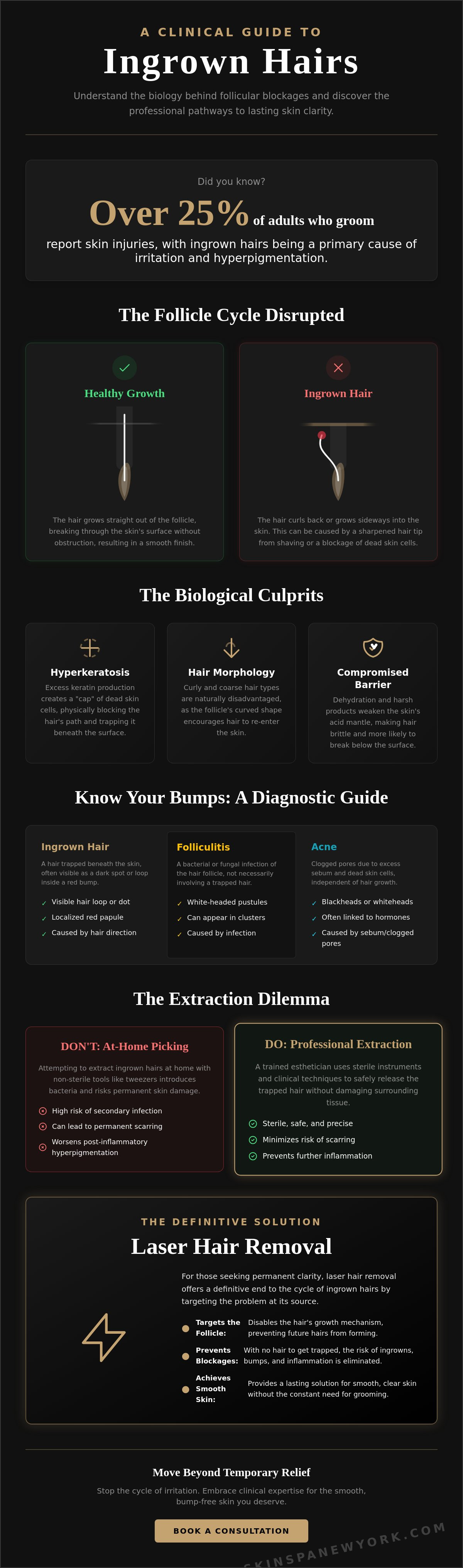
Did you know that over 25 percent of adults who groom report sustaining skin injuries, with the most persistent and frustrating culprit being the development of painful ingrown hairs? It's a cycle that feels both predictable and exhausting. You've likely experienced the disappointment of a routine shave followed by red bumps and the shadow of post-inflammatory hyperpigmentation. We recognize that home remedies often fall short, leaving your skin feeling compromised rather than cared for.
This clinical guide is designed to help you reclaim your skin's natural elegance and health. You'll discover the biological causes of follicular blockages and the advanced professional treatments that provide lasting skin clarity. We'll preview the efficacy of specialized solutions, from the precision of laser hair removal to the renewing power of chemical peels. By shifting your focus from temporary relief to clinical expertise, you can finally achieve the smooth, bump-free results that mirror the sophistication of your personal standards.
Key Takeaways
- Uncover the clinical causes of follicular blockages, including how hyperkeratosis creates a physical barrier that traps emerging hair.
- Learn why professional extractions are the only safe way to address active irritation without risking permanent scarring or secondary infections.
- Compare the benefits of salicylic and glycolic acids to determine which chemical exfoliants best support your unique skin barrier.
- Explore how advanced laser hair removal provides a definitive solution for ingrown hairs by targeting growth at the source.
- Discover the essential mechanical habits and professional treatments that move your skincare routine beyond temporary relief toward lasting clarity.
Understanding Ingrown Hairs: Causes, Symptoms, and the Follicle Cycle
To truly address skin irregularities, one must first understand the biological mechanism at play. When guests ask What is an ingrown hair?, they're often seeking a solution to Pseudofolliculitis Barbae, a condition where hair curves back into the skin rather than rising through the surface. This disruption of the follicle cycle doesn't just cause temporary discomfort; it significantly impacts skin texture, leading to a loss of that coveted smooth finish. In a fast-paced urban environment, the friction from professional attire and daily commuting often exacerbates the condition, turning a minor irritation into a persistent concern.
Identifying the early warning signs is essential for proactive care. You might first notice localized redness or a sensation of pruritus, more commonly known as itching. This often progresses to the formation of firm papules. While a standard ingrown hair involves a single trapped strand, deep-seated follicular cysts can develop if the inflammation remains unaddressed. These cysts sit much deeper within the dermis and require a more sophisticated, clinical approach to resolve without damaging the surrounding tissue.
Common High-Risk Areas for Professional Clients
The bikini line and labia represent some of the most delicate areas we treat. Here, the skin is naturally thinner and more prone to irritation from movement and clothing. For men, the face and neck present unique challenges due to the necessity of daily grooming, which can often blunt hair tips and encourage them to re-enter the skin. Underarms also remain a "perfect storm" for ingrown hairs. The combination of occlusive deodorants, moisture, and the constant friction of the arm against the torso creates an environment where hair struggle to exit the follicle cleanly. Furthermore, for those experiencing similar skin irritations or complications on their feet, Local Foot Doc offers expert podiatric care in Brooklyn and Queens to help maintain total body health and comfort.
Differentiating Ingrowns from Folliculitis and Acne
It's vital to distinguish between a simple trapped hair and more complex conditions. While an ingrown hair often presents as a dark spot or a visible loop beneath a bump, folliculitis is typically a bacterial or fungal infection characterized by white-headed pustules. Acne, conversely, is driven primarily by sebum production and clogged pores rather than hair direction. If you notice a bump that is excessively painful, spreading, or resistant to gentle care, it likely requires professional diagnostic attention. Our experts look for specific visual cues to ensure the treatment matches the biological cause, providing you with the clarity and confidence you deserve.
The Biological Mechanics of Trapped Hair and Skin Barrier Health
The skin serves as a dynamic shield, but when its natural functions fall out of balance, the results are often visible and uncomfortable. One of the most overlooked factors in the development of ingrown hairs is the health of the skin barrier itself. Specifically, the acid mantle—a thin, slightly acidic film on the skin's surface—acts as a guardian, ensuring that the follicle remains clear and the hair has a smooth exit path. When this barrier is compromised by dehydration or harsh products, the hair becomes brittle and prone to breaking below the surface, leading to internal irritation.
Hyperkeratosis is a primary culprit in this process. This condition occurs when the body produces excess keratin, creating a physical "cap" of dead skin cells over the follicle opening. While following standard ingrown hair prevention tips can help, understanding the cellular level of this blockage is key to achieving professional-grade results. Without addressing the underlying skin health, even the most careful grooming habits can fail.
Keratinization and the Clogged Pore
The natural cycle of skin cell turnover is a delicate process that often slows down due to age, environmental stress, or hormonal shifts. When dead cells aren't shed efficiently, they mix with sebum, creating a sticky "glue" that seals the follicle shut. Keratinization is the primary biological gatekeeper of the follicle, determining whether a hair emerges cleanly or becomes trapped. If you find your skin feels congested or prone to these blockages, a customized facial can help restore balance to the acid mantle and refine the skin's surface texture.
Hair Morphology: Curly vs. Straight Follicles
While anyone can experience trapped hairs, certain structural factors increase the risk significantly. Curly and coarse hair types face a distinct disadvantage because the follicle itself is often curved, guiding the hair at an angle rather than straight up. This morphology creates several challenges:
- The Spring-Back Effect: Curly hair possesses a natural tension that encourages it to coil back toward the dermis before it ever clears the surface.
- Blunt-Cut Edge: Shaving creates a sharp, angled tip on the hair shaft, making it much easier for the strand to pierce the follicle wall.
- Fitzpatrick Skin Types: Those with higher Fitzpatrick ratings often experience a more robust inflammatory response, leading to more pronounced redness and post-inflammatory hyperpigmentation.
This structural reality means that for many, traditional grooming methods aren't just ineffective; they're counterproductive. When the hair is naturally coarse, the inflammatory response is often more aggressive, necessitating a clinical intervention that addresses both the hair follicle and the skin's healing capacity. By understanding these mechanics, we can move away from reactive "fixes" and toward a sophisticated, proactive regimen.
Clinical vs. At-Home Extraction: Why Professional Care Matters
It's tempting to reach for tweezers the moment a painful bump disrupts your skin's clarity. Yet, the path to a smooth result is rarely found through "bathroom surgery." While some advice suggests simply waiting for the irritation to pass, we believe in a more proactive, clinical approach. Professional intervention ensures that the hair is removed without compromising the integrity of your skin barrier or leaving behind a legacy of dark spots. Choosing an expert environment means moving away from the frustration of home remedies toward a state of composed confidence.
The Dangers of Self-Extraction
The risks of home picking are far more significant than a temporary redness. When you attempt to extract ingrown hairs yourself, you face a high probability of cross-contamination. Staph infections are a common consequence of using non-sterile tools in a domestic environment. The physics of improper pressure is also frequently misunderstood. Pushing on a bump can cause the follicle to rupture deep within the dermis, spilling bacteria and keratin into the surrounding tissue. This internal trauma is what leads to permanent "pockmark" scarring and persistent post-inflammatory hyperpigmentation (PIH).
Once the skin is damaged at this level, the road to recovery is much longer. To avoid these complications, many clients transition toward long-term prevention. Researching laser hair removal for ingrown hairs reveals how targeting the follicle directly can stop this cycle before it ever begins. By removing the hair growth entirely, you eliminate the possibility of a trapped strand, providing a definitive solution to a recurring problem.
Professional Facial and Body Extractions
When you visit a clinical sanctuary in New York or Miami, your treatment is handled with the precision of a master artisan. We don't just "remove" a hair; we prepare the entire area for healing. The process typically begins with warm steam and specialized enzymatic exfoliants. These steps are crucial for softening the skin and opening the pores, making the eventual extraction nearly effortless. Our specialists may incorporate medical-grade Chemical Peels or PCA Peels to dissolve the stubborn keratin cap that traps the hair. These peels provide a level of exfoliation that over-the-counter products simply cannot match.
For a truly comprehensive experience, we often recommend a Swedish Massage following your session. This helps lower systemic cortisol and reduces the inflammation that often accompanies skin distress. By choosing a professional environment, you're investing in a sterile, sophisticated solution that prioritizes your comfort and your skin's future clarity. It's a refined approach that respects the delicate nature of your skin while delivering visible, clinical results.
Comprehensive Prevention: From Chemical Exfoliants to Mechanical Habits
Prevention isn't just about the moment you shave; it's a daily commitment to skin health. For the urban professional, this means managing environmental stressors while maintaining a refined, polished appearance. This sense of style is often highlighted by curated accessories from BodyJ4You, making a clear and healthy neckline even more essential. Moving beyond the biological causes we previously discussed, successful prevention requires a two-pronged approach that combines advanced chemical actives with disciplined mechanical habits. By refining the surface of the skin, you ensure that hair has an unobstructed path to the surface, significantly reducing the likelihood of ingrown hairs.
Chemical exfoliation stands as the most effective defense in a modern skincare arsenal. Salicylic acid (BHA) is lipophilic, meaning it can penetrate deep into the pore to dissolve oil and debris that often trap emerging strands. In contrast, Glycolic acid (AHA) works on the surface to sweep away dead cells and prevent hyperkeratosis. While mechanical exfoliation has its place, a gentle touch with a soft cloth or mild scrub is far superior to aggressive scrubbing. Over-exfoliation often causes micro-tears, which trigger an inflammatory response and actually make the skin more prone to blockages.
Your shaving ritual also requires clinical precision. Always prioritize high-quality, sharp blades and shave in the direction of hair growth to minimize follicular trauma. Proper lubrication with a non-comedogenic cream ensures the blade glides without catching, while post-shave hydration keeps the follicle exit supple. Keeping the skin hydrated prevents it from becoming "leathery," a common state that forces hair to curl inward rather than breaking the surface.
Choosing the Right Active Ingredients
Selecting the right active depends on your specific skin concerns. Salicylic acid is ideal for deep pore penetration and oil control, making it perfect for congestion-prone areas. For sensitive regions like the bikini line or neck, Lactic acid offers a gentler alternative that hydrates while it exfoliates. If you're dealing with the aftermath of previous irritations, Vitamin C and Niacinamide are essential for treating existing dark spots and restoring an even skin tone.
Post-Shave Protocols for Urban Skin
Adhere to the 24-hour rule by avoiding intense heat, swimming, or heavy exercise immediately after hair removal. In humid climates like Miami, tight professional attire can trap heat and moisture against the skin, creating a breeding ground for new bumps. Forma skin tightening provides a sophisticated way to refine overall skin texture and improve the resilience of the dermal layer. To ensure your skin remains at its peak, schedule a professional skin analysis to identify the perfect balance of hydration and exfoliation for your lifestyle.
Laser Hair Removal: The Professional Solution for Permanent Clarity
While topical acids and careful grooming provide relief, they rarely solve the root cause for those with a structural predisposition to ingrown hairs. Laser technology offers a definitive shift from daily management to long-term resolution. By utilizing selective photothermolysis, the laser energy targets the pigment within the follicle, effectively disabling the hair bulb without damaging the surrounding tissue. It's a sophisticated process that requires clinical expertise to ensure settings are perfectly calibrated for your specific Fitzpatrick skin type and hair texture. This precision ensures that the treatment is both safe and effective, regardless of your unique biological profile.
Removing the hair entirely remains the only 100 percent effective method for preventing the recurrence of trapped strands. When you consider the cumulative cost and time spent on a lifetime of razors, creams, and the treatment of secondary infections, the long-term ROI of a laser series becomes clear. It's an investment in your skin's future clarity and your own daily efficiency. By choosing a professional clinical environment, you're transitioning away from the frustration of temporary fixes and toward a state of lasting, polished confidence.
How Laser Breaks the Ingrown Cycle
The primary benefit of this technology is the gradual thinning and eventual cessation of hair growth. Even before growth stops completely, the hair that does remain becomes significantly finer and softer. This change in morphology means the hair lacks the structural rigidity required to pierce the follicle wall and re-enter the dermis. For those seeking Laser Hair Removal NYC, our clinical environment ensures that every session moves you closer to a permanent state of smoothness. The process is purposeful and steady, mirroring the composed pace of a high-end sanctuary.
Advanced Modalities for Skin Texture
For many guests, the challenge isn't just the active hair but the textural legacy left behind by years of irritation. We utilize Morpheus8 NYC to remodel subdermal tissue and smooth out pockmarks or scarring caused by chronic picking. Additionally, Laser Genesis serves as a gentle yet effective tool for reducing persistent redness and evening out the skin tone. Whether you're visiting our locations in Boston, NYC, or Miami, a customized approach is essential. We don't just treat the follicle; we restore the skin's overall health and radiance, ensuring you feel as confident as you look in every environment.
Reclaim Your Skin's Natural Clarity
Achieving a smooth, refined complexion requires more than just changing your razor; it's about understanding the delicate balance between targeted exfoliation and skin barrier health. Moving from the frustration of home extraction to the precision of advanced laser technology ensures that the cycle of irritation is broken at its source. By prioritizing professional interventions like medical-grade chemical peels or a customized laser series, you're choosing a path that respects your skin's biology while delivering clinical results. You don't have to manage the discomfort of ingrown hairs alone when a sophisticated solution is readily available.
Since our founding in 2005, we've provided over two decades of clinical expertise to help guests navigate their aesthetic goals with confidence. We specialize in advanced laser technology tailored for all skin types, ensuring safe and effective outcomes in a premier sanctuary environment. With convenient luxury locations across NYC, Boston, and Miami, your journey toward lasting skin clarity is always within reach. Schedule a Consultation at Skin Spa New York today to begin your transformation. We look forward to welcoming you and helping you achieve the smooth, radiant skin you deserve.
Frequently Asked Questions
How can I tell if an ingrown hair is infected?
You can identify an infection by looking for signs like pustules containing yellow or white fluid, increasing localized pain, or warmth to the touch. While standard irritation involves minor redness, an infection often presents as a throbbing sensation or spreading inflammation around the bump. If the area becomes excessively swollen or you develop a fever, it's essential to seek professional clinical attention to prevent further complications.
Will laser hair removal work on my pubic area if I have dark skin?
Modern laser technology is highly effective and safe for dark skin tones when using specific wavelengths like the Nd:YAG laser. We specialize in customizing settings for all Fitzpatrick skin types to ensure the laser targets the hair follicle without affecting the surrounding pigment. This professional approach provides a definitive solution for ingrown hairs in delicate regions, regardless of your natural skin tone or hair texture.
How long does it take for an ingrown hair bump to fade?
A typical bump usually resolves within one to two weeks if it's left undisturbed and treated with gentle chemical exfoliants. However, if the hair remains trapped deep within the dermis, the inflammation can persist for several weeks or even months. Professional extractions or clinical peels can significantly accelerate this recovery timeline by removing the physical blockage and calming the skin's inflammatory response.
Can I use a chemical peel at home for ingrown hairs?
While low-concentration over-the-counter exfoliants are available, true medical-grade chemical peels should only be administered by a trained professional. Home kits often lack the precision and strength required to safely dissolve a stubborn keratin cap without causing irritation. Professional application ensures the correct pH balance and depth of penetration, providing a more effective result while minimizing the risk of chemical burns or increased sensitivity.
Is it safe to get a facial if I have active ingrown hair bumps on my face?
It is not only safe but often highly recommended to receive a professional facial when dealing with active bumps. Our specialists can tailor a Customized Facial to include gentle extractions and soothing enzymatic treatments that address the immediate irritation. This clinical approach helps clear the follicles safely and prevents the formation of new blockages, restoring your skin's natural clarity and smooth texture.
What is the fastest way to get rid of a painful ingrown hair cyst?
The most efficient way to resolve a deep-seated cyst is through professional clinical intervention rather than attempting home extraction. A specialist can use sterile tools and targeted treatments, such as a localized chemical peel, to release the trapped hair and drain any fluid. This method provides immediate pressure relief and significantly reduces the long-term risk of permanent "pockmark" scarring or secondary bacterial infections.
Does waxing cause more ingrown hairs than shaving?
Waxing can sometimes increase the frequency of ingrown hairs because it pulls the hair from the root, which may cause new, finer hair to struggle to break the skin surface. Shaving, conversely, creates blunt, sharp edges that can easily re-enter the dermis if the skin is dry. Both methods have inherent risks, which is why many clients transition to laser hair removal as a permanent, clinical solution.
Can Morpheus8 help with the scarring left by old ingrown hairs?
Morpheus8 is exceptionally effective at remodeling skin that has been textured or scarred by chronic irritation and picking. By combining microneedling with radiofrequency energy, this treatment stimulates collagen production and resurfaces the dermal layer from within. It’s a sophisticated modality that helps smooth out old "pockmarks" and post-inflammatory hyperpigmentation, restoring a polished and uniform appearance to the skin's surface.
