

“Peels” has more than one grammatical role. It’s the plural of the noun peel, meaning a skin or covering, and the present-tense verb form used with “he,” “she,” or “it” to describe removing one. The word also carries older, specialized meanings: senses referring to a baker’s shovel and a fortified tower were first recorded in 1350-1400.
Context makes these uses easier to distinguish. This guide explores where peel comes from and how peels appear in noun and verb forms, including related words and changes in tense. You’ll learn how to read the word in a sentence and recognize when it refers to a covering, an action, or a less familiar historical meaning.
Key Takeaways
- Compare peel types by their ingredients and intended depth to understand how treatments may differ.
- Connect your skin concern with the goals a peel is designed to address.
- Use the distinction between light, medium, and deep treatments to understand why intensity matters.
- Prepare by following tailored pre-treatment guidance and sharing relevant skin-care details with your licensed professional.
- Plan for recovery based on the peel’s depth and follow aftercare instructions to support your skin as it renews.
What are the different types of chemical peels?
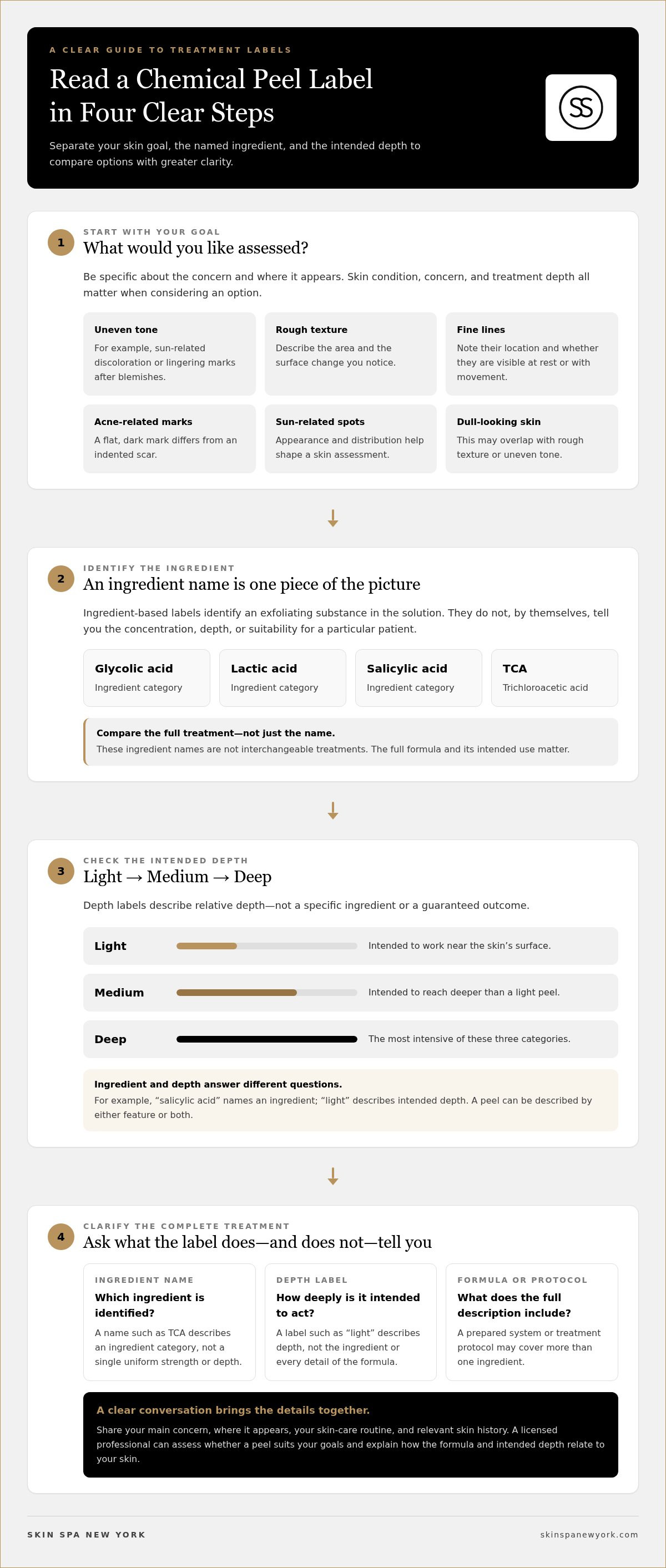
Chemical peels are commonly described by their ingredients, treatment depth, or formula. These labels answer different questions: which solution is used, how deeply it is intended to act, and how a particular treatment is designed. For example, “glycolic acid” identifies an ingredient, while “light” describes depth. A name alone doesn’t explain every detail of a formula.
Ingredient-based types are named for an exfoliating substance in the solution. Examples include glycolic acid, lactic acid, salicylic acid, and trichloroacetic acid, often abbreviated as TCA. These names identify different ingredients, not interchangeable treatments. The full formula and its intended use matter, so the ingredient label is a starting point, not a complete description.
- Glycolic acid peels are formulations identified by glycolic acid. The name tells you which ingredient is associated with the peel, but not its concentration, depth, or suitability for a particular patient.
- Lactic acid peels are formulations identified by lactic acid. A patient comparing this option with glycolic acid should distinguish the ingredient name from the complete treatment plan.
- Salicylic acid peels are formulations identified by salicylic acid. The label alone doesn’t establish how the formula is prepared or applied.
- TCA peels are formulations identified by trichloroacetic acid. The word “TCA” describes an ingredient category, not a single uniform strength or treatment depth.
Depth-based types are grouped by how deeply the treatment is intended to act. The familiar terms are light, medium, and deep. This is a separate classification from ingredient names: a peel can be described by its depth, its formula, or both. For instance, “salicylic acid” and “light” describe different features, not competing names for the same feature.
Formula-specific types are named for a prepared system or treatment protocol. The label may cover more than one ingredient, so read the full treatment description rather than inferring details from a short name. Ask what the label describes, which category the treatment belongs to, and which written aftercare instructions apply. These steps make it easier to compare options accurately.
To understand a peel menu, identify the named ingredient or formula, note whether the description states a depth, and clarify any unfamiliar term before treatment. A label such as “TCA” answers only the ingredient question. A label such as “light” answers only the depth question. Separating these details makes comparisons clearer and prevents a product name from standing in for a full explanation.
What skin concerns can chemical peels treat?
Chemical peels are treatments used to address selected surface-level skin concerns. Your concern, skin condition, and treatment depth all matter when considering an option. Someone focused on uneven tone, for example, may have different priorities from someone concerned with rough texture. A clear goal helps guide a personalized discussion, but no single formula addresses every concern in the same way.
Uneven skin tone describes areas that look lighter or darker than the surrounding skin. Sun-related discoloration and lingering marks after blemishes are examples a patient may want assessed. A professional considers where the discoloration appears, what it looks like, and the patient’s skin history before discussing treatment. This helps distinguish a surface concern from changes that need a different evaluation.
Rough texture means the skin feels or looks less smooth than desired. You might notice a coarse feel or an uneven surface when applying moisturizer. A peel may be considered as part of a plan for surface refinement. The appropriate approach depends on the area involved and the desired degree of change, not simply on the word “rough.”
- Fine lines are shallow creases that can become more visible with facial movement or at rest. Patients may raise them as a concern when seeking smoother-looking skin. Discuss their location and appearance rather than assuming a peel will address every line equally.
- Acne-related marks are changes in color or texture that remain after blemishes. A flat, dark mark differs from an indented scar, so describe which one you see. That distinction helps a professional assess whether a peel suits the concern.
- Sun-related spots are areas of discoloration associated with sun exposure. Their appearance and distribution help shape a skin assessment. Avoid treating every spot as the same issue; a professional should evaluate the specific area before recommending a treatment.
- Dull-looking skin describes a lack of the even, refreshed appearance a patient wants. It can overlap with rough texture or uneven tone. Name the specific change you notice, such as a patchy appearance across the cheeks, to make your goal clearer.
Before considering treatment, write down your main concern and where it appears. Be specific, such as discoloration on your cheeks or roughness along your forehead. Share your current skin-care routine and relevant skin history during the assessment. These details help a licensed professional consider whether a peel suits your goals and how its depth and formula relate to your skin.
What is the difference between light, medium, and deep peels?
A light peel is intended to work near the skin’s surface. A medium peel is intended to reach deeper than a light peel, while a deep peel is the most intensive of the three categories. These labels describe relative depth, not a specific ingredient or guaranteed outcome. For example, “light” tells you something different from a formula name such as glycolic acid.
With a light treatment, the discussion focuses on a less intensive approach to the skin’s surface. You might ask about it if you’re seeking a change in overall texture or tone. The category alone doesn’t tell you which ingredients are used or how your skin will look afterward. Ask what the treatment is intended to address and how the proposed formula fits that goal.
A medium treatment is a deeper category than a light treatment. That distinction matters when comparing options because depth can affect the treatment plan and aftercare. If you’re considering a medium option, ask what the term means for the specific formula, expected visible changes, and recovery instructions. The category name provides context, but doesn’t answer those questions by itself.
A deep treatment is the most intensive depth category. It isn’t simply a stronger name for a light option; the label signals a more substantial treatment approach. Before considering one, discuss your skin concern, relevant skin history, and the care required during recovery. Ask how the proposed treatment differs from a medium option in application and aftercare.
- Depth: Light is the shallowest category; medium is deeper; deep is the most intensive.
- Formula: Ingredient names, such as glycolic acid or TCA, describe a different feature.
- Planning: The treatment goal, skin history, and recovery guidance help frame the discussion.
To compare categories, describe one clear goal, such as uneven tone on your cheeks, rather than asking only for a “strong” treatment. Then ask which depth is being considered, what the formula contains, and what changes to expect during recovery. These questions help you compare like with like. A light peel with one formula and a medium peel with another differ in more than their labels.
Depth is only one part of an informed decision. Before proceeding, understand the intended treatment area, proposed formula, and aftercare plan. If a description uses “light,” “medium,” or “deep” without explaining the treatment itself, ask for a clear explanation. That conversation connects the category to your specific skin goals.
How should you prepare for a chemical peel
Preparation means organizing your information and following instructions tailored to the planned treatment. Before your appointment, write down your skin goals, current products, and relevant health history. For example, note whether your concern is uneven tone on your cheeks or roughness near your forehead. A focused record helps the treating professional understand what you want addressed.
A skin-care inventory is a list of the products and treatments you currently use. Include cleansers, moisturizers, exfoliants, prescription products, and recent facial treatments. Record product names when available instead of describing everything as “a cream.” This gives the professional a clearer picture of your routine and supports specific instructions for the formula being considered.
Health history includes conditions, sensitivities, and medications that may affect treatment planning. Tell the professional about past reactions to skin products, current prescriptions, and relevant skin concerns. Don’t stop a prescribed medication or change your routine on your own. Instead, raise the details during your assessment and follow the guidance you receive.
Pre-treatment instructions are directions for your particular peel and skin-care plan. They explain what to do before your appointment and which products or activities to discuss. Instructions can differ by formula and treatment depth, so don’t substitute advice intended for another peel. If a direction is unclear, ask the treating professional to explain it before treatment day.
- Before the appointment: Gather product names, medication details, and notes about previous skin reactions.
- During the assessment: Describe your main goal, such as improving the appearance of a specific patch.
- Before treatment: Review the written directions and clarify unfamiliar terms or steps.
Appointment planning means arranging your schedule around the treatment instructions and recovery discussion. Ask what to expect immediately afterward, which products to have available, and which activities the plan addresses. If you have a work event or family photos planned, mention the date. That context helps you discuss timing and practical considerations without assuming every peel has the same recovery pattern.
Informed consent means understanding the proposed treatment before agreeing to proceed. Confirm the formula, intended treatment area, expected skin response, and aftercare steps in plain language. Keep the written guidance accessible at home. Arriving prepared makes it easier to discuss specific concerns, share accurate product information, and follow the directions for your planned treatment.
Before confirming the plan, make sure any notes or questions refer to the skin treatment being discussed. The word “Peel” also appears in unrelated names and history: the Peel River in northern Yukon Territory and the Northwest Territories, Canada, is 425 miles long. Sir Robert Peel lived from 1788-1850 and served as British prime minister from 1834-35 and 1841-46. These references do not describe a skin-care treatment, so keep your preparation focused on the formula, treatment area, and guidance provided by your professional.
Other uses include British broadcaster John Peel, who lived from 1939-2004 and presented his Radio 1 music program from 1967-2004, and Peel fortified towers in the borderlands between England and Scotland, which date to the 16th century. For your appointment, return to the practical questions: whether you understand the expected skin response, what aftercare steps to follow, and whom to contact if an instruction remains unclear. Keep the information you gathered available so you can refer to it during the discussion.
What is the recovery time after a chemical peel
Recovery time is the period your skin needs to settle after treatment. There isn’t one timeline for every peel. The planned depth and formula, treatment area, and your skin’s response all affect the process. For example, recovery expectations for a light treatment shouldn’t automatically be applied to a deeper one. Ask for guidance specific to your treatment.
Skin response means the changes you notice after the procedure. Your treating professional can explain which changes are expected with your particular formula and which require follow-up. Clarify this before treatment instead of relying on descriptions meant for another peel. Knowing what to expect helps you distinguish your written aftercare steps from general advice.
Aftercare is the set of instructions for caring for your skin after treatment. Follow the directions for your formula, including how to cleanse and which products to use or avoid. Don’t add exfoliants or other active products just because they’re part of your usual routine. If a product’s role is unclear, ask before using it during recovery.
Recovery planning means arranging daily activities around the care your skin needs. Before your appointment, consider a work presentation, family gathering, or planned photographs. Ask what visible changes the specific treatment may involve and how to plan around them. A light, medium, or deep label can guide the conversation, but your recovery guidance should address the exact treatment.
- Before treatment: Ask for expected recovery changes and written aftercare instructions.
- During recovery: Follow those instructions instead of introducing new products or steps.
- If uncertain: Contact the treating professional for guidance about your specific symptoms or care plan.
Follow-up guidance explains what to do if recovery differs from the expected course. Before leaving, find out whom to contact and what changes should prompt a conversation. If you’re unsure whether a product belongs in your routine, pause and ask rather than guessing. Keep your instructions accessible so you can refer to the correct plan at home.
Recovery expectations are the changes and care steps discussed for your individual treatment. Ask how the formula, depth, and treatment area shape your plan. Understanding these details helps you organize your schedule, prepare suitable skin-care products, and follow clear aftercare instructions. The most useful estimate is the one tailored to your treatment, not a general timeline for all chemical peels.
The word “peel” also has unrelated historical and kitchen uses. Sir Robert Peel served as British Home Secretary from 1828-30; the repeal of the Corn Laws under Sir Robert Peel took place in 1846. John Peel presented Radio 4's Home Truths from 1998-2004. In pizza making, a placement peel is used to launch uncooked pizza into the oven, while a turning peel is used to rotate pizzas inside the oven for even cooking. A wooden pizza peel is less likely to stick to raw pizza dough than a metal peel. These meanings do not describe skin recovery.
Skin Spa New York: Laser Hair Removal
Skin Spa New York offers Laser Hair Removal for patients seeking treatment for unwanted hair, a different goal from addressing skin texture or tone with a chemical peel. If your priority is facial skin care, a customized facial or Microneedling may better match your needs. The right next step depends on your goals and the concern you want to address.
Consider which outcome matters most: hair reduction, facial care, or skin rejuvenation. That distinction can help you focus your conversation and explore a suitable treatment path with Skin Spa New York in New York, Boston, or Miami.
Contact Skin Spa New York to discuss your treatment goals.
Make your next step personal
Understanding peels is useful, but choosing a treatment starts with your priorities. Consider what you’d like to address, what fits comfortably into your routine, and what questions you want answered before moving forward. Clear goals make it easier to have a focused conversation about care that suits your needs.
You may come in with one concern in mind and find that a different treatment better matches your goals. Share what you hope to improve and the details that matter to you. A thoughtful discussion can help you understand your options and decide how to proceed at a pace that feels right.
For guidance on your aesthetic care goals, contact Skin Spa New York. Your next step can begin with a conversation centered on you.
Frequently Asked Questions
What does “peels” mean in skincare and beauty?
In skincare, “peels” usually means chemical peel treatments, which use a chemical solution to exfoliate the skin. The word can refer to the treatment category or multiple treatments, while “a peel” means one treatment. For example, someone might compare different peels when discussing skin-care options. The term describes a treatment approach, not a single formula or guaranteed result.
