

At 35, it’s not too late to start caring for your skin. Skincare treatments for men in their 30s can begin with a consistent routine and broad-spectrum sunscreen of at least SPF 30 every day. From there, ingredients such as vitamin C and retinol can be considered according to your skin’s needs.
If skincare has felt complicated or easy to put off, a straightforward plan can make it more manageable. This guide explains the daily basics, what vitamin C and retinoids may help address, and how to build a routine you can maintain. You’ll also learn when professional treatments such as microneedling may be relevant to your skin goals.
Key Takeaways
- Build a practical foundation with cleansing, moisturizing, and broad-spectrum sunscreen; the U.S. Food and Drug Administration recommends SPF 15 or higher for sunscreen protection.
- Choose products with your skin’s concerns in mind, such as oil-free or non-comedogenic options if you’re prone to clogged pores.
- Vitamin C and retinoids can address different visible concerns, so learn how each ingredient may fit into a considered routine.
- Give active ingredients time: consistent use of retinol and niacinamide typically takes 8–12 weeks to show meaningful change.
- Explore professional options such as microneedling when you want to discuss skin rejuvenation beyond your at-home routine.
1. A simple cleanser, moisturizer, and sunscreen routine
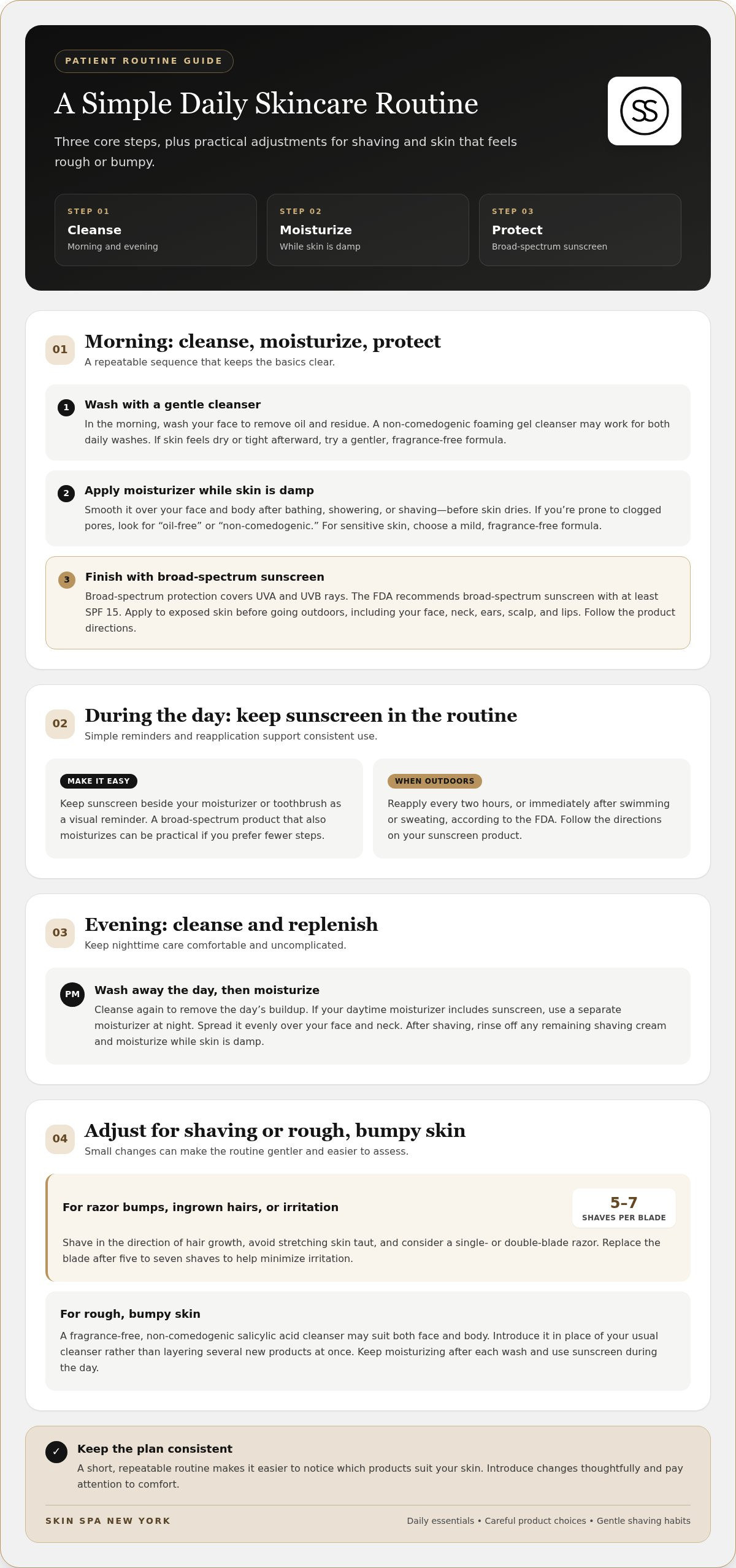
A useful routine starts with three steps: cleansing, moisturizing, and sunscreen. In the morning, wash your face with a gentle cleanser to remove oil and residue. Repeat in the evening to clear away the day’s buildup. A non-comedogenic foaming gel cleanser can work for both washes. If your skin feels dry or tight afterward, try a gentler, fragrance-free formula.
Next, apply moisturizer while your skin is still damp. After bathing, showering, or shaving, smooth it over your face and body before your skin dries. This helps address dryness and leaves skin feeling more comfortable. If you’re prone to clogged pores, look for an oil-free or non-comedogenic label. For sensitive skin, choose a mild, fragrance-free moisturizer, since fragrance can cause irritation or dryness.
In the morning, a moisturizer with broad-spectrum sunscreen can combine two steps. Broad-spectrum protection covers both UVA and UVB rays. To get the most protection from sunscreen, choose a broad-spectrum formula with an SPF of at least 15, according to the U.S. Food and Drug Administration. Apply it to exposed skin before going outdoors, including your face, neck, ears, scalp, and lips. Follow the product’s directions for application.
Leaving sunscreen in your morning routine matters even when the day feels overcast or mostly indoors. Keep it beside your moisturizer or toothbrush as a visual reminder. If you spend time outdoors, reapply sunscreen every two hours or immediately after swimming or sweating, according to the U.S. Food and Drug Administration. A broad-spectrum product that also moisturizes can be practical when you prefer fewer steps.
At night, cleanse again and use a separate moisturizer if your daytime formula includes sunscreen. Choose a comfortable texture, then spread it evenly over your face and neck. After shaving, rinse off any remaining shaving cream and apply moisturizer while your skin is damp. Avoid fragranced products if they tend to irritate or dry your skin. This keeps nighttime care simple without adding another active ingredient.
Razor bumps, ingrown hairs, and shaving irritation often call for a gentler technique. Shave in the direction of hair growth, avoid stretching the skin taut, and consider a single- or double-blade razor. Replace the blade after five to seven shaves to help minimize irritation.
For rough, bumpy skin, a fragrance-free, non-comedogenic salicylic acid cleanser may suit both face and body. Introduce it in place of your usual cleanser rather than layering several new products at once. Keep moisturizing after each wash, and use sunscreen during the day. A short, repeatable routine makes it easier to notice which products suit your skin.
2. What Should My Skincare Routine Be In My 30s?
A useful guide to skincare treatments for men in their 30s begins with a daily question: what does your skin need to feel comfortable? Keep the core routine practical, then adjust products around concerns such as dryness, excess oil, or sensitivity. A consistent sequence makes it easier to notice how your skin responds to a change.
In the morning, cleanse your face, apply moisturizer, then use broad-spectrum sunscreen with at least SPF 30. Apply sunscreen to exposed skin before going outdoors, including your scalp, ears, neck, and lips. For everyday use, choose a broad-spectrum formula with SPF 30 or higher that feels comfortable enough to apply regularly.
Let texture guide your sunscreen choice. If you dislike a heavy feel, try a lighter formula; if your skin tends to feel dry, a moisturizing sunscreen may suit your routine. Check the product label for broad-spectrum protection and follow its directions. A sunscreen you can comfortably use each day is more practical than one left unused.
At night, cleanse your face to remove sunscreen and the day’s buildup. Apply moisturizer afterward, and keep this routine simple while you assess your skin. If you use a targeted product, follow its directions and add it as a separate step. Introducing several new products at once can make it difficult to identify how each one affects your skin.
For acne-prone skin, look for “oil-free” or “non-comedogenic” labels on cleansers and moisturizers. These terms indicate products designed not to clog pores. If fragrance tends to irritate or dry your skin, choose mild, fragrance-free formulas. For example, switch to a fragrance-free moisturizer before changing several parts of your routine.
Treat skincare as a considered plan, not a reason to add every trending ingredient. Start with daily essentials and identify one concern, such as uneven tone or rough texture. Then decide whether a targeted product fits. Keep sunscreen in your morning routine as you explore other options.
Make the steps easy to remember. Place sunscreen beside your morning essentials and keep nighttime moisturizer near your cleanser. If your face feels tight after washing, reassess your cleanser or moisturizer before adding an active ingredient. A brief note on your phone can help track the products you use and any changes in comfort.
Review your routine after following it consistently. Consider what feels comfortable, what you can maintain, and which concern remains your priority. This simple daily structure gives you a clear starting point for informed choices about additional care.
3. Microneedling, LED light therapy, and prescription retinoids
Choose a treatment based on your concern. Retinol may improve the appearance of pores, fine lines, wrinkles, and rough texture. Microneedling and LED light therapy are professional options, while retinoids are topical ingredients. These approaches aren’t interchangeable, so match the treatment to your goal rather than adding several at once.
Microneedling uses fine needles to create controlled punctures in the skin. A licensed professional can tailor treatment to the area and concern. Afterward, follow the specific aftercare instructions and keep your routine gentle. Avoid adding strong active products until the recommended time has passed. The procedure isn’t an at-home substitute for a retinol product.
LED light therapy uses light as a treatment approach; its purpose and protocol depend on the device and treatment plan. Ask what concern the session addresses and what aftercare it requires. Prescription retinoids are another option, especially when acne is a concern. They differ from over-the-counter retinol, so use a prescribed product only as directed.
Retinol can be a targeted step for the look of enlarged pores, post-acne marks, fine lines, wrinkles, and uneven texture. Start by following the product directions, and introduce it as a single new active rather than combining it immediately with other exfoliating products. Active ingredients such as retinol and niacinamide typically take 8–12 weeks of consistent use to show meaningful change. Sunscreen remains part of daytime care.
Chemical peels and microdermabrasion may suit men seeking a professional approach to surface texture or dullness. A peel uses a chemical solution, while microdermabrasion exfoliates the skin’s surface. Suitability depends on your concern, skin sensitivity, and treatment plan. Before booking either treatment, understand the recommended preparation and aftercare.
Laser treatments serve different purposes. Laser hair removal targets unwanted hair, while other laser approaches may address different concerns. Potential risks include discomfort, irritation, or changes in skin pigmentation. Before treatment, discuss the intended target, likely recovery, and aftercare, particularly if you have sensitive skin or a history of skin reactions.
There isn’t one schedule for facials or other professional treatments. Frequency depends on the treatment type, its purpose, and how your skin responds between sessions. A customized facial can address current concerns, while microneedling or a peel follows its own treatment plan. Keep a record of sessions and reactions so future appointments can build on what your skin tolerated.
4. Vitamin C and antioxidant protection
Vitamin C can be a focused addition for men noticing dullness or mild pigmentation. Early collagen loss can begin during the 30s, so skincare treatments for men in their 30s may include ingredients selected for visible tone and texture concerns. In the morning, apply a vitamin C serum to clean, dry skin, then continue with moisturizer and sunscreen. Follow the serum’s directions and avoid applying it directly around the eyes unless directed.
Antioxidants serve a different role in skincare than sunscreen. Vitamin C is used to improve the look of uneven tone and a lacklustre complexion, but it doesn’t replace sun protection. Keep broad-spectrum sunscreen in your daytime routine. Each product has a distinct purpose: the serum targets appearance, while sunscreen protects exposed skin from UVA and UVB rays.
For hydration, a hyaluronic acid serum can complement vitamin C. Apply the thinner serum first, then layer the other product according to its directions. Follow with moisturizer to complete the routine. For example, if your cheeks feel dry but your T-zone feels comfortable, apply hydrating products where needed rather than automatically using more across your entire face.
Vitamin A products, including retinol, are generally used at night. Cleanse first, apply retinol as directed, then moisturize. Retinol can help improve the appearance of fine lines, wrinkles, pores, and rough texture. When starting, keep it separate from unfamiliar active ingredients so you can observe how your skin responds. A considered routine should address your specific concerns, not turn every evening into a complicated sequence.
Storage and consistency matter for serums. Store vitamin C according to its product instructions, and close the container after use. If the product changes noticeably in color, texture, or smell, review its label before continuing. Record when you started using it to help assess your routine without changing several products at the same time.
Give an active ingredient a fair, steady trial before judging its effect. Retinol and niacinamide typically take 8–12 weeks of consistent use to show meaningful change. Keep notes on comfort and visible concerns, such as uneven tone or rough patches. That record can help you decide whether to continue the same steps or simplify your routine.
5. Building a consistent skincare routine
A routine is easier to maintain when it fits the morning and evening you already have. Place cleanser beside the sink, moisturizer nearby, and sunscreen where you’ll see it before leaving home. At night, keep cleanser and moisturizer together. These small arrangements make each step part of an existing habit rather than another task to manage.
Start with the essentials before adding targeted products. In the morning, cleanse, moisturize, and apply sunscreen. At night, cleanse again and moisturize. Once that sequence feels manageable, consider adding one active ingredient for a specific concern, such as retinol for rough texture. Introducing one new product at a time helps you identify what suits your skin.
Use a new routine consistently for a few weeks before deciding whether it suits you. Keep the steps and timing steady, and note changes such as dryness, irritation, or how your skin feels after washing. If you change several products at once, it’s harder to tell which one caused a reaction or improved comfort.
A 35-year-old is not too late to begin. If your current routine consists only of occasional face washing, add one repeatable morning step first, then build toward the full sequence. For example, keep sunscreen beside your keys and moisturizer beside your cleanser. Practical cues can help even on rushed workdays.
Keep a brief record of your products and any noticeable changes. A phone note can list the cleanser, moisturizer, sunscreen, and active ingredient you use, along with when you started each one. If a product causes persistent irritation, stop using the new step and return to the basics. If concerns persist or new symptoms appear, consult a dermatologist.
Consistency also means adjusting thoughtfully, not using every product every day. If your skin feels dry after introducing an active, simplify your routine and focus on gentle cleansing and moisturizing. Avoid adding another exfoliant while assessing the change. Once your skin feels comfortable, follow product directions and reintroduce only the step that addresses your main concern.
If a steady routine hasn’t produced the changes you want after 3–6 months, consider seeking professional help. Bring your product list and notes about irritation or visible concerns; these details can make a discussion more focused. A clear history helps distinguish whether the next step is a routine adjustment or a professional treatment suited to your goals.
Realistic expectations can make a routine easier to sustain. The page recommends following a consistent skincare routine for at least a few weeks, giving your skin time to respond before judging whether the steps are working. The author reports noticing changes after committing to a routine within a couple of months. That experience offers perspective, but individual responses vary. Progress may be subtle, and no immediate visible change doesn’t necessarily mean the routine is unsuitable. Pay attention to comfort as well as appearance, and let persistent concerns guide whether to seek professional advice.
Skin Spa New York: Laser Hair Removal
Skin Spa New York offers Laser Hair Removal for people seeking a professional option for unwanted hair. If shaving irritation or recurring ingrown hairs are part of your routine, this treatment may be worth exploring alongside daily skincare. Results develop over a course of treatments, with long-lasting reduction possible after a few sessions.
For facial concerns rather than unwanted hair, a Customized Facial or Microneedling may better match your goals. A conversation about your priorities can help clarify which treatment aligns with your concerns and what aftercare to follow. The next step depends on whether you want to address unwanted hair, texture, or another visible concern.
To learn more about treatment options, contact Skin Spa New York or visit skinspanewyork.com.
Make your next skincare step personal
Your skin’s priorities can shift, so let your next step reflect what you want to address rather than adding treatments without a clear purpose. Skincare treatments for men in their 30s can be considered as part of a personal plan, shaped by your concerns, preferences, and response to care. A focused conversation can help connect your goals with an appropriate treatment.
Skin Spa New York offers Laser Hair Removal for unwanted hair, Customized Facial care for individual skin concerns, and Microneedling as a professional rejuvenation treatment. These options serve different goals, so start by identifying what you’d most like to address.
When you’re ready to discuss your skincare goals and possible next steps, connect with Skin Spa New York. Your routine can grow with you, one considered choice at a time.
Frequently Asked Questions
Is 35 Too Late to Start Skincare?
No. Starting at 35 gives you the opportunity to build habits around your current concerns, whether that means dryness, uneven tone, or early fine lines. Begin with products you can use consistently instead of trying several active ingredients at once. A simple record of what you use and how your skin feels can help you make thoughtful adjustments over time.
What Should My Skincare Routine Be In My 30s?
Choose a routine that suits your skin’s comfort and main concern. Keep cleansing, moisturizing, and daytime sun protection as the foundation. If you add a targeted product, select it for a specific goal, such as retinol for the appearance of rough texture. Introduce that product on its own and follow its label so you can tell how your skin responds.
What daily skincare routine should men in their 30s follow?
Use a short morning sequence and a simple evening reset. In the morning, cleanse, moisturize, and apply broad-spectrum sunscreen; at night, remove the day’s buildup and moisturize. On shaving days, notice how your skin feels afterward and avoid adding a new active product to irritated areas. Keeping your routine in the same place and order can make it easier to repeat.
Which ingredients help prevent early wrinkles and sun damage?
Broad-spectrum sunscreen is the key daily step for protection against UVA and UVB rays. Vitamin C is an antioxidant used to support a brighter-looking complexion, while retinol can improve the appearance of fine lines and rough texture. These ingredients have different roles: vitamin C doesn’t replace sunscreen, and retinol isn’t a substitute for sun protection. Follow product directions when combining them.
When should men in their 30s see a dermatologist for acne or aging skin?
Arrange a dermatology visit if acne or another skin concern persists despite consistent care, or if new symptoms appear. A new spot or mole that itches, bleeds, or changes color deserves attention rather than self-treatment. Bring a list of products and note when symptoms began. Those details can help the dermatologist understand what’s changed and discuss suitable next steps.
