

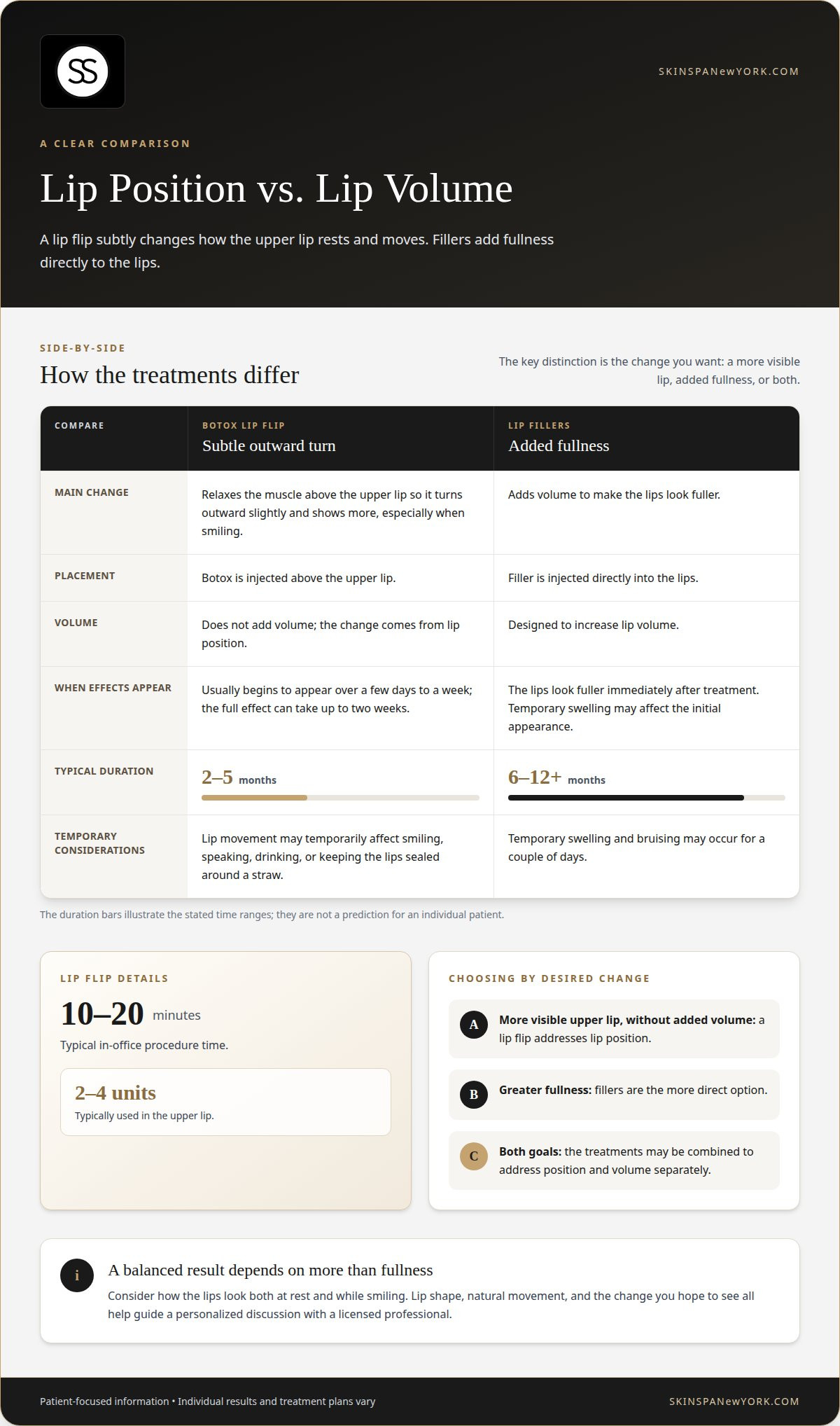
The signature change is a more visible, gently upturned upper lip, without added volume. If you’re wondering what a Botox lip flip looks like, picture a subtle shift that can make the upper lip show more when you smile, rather than a dramatically fuller pout. The in-office procedure typically takes 10 to 20 minutes and uses about two to four units of Botox in the upper lip.
It’s understandable to want a clear picture of the result before considering a Botox lip flip. This guide explains how it changes the upper lip, when results appear, how long they typically last, and how the effect differs from lip filler. You’ll also learn what the procedure involves and what to consider when deciding whether this subtle approach suits your aesthetic goals.
Key Takeaways
- A lip flip subtly turns the upper lip outward, creating more visible lip without adding volume.
- Compare the effect with filler to clarify whether you’re seeking a gentle change in lip position or added fullness.
- Results develop over a few days to a week and typically last two to five months.
- Learn how temporary changes in lip movement may affect smiling, drinking, or using a straw.
- The procedure typically takes 10 to 20 minutes, with about two to four units used in the upper lip.
What is the difference between a lip flip and lip fillers?
A Botox lip flip and lip fillers address different features. A lip flip uses Botox above the upper lip to relax the muscle, allowing the lip to turn outward slightly. Fillers are injected directly into the lips to add volume. The practical difference is that one changes the upper lip’s position, while the other changes its fullness.
If your upper lip seems to disappear when you smile, a lip flip may make its border more visible without adding bulk. The subtle effect comes from the lip’s position, not added material. It may suit someone seeking a small change in upper-lip definition who prefers not to add fullness.
Lip fillers are designed to increase volume, so the lips look fuller immediately after treatment. Their effects typically last 6 to 12 or more months. By contrast, a lip flip’s effects typically last two to five months. These different timelines matter when choosing between treatments: consider both the look you want and how long you want the change to last.
There’s no single ideal result. Consider how your lips look at rest and when you smile. If you want a more visible upper lip without added volume, a lip flip addresses that goal. If you want greater fullness, fillers are the more direct option. A provider can assess your lip shape and movement alongside your goals to discuss a personalized plan.
The difference also affects where treatment is placed. Botox is injected above the upper lip, while fillers are injected directly into the lips. Filler can cause temporary swelling and bruising for a couple of days, so these effects may influence how the lips look initially. For either treatment, the choice depends on whether your priority is lip position, volume, or both.
A lip flip can be done alone or combined with fillers. A reported example involved a 28-year-old patient receiving a Botox lip flip with two syringes of Juvéderm. This illustrates that combination treatments can pair muscle relaxation with added volume, but it isn’t a standard amount or a recommendation for every patient.
In short, consider the intended change: a lip flip subtly turns the upper lip outward, while dermal fillers add fullness within the lips. If you want both a more visible upper lip and added volume, combining treatments may address each feature separately. Keep your preferred look, smile movement, and desired fullness in mind during the discussion.
Can a Botox lip flip be done on the bottom lip?
Yes. Botox can also be used around the lower lip. A typical approach may use two units there, but placement and amount depend on the movement being treated. The goal is a measured change in lip position, not added volume. Discuss whether your concern is the lower lip alone or how both lips look together when you smile.
Lower-lip treatment can subtly affect how the lip rests and moves, so the before-and-after difference may be modest. Botox relaxes targeted muscle activity; it doesn’t add volume or create the fuller appearance associated with filler. To see what a Botox lip flip looks like, compare photographs taken at rest and while smiling. Keep facial expression, lighting, and camera angle consistent, as each can affect how lip shape appears.
Results usually begin to appear over a few days to a week, and the full effect can take up to two weeks. Lip flip effects typically last two to five months. An early photo may not show the settled result, while later comparisons can reveal how the lip’s position has changed. If you’re planning treatment before a major event, schedule it at least two weeks beforehand.
Before-and-after images are most useful when they show the same patient in comparable poses. Look at the upper and lower lips at rest, then during a natural smile. Notice whether the lower lip appears more balanced with the upper lip, rather than judging only by fullness. A lip flip may suit someone whose upper lip turns inward or disappears when smiling, but that alone doesn’t determine whether lower-lip treatment is appropriate.
Before treatment, Cleveland Clinic advises avoiding alcohol, cigarettes, and aspirin for at least one week. Afterward, avoid alcohol for 24 hours, straws and smoking for three days, and lipstick, lip balm, or other lip products for three to four days. Avoid strenuous activity for 24 hours, and limit pressure on the lips while they heal.
Temporary changes in movement can affect everyday actions, including drinking or smiling. If you’re considering treatment on both lips, discuss your natural lip movement and desired enhancement with a licensed professional. Injection placement matters: a change that looks balanced at rest should also suit your smile. Comparing both expressions can help clarify the intended result before treatment.
Are there any side effects?
Yes, a lip flip can cause temporary changes at the injection site and in lip movement. Knowing which effects may occur can help you recognize when a change needs attention.
Possible Side Effects and Risks
Common temporary effects include mild bruising or swelling at the injection site, plus weakness or numbness in the treated area. Pain and swelling should resolve within 12 to 24 hours. Slight asymmetry is also possible, though it is rare. These effects can influence how the lip looks while the cosmetic treatment settles.
Placement and dosing matter. Treatment that doesn’t account for your anatomy can alter your smile or make the upper lip feel heavy. Excessive or improperly dosed treatment can also interfere with the mouth’s seal. A personalized assessment connects the desired change with your natural lip movement.
Effects on Smiling and Drinking
Because a lip flip relaxes muscle activity around the mouth, you may temporarily notice changes when smiling, speaking, or drinking. For example, reduced control can make it harder to keep your lips sealed around a straw or cup. Drooling can occur if muscle movement is affected more than intended.
Speech can feel different as the mouth adjusts, and eating may require extra care. Patients typically become fully acclimated to modified lip function about a week after treatment. If eating properly remains difficult more than 10 days later, consult the injector. Persistent speech difficulty beyond 3 to 4 weeks also warrants follow-up with the provider.
Normal and Abnormal Reactions
Mild bruising, brief swelling, and temporary weakness or numbness are possible short-term effects. Pain and swelling should resolve within 12 to 24 hours. Rare slight asymmetry can occur as well. Changes that disrupt drinking or speech deserve attention, particularly when they persist instead of easing as the patient adapts.
A lip flip’s effects typically last two to five months, but unusual functional changes can resolve sooner. In rare cases, effects on muscle movement may ease sooner than expected. Speech difficulties commonly improve within one to two weeks; symptoms lasting beyond 3 to 4 weeks call for provider follow-up.
Track specific changes after treatment, such as difficulty sealing your lips around a straw or altered speech. These details help your provider understand how treatment affects daily function as well as appearance. A lip flip should be tailored to your lip movement and facial anatomy, since relaxing muscles can influence both your smile and everyday mouth movements.
How a Botox lip flip changes upper-lip appearance
A Botox lip flip subtly turns the upper lip upward, making it appear larger without adding volume. The change comes from relaxing muscles above the lip, not from placing material inside it. For example, if your upper lip rolls inward while you smile, you may see more of its border afterward. The result is a change in position, not the fuller shape created by dermal filler.
The visual difference can be delicate at rest and clearer when you smile. As the upper lip turns outward, more of its surface may show, creating a more defined lip line. The treatment doesn’t change the lips’ underlying structure or stop aging. It changes how the upper lip moves, not its natural size or shape.
If you show gum above your teeth when smiling, you may also notice a change. Relaxing the muscles that lift the upper lip can minimize visible gum for some patients. The effect depends on how your lip moves during a smile, so its appearance at rest doesn’t tell the whole story. Comparing your upper lip at rest and while smiling gives a clearer picture of the movement being addressed.
To describe your desired result, identify the moment that concerns you. Does your upper lip turn inward in a full smile, or does it simply look less visible in a casual expression? Those are different observations. A personalized assessment considers upper-lip movement, your smile, and the balance between both lips before discussing treatment placement.
The full effects can take up to two weeks to appear, so an immediate comparison may not show the settled change. In some cases, unevenness or a pronounced lip area becomes more balanced over 2 to 4 weeks as muscles adjust. A patient reviewing progress should compare similar expressions and angles, rather than judging the result from one photograph taken at rest.
For a meaningful before-and-after comparison, use consistent lighting and facial expressions. Look at the lip border, how much upper lip shows when you smile, and whether gum show appears different. A lip flip can create subtle enhancement, but it doesn’t add volume. Seeking a noticeably fuller shape is a different goal from wanting more of the upper lip to show when smiling.
Procedure duration and typical injection amounts
A Botox lip flip is a brief, minimally invasive in-office procedure, typically taking 10 to 20 minutes. The injector uses a fine needle to place a small amount of botulinum toxin into the muscle above the upper lip. These injections relax targeted muscles, allowing the lip to turn outward slightly. The treatment focuses on movement, not on adding volume.
A typical approach uses about two to four units of Botox in the upper lip. Some treatment plans also use two units in the lower lip. These figures describe common amounts, not a dosing formula for every patient. Lip shape, muscle movement, and the area being treated all affect how an injector plans placement and dosage.
Why do amounts differ? A lip flip targets specific muscles around the mouth, and the intended change may involve the upper lip alone or include the lower lip. For example, someone concerned about an upper lip that rolls inward while smiling may have a different treatment plan from someone seeking a change in both lips. The aim is a measured enhancement that suits the patient’s anatomy.
The procedure’s short duration doesn’t mean the full effect appears immediately. Botox relaxes the targeted muscles, so the visible change develops over time. Full effects can take up to two weeks to appear. When assessing results, distinguish the time spent receiving injections from the time needed for the muscle response to become visible.
After the injections, a healthcare provider may monitor the patient for up to 15 minutes. That brief observation is separate from the 10-to-20-minute procedure estimate. Understanding both timings can help patients plan the appointment and avoid expecting the final lip appearance before the treatment has taken effect.
Units alone don’t tell you what the result will look like. Placement and muscle response shape how much the upper lip turns outward, while the treatment’s purpose remains distinct from filler, which adds volume. If you’re weighing those goals, discuss lip enhancement and filler options as part of a personalized treatment conversation.
Skin Spa New York: Laser Hair Removal
Skin Spa New York offers Botox Cosmetic for patients exploring a Botox lip flip. If you’re considering a subtle upper-lip change, bring your goals and questions about how your lip moves when speaking and smiling to a personalized treatment discussion.
A lip flip focuses on relaxing muscles around the upper lip, while fillers add volume. Clarifying whether you want a change in lip position, fullness, or both can help guide a discussion about suitable options. Your facial anatomy and desired appearance are important considerations.
For a thoughtful discussion of Botox Cosmetic and your aesthetic goals, contact Skin Spa New York.
Choose a Lip Goal That Feels Like You
Before taking the next step, consider how you want your lips to look during the expressions you make every day. A relaxed smile, a full grin, and natural speech can each reveal different preferences. Thinking through these moments can help you describe the change you’re seeking and decide whether a subtle adjustment suits your personal style.
If you’re still wondering what a Botox lip flip looks like on your own face, focus the conversation on your goals rather than someone else’s photo. Your natural lip movement and preferred degree of definition can guide a personalized discussion about suitable aesthetic options. It’s completely reasonable to take time to decide.
For a thoughtful conversation about your goals and treatment options, contact Skin Spa New York. A clear, considered next step can help you feel more confident in your choice.
Frequently Asked Questions
What is a lip flip?
A lip flip is a cosmetic treatment that uses Botox to subtly change how the upper lip rests and moves. It targets the muscle above the lip rather than adding material inside it. For example, if your upper lip rolls inward when you smile, you can discuss whether changing that movement aligns with your goals. A lip flip is distinct from treatments designed to increase lip volume.
How Long Do Lip Flips Last?
Lip flip effects typically last two to five months. Since the effect isn’t permanent, duration may matter when planning around your preferences or an upcoming occasion. If you’re considering a lip flip before a major event, plan the appointment at least two weeks beforehand to give the result time to develop. Your desired look and the treatment’s temporary nature are useful topics to discuss with your injector.
Is it normal to have trouble speaking after a Botox lip flip?
Temporary speech changes can happen as your mouth adjusts to altered lip movement. Speech difficulties usually improve within one to two weeks, and patients typically acclimate to modified lip function in about a week. If difficulty speaking continues beyond 3 to 4 weeks, contact your provider. Note the specific words or movements that feel difficult, since those details help describe how the change affects everyday communication.
Lip flips may have been trending on TikTok, but is it the right choice for you?
A lip flip is worth discussing if your upper lip turns inward or pulls upward when you smile and you want more definition without added bulk. It doesn’t create the same fuller appearance as lip filler. Before deciding, describe what you’d like to change in your own expressions rather than using a social media image as your target. Your lip movement and desired outcome are central to the conversation.
What is the recovery time?
A lip flip typically involves little to no downtime, though temporary injection-site effects or changes in lip movement can occur. For the first 24 hours, avoid strenuous activity; avoid straws and smoking for three days. Take care with activities that press on the lips while they heal. If you have an event or work presentation planned, allow time to see how your lip movement feels afterward.
What does a Botox lip flip look like before and after?
Before treatment, your upper lip may appear less visible when you smile if it rolls inward. Afterward, it can turn slightly upward, showing more of the lip without added volume. To compare appearances, take photographs in similar lighting with both a relaxed face and a natural smile. Consistent angles make it easier to spot changes in lip position rather than differences caused by expression or camera placement.
How does a Botox lip flip change the upper lip when smiling?
By relaxing muscles that lift the upper lip, a lip flip can make the lip turn outward and may minimize visible gum when you smile. The effect is about movement, not lip structure. Compare a full smile with your relaxed expression when describing your goal. If visible gum or an upper lip that disappears is your concern, explain when it happens to help guide a focused treatment discussion.
How soon do lip flip results appear and how long do they last?
Some changes appear over a few days to a week, while the full effect can take up to two weeks. Lip flip results typically last two to five months. Avoid judging the result from an early photograph; instead, compare expressions after the treatment has had time to take effect. If you’re preparing for a particular occasion, scheduling at least two weeks ahead allows time for the result to develop.
